
What You Need to Know About the Newly Inaugurated Ganga Expressway in Uttar Pradesh
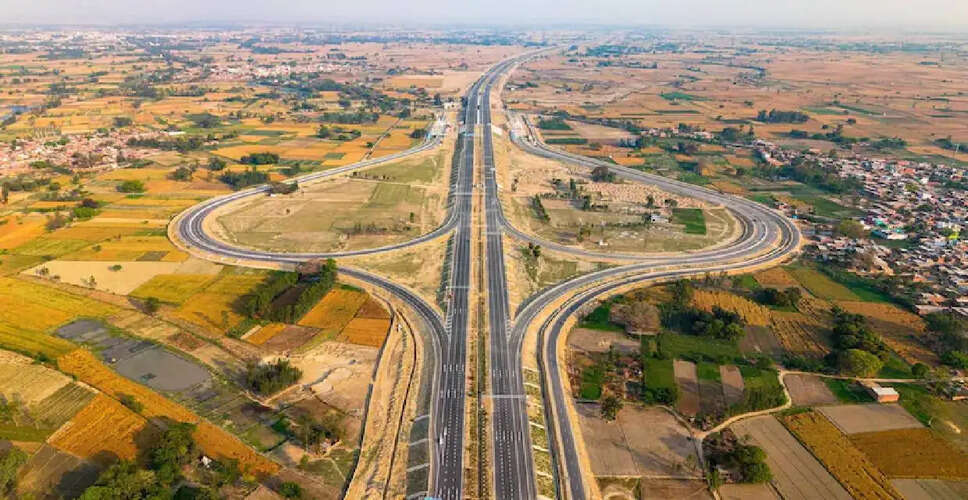

Inauguration of the Ganga Expressway
On Wednesday, Prime Minister Narendra Modi officially opened the Ganga Expressway, a significant infrastructure initiative stretching 594 kilometers and linking Meerut to Prayagraj.
The Prime Minister arrived in Hardoi district around midday, where he inaugurated the expressway with a ceremonial button press, accompanied by Governor Anandiben Patel and Chief Minister Yogi Adityanath, among other dignitaries.
This high-speed corridor is anticipated to greatly enhance connectivity throughout Uttar Pradesh, fostering industrial investment, improving logistics, and supporting agricultural marketing and regional equity.
In a post on social media, Chief Minister Adityanath remarked that the expressway's inauguration marks a new phase in the state's development journey.
He referred to the six-lane expressway, which can be expanded to eight lanes, as a 'lifeline' that will connect villages, farmers, entrepreneurs, and youth, emphasizing its role in accelerating development and reducing distances.
Union Minister and BJP's Uttar Pradesh president Pankaj Chaudhary highlighted that this expressway is among the longest in the nation and represents a modern infrastructure gift to the state.
The expressway links twelve vital districts: Meerut, Hapur, Bulandshahr, Amroha, Sambhal, Badaun, Shahjahanpur, Hardoi, Unnao, Rae Bareli, Pratapgarh, and Prayagraj.
It is expected to significantly cut travel times while providing a faster, safer, and more convenient travel experience.
Constructed under a public-private partnership, the expressway features six lanes with the potential for expansion to eight, designed for speeds up to 120 km/h.
A notable aspect of the project is a 3.2-kilometer airstrip near Shahjahanpur, designated for emergency landings of Air Force aircraft. Additionally, the expressway is equipped with an Intelligent Traffic Management System (ITMS), CCTV surveillance, emergency call boxes, ambulances, and patrolling units to ensure safety.
The project also includes the development of integrated manufacturing and logistics clusters (IMLCs) along the corridor, featuring warehouses, cold storage facilities, and food processing hubs aimed at attracting investment and creating jobs.
Furthermore, the expressway will connect with other major corridors, including the Purvanchal, Agra-Lucknow, Bundelkhand, and Gorakhpur Link expressways, forming a comprehensive interconnected network.
Authorities believe this project will generate substantial employment opportunities and play a pivotal role in advancing Uttar Pradesh's ambition of becoming a trillion-dollar economy.