
What to Expect from Xi Jinping's Upcoming Visit to India for the BRICS Summit
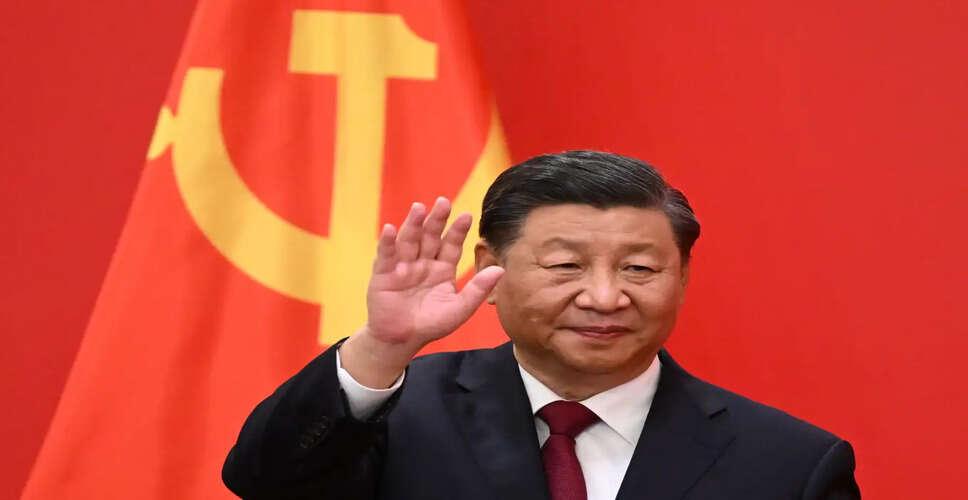

Xi Jinping's Anticipated Visit to India
Chinese President Xi Jinping is set to travel to India this week to participate in the 18th BRICS Summit in New Delhi, as confirmed by the foreign ministry on Thursday.
This marks Xi's first trip to India in almost seven years.
Invited by Prime Minister Narendra Modi, Xi will be present at the summit scheduled for September 12 and 13, according to a spokesperson from the Foreign Ministry.
Sources indicate that Xi is likely to engage with Prime Minister Modi during the summit's informal discussions.
This visit is anticipated to be a significant diplomatic event, potentially influencing the ongoing efforts to enhance relations between the two nations, as well as BRICS collaboration in light of the current global challenges, including the conflicts in West Asia and the ongoing Russia-Ukraine war.
As the current chair of BRICS, India will host the summit in New Delhi on the specified dates.
Xi's last visit to India occurred in 2019 for an informal summit with Modi in Mamallapuram, near Chennai.
Previously, he attended the BRICS summit in Goa in 2016 and made his inaugural visit to India in September 2014, where he held extensive discussions with Modi during their first terms.
The upcoming visit is particularly noteworthy as it coincides with efforts by both India and China to restore normalcy in their relations following the 2020 standoff in Eastern Ladakh.
In preparation for Xi's visit, National Security Advisor Ajit Doval and Chinese Foreign Minister Wang Yi engaged in detailed discussions in Beijing last month regarding boundary issues, maintaining peace along the border, and enhancing bilateral relations.
During the 25th round of Special Representatives' talks held in Beijing on August 25, both sides reached an eight-point consensus and agreed to further discussions on boundary delimitation and management.
Given these significant discussions on boundary and broader bilateral matters, a meeting between Modi and Xi at the BRICS summit is expected to draw considerable attention regarding the future trajectory of India-China relations.
The BRICS summit in New Delhi will convene major emerging economies, including Brazil, Russia, India, China, and South Africa, with a focus on multilateral cooperation at the heart of the agenda.
BRICS has become a vital platform for emerging economies advocating for enhanced representation in global governance, reforming international financial institutions, strengthening trade and investment ties, and promoting sustainable development goals.
Chinese officials have indicated that Xi's participation highlights Beijing's ongoing commitment to the BRICS framework and its role in fostering a more inclusive global order.
The discussions are expected to encompass a variety of shared interests, such as increasing intra-BRICS trade, enhancing payment systems, advancing cooperation in science and technology, tackling climate change, and aligning positions on significant international issues.
Originally consisting of Brazil, Russia, India, China, and South Africa, BRICS expanded in 2024 to include Egypt, Ethiopia, Iran, and the UAE and Saudi Arabia, with Indonesia set to join in 2025.
Last year, Belarus, Bolivia, Kazakhstan, Cuba, Malaysia, Nigeria, Thailand, Uganda, Uzbekistan, and Vietnam were designated as BRICS partner countries.
BRICS has emerged as a powerful coalition, representing 11 major emerging economies that account for approximately 49.5% of the global population, around 40% of global GDP, and about 26% of global trade.
In a statement, the Ministry of External Affairs noted that India's BRICS chairmanship is guided by the theme: 'Building for Resilience, Innovation, Cooperation, and Sustainability,' reflecting Prime Minister Modi's vision of a people-centric approach rooted in the spirit of 'Humanity First.'
As a founding member of BRICS, India has previously held the chair three times, in 2012, 2016, and 2021.
India began its fourth BRICS chairmanship on January 1, with 2026 marking the 20th anniversary of the group's establishment.
Over the years, BRICS has progressively developed into a comprehensive framework for cooperation across three foundational pillars: political and security, economic and financial, and cultural and people-to-people exchanges.