
What to Expect from Xi Jinping's Historic Visit to North Korea?
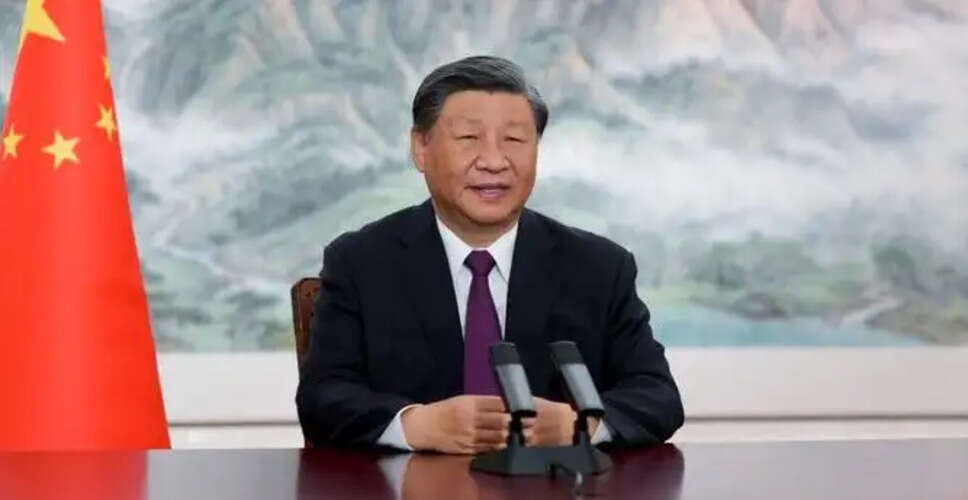

Xi Jinping's Significant Journey to Pyongyang
Seoul: Chinese President Xi Jinping is preparing for a visit to Pyongyang on Monday, marking his first trip to North Korea in seven years. This visit is anticipated to reinforce China's influence over North Korea while offering economic and political support.
During his two-day visit, Xi is scheduled to meet with Kim Jong Un. This will be their first face-to-face meeting since their gathering in Beijing last September, which also included Russian President Vladimir Putin and other international leaders.
While no specific agenda has been disclosed, analysts believe the discussions could significantly impact their bilateral relations and beyond, especially as both leaders aim to restore their traditional alliance amid ongoing tensions with the United States.
Leif-Eric Easley, a professor at Ewha University in Seoul, remarked, "A Chinese leader doesn’t just visit North Korea without purpose. Xi’s trip will have substantial implications for China-DPRK relations."
Strengthening Influence Over North Korea
Xi's visit follows his recent summits with US President Donald Trump and Putin in Beijing last month, with another meeting with Trump planned for September.
Experts suggest that Xi aims to showcase China’s influence over the Korean Peninsula and assert a leadership role in Northeast Asia amid strategic competition with the US, according to Kwak Gil Sup, head of One Korea Centre, which focuses on North Korean issues.
Historically, China has been North Korea's primary economic supporter and diplomatic ally, often avoiding strict enforcement of UN sanctions and providing covert aid to help its struggling neighbor. This year marks the 65th anniversary of their mutual defense treaty.
However, recent years have raised concerns about their relationship, particularly as North Korea has increasingly cooperated with Russia, supplying troops and arms for the conflict in Ukraine in exchange for economic and military support.
Experts believe that re-establishing exclusive influence over North Korea would enhance Xi's negotiating power with Trump, who has expressed interest in reviving diplomacy with Kim.
Easley noted, "China does not seem to prioritize implementing UN Security Council resolutions or enforcing sanctions."
In a recent article in the North's main newspaper, Rodong Sinmun, Xi emphasized the need for China and North Korea to enhance strategic cooperation and jointly oppose "hegemonism and coercive politics" while striving for a balanced multipolar world.
Kim's Dependence on Xi for Nuclear Aspirations
Analysts predict that Xi may offer Kim economic assistance, including shipments of rice and fertilizers, a revival of Chinese tourism to North Korea, and collaborative economic initiatives.
Kwak stated, "North Korea cannot rely solely on Russia; it must align with China."
In an editorial, Rodong Sinmun referred to Xi as "the most honored state guest," highlighting the friendly atmosphere in Pyongyang.
Xi might also avoid pressing Kim on denuclearization, instead focusing on vague discussions about peace and stability on the Korean Peninsula. This approach is crucial for Kim, who seeks international recognition as a nuclear state to advocate for lifting UN sanctions.
Easley pointed out that Chinese officials have publicly refrained from discussing denuclearization while still considering it a long-term objective. Kim appears to want Xi to accept North Korea as a nuclear neighbor.
Recently, Kim unveiled a new facility for producing nuclear materials and pledged to enhance the country's nuclear capabilities "at an exponential rate." He also oversaw trials of a new naval destroyer and called for accelerating the development of a nuclear-armed navy.
On Sunday, Kim's sister, Kim Yo Jong, echoed her brother's sentiments, dismissing US efforts for North Korean denuclearization as an "escapist and anachronistic dream."
Since the collapse of high-stakes diplomacy with Trump in 2019, Kim Jong Un has rejected US and South Korean overtures for dialogue, focusing instead on expanding and modernizing his nuclear arsenal. He mentioned in September that he still holds "good personal memories" of Trump but urged the US to drop its demand for North Korea's denuclearization as a prerequisite for renewed talks.
Experts believe Kim ultimately seeks arms reduction negotiations with the US to gain concessions in exchange for partially relinquishing his nuclear arsenal.