
What to Expect from the Xi-Trump Summit: Key Issues on the Table
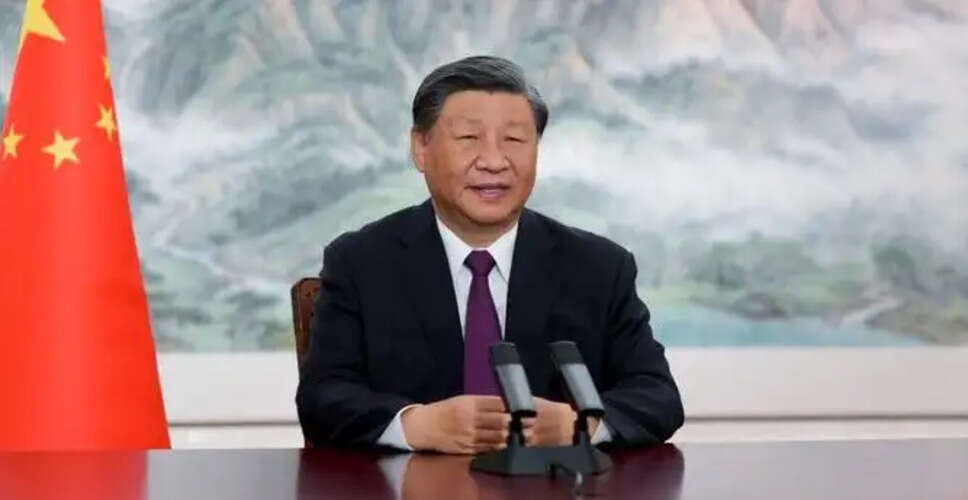

Xi Jinping's Visit to Washington
On Wednesday, Chinese President Xi Jinping departed for Washington to engage in a significant second summit with US President Donald Trump, marking their second meeting in under six months. The agenda will cover a wide array of bilateral and global topics.
Accompanying Xi are his wife, Peng Liyuan, Cai Qi, a member of the Communist Party's Central Committee, and Foreign Minister Wang Yi, as confirmed by the foreign ministry.
During Trump's visit to China in May, he extended an invitation to Xi and Peng to visit the White House.
The Chinese delegation is anticipated to arrive at Joint Base Andrews near Washington, where Trump is expected to personally greet them upon their arrival, as reported by various media outlets.
The Chinese Foreign Ministry has characterized this upcoming meeting as a historically significant milestone.
Key discussion points are likely to include trade tariffs, advancements in technology, military relations, conflicts in the Middle East, the ongoing Russia-Ukraine war, the arms race in space, and US arms sales to Taiwan.
Prior to Xi's visit, Chinese Vice Premier He Lifeng, US Treasury Secretary Scott Bessent, and American Trade Representative Jamieson Greer engaged in extensive discussions regarding economic and trade matters, particularly focusing on AI.
In a recent meeting with He in New York, Bessent mentioned that the US has proposed a new notification system for AI incidents that could pose risks to national security.
The Xi-Trump discussions are particularly relevant following Trump's signing of the 'Lindsey O. Graham Sanctioning Russia and Iran Act of 2026', which allows for imposing tariffs of up to 100% on the top five crude oil and gas importers from Russia, including China and India.
Additionally, Trump announced the establishment of a new AI Force, signaling a potential intensification of the technological rivalry between the two nations.
Last week, the US acknowledged the deployment of a space weapon in Earth's orbit, marking the first time it has confirmed such offensive capabilities.
China has rejected US efforts to impose tariffs on its imports of Russian oil and gas, asserting that normal trade relations should not be disrupted by external influences.
The Chinese Foreign Ministry spokesperson, Guo Jiakun, stated that China opposes unilateral sanctions lacking a basis in international law and without a UN Security Council mandate.
Despite the looming tariff threats, negotiations are ongoing between Washington and Beijing regarding a reciprocal tariff reduction framework for products valued at USD 30 billion from each side, according to China's Commerce Ministry.
The goal of these discussions is to establish a reciprocal tariff reduction agreement as soon as possible, as stated by ministry spokesperson Huang Ling.
Ahead of the summit, Chinese Foreign Minister Wang and US Secretary of State Marco Rubio also conducted a phone call to discuss high-level exchanges between their nations.
The potential for conflict between Iran and the US is expected to be a topic of discussion, especially following the visit of Iranian Foreign Minister Abbas Araghchi to Beijing last week, where he expressed Tehran's desire for a diplomatic resolution to the ongoing tensions.
Trump is likely to urge Xi to persuade Russian President Vladimir Putin to cease hostilities in Ukraine, given the close ties between Beijing and Moscow.
Conversely, Xi is expected to advocate for Trump to reconsider the USD 11 billion arms sales to Taiwan, which represents the largest military package from the US to Taipei.
This arms deal includes HIMARS rocket systems, anti-tank missiles, loitering drones, howitzers, and military software, among other equipment.
China, which views Taiwan as part of its territory, has expressed strong opposition and condemnation of the US arms sales package.