
What to Expect from the Upcoming BRICS Summit in Brazil: Key Issues on the Agenda
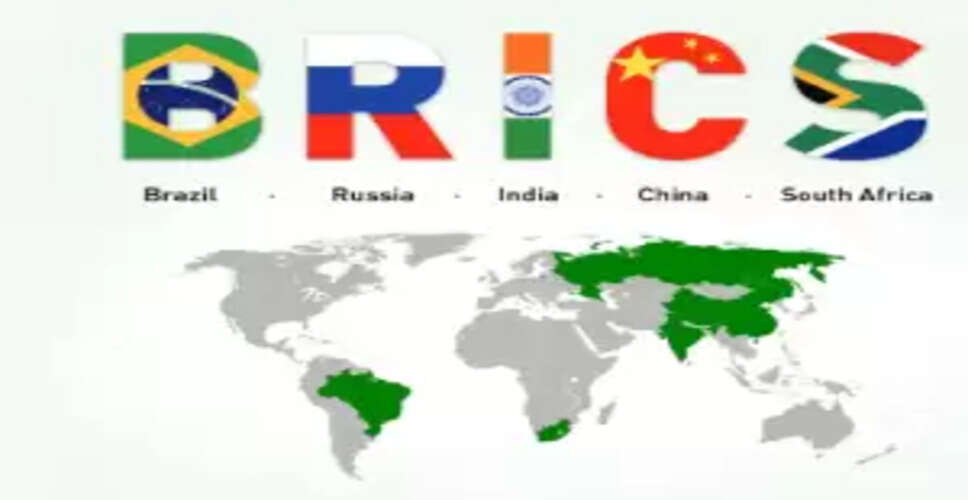
BRICS Summit Set to Address Global Challenges
In Rio de Janeiro, Brazil is preparing to host a summit for the BRICS nations this Sunday and Monday. The agenda will cover critical issues such as the recent Israeli actions against Iran, the humanitarian situation in Gaza, and the trade tariffs imposed by the U.S. under President Trump.
Experts and diplomats have expressed concerns that the recent expansion of BRICS, which saw its membership double last year, may hinder its effectiveness as a significant player in global affairs. The cautious approach to the summit's agenda appears to be a strategy to avoid drawing attention from the Trump administration.
Brazilian President Luiz Inacio Lula da Silva aims to prioritize discussions on artificial intelligence and climate change, although some key leaders will not be present.
Notably, this summit marks the first absence of China's President Xi Jinping since he took office in 2012. Meanwhile, Russian President Vladimir Putin will participate via video link, largely due to an international arrest warrant stemming from the Ukraine conflict.
Language and Controversial Topics Under Discussion
The anticipated restraint at this summit contrasts sharply with last year's meeting in Kazan, Russia, where the Kremlin sought to create alternatives to U.S.-led financial systems to evade Western sanctions.
A source involved in the summit preparations indicated that some BRICS members are advocating for stronger language regarding the Gaza situation and Israel's actions against Iran. This source requested anonymity due to the sensitive nature of the discussions.
According to Oliver Stuenkel, a professor at the Getulio Vargas Foundation, Brazil is keen to keep the summit focused on technical matters.
As a result, observers predict that the final declaration will likely be vague concerning Russia's actions in Ukraine and Middle Eastern conflicts.
The absence of Xi and Putin may facilitate a less contentious statement, as these leaders have historically pushed for a more aggressive anti-Western stance, unlike Brazil and India, which favor a neutral position.
A Brazilian official revealed that the summit is expected to yield three joint statements and a final declaration that will be less influenced by current geopolitical tensions.
Joao Alfredo Nyegray, a professor specializing in international business and geopolitics, noted that while the summit could have showcased an alternative to global instability, it is unlikely to achieve that goal.
The withdrawal of leaders like Egypt's President Abdel Fattah al-Sisi and the uncertainty surrounding the representation of countries such as Iran, Saudi Arabia, and the UAE highlight the challenges BRICS faces in establishing itself as a unified global leader.
Brazil's Cautious Approach Amid U.S. Tariffs
As the host nation, Brazil has identified six key priorities for the summit: global healthcare cooperation, trade and investment, climate change, governance of artificial intelligence, peace and security, and institutional development.
The focus will be on less contentious topics, such as enhancing trade relations among member nations and addressing global health issues, particularly in light of Trump's return to the presidency.
Ana Garcia, a professor at the Federal Rural University of Rio de Janeiro, emphasized that Brazil aims to minimize potential economic damage and avoid attracting the attention of the Trump administration.
While Brazil continues to advocate for reforming Western-led global institutions, it is keen to avoid becoming a target for tariffs, a situation it has managed to evade thus far.
Trump has threatened to impose significant tariffs on the bloc if any actions are perceived as undermining the dollar.
Notable Absences at the Summit
Iranian President Masoud Pezeshkian and Egypt's Abdel-Fattah el-Sissi will also be absent from the summit. These nations joined BRICS in 2024, along with Ethiopia, Indonesia, and the UAE. Saudi Arabia has been invited and is participating in discussions but has yet to confirm its attendance officially.
In addition to the new members, BRICS has ten strategic partner countries, including Belarus, Cuba, and Vietnam, a category established during last year's summit.
This rapid expansion has prompted Brazil to prioritize institutional development to better integrate new members and enhance internal cohesion.
Despite the notable absences, the summit remains significant for those attending, especially given the instability caused by Trump's tariff policies. Bruce Scheidl, a researcher at the University of Sao Paulo's BRICS study group, remarked that the summit presents a crucial opportunity for emerging nations to explore alternatives and diversify their economic partnerships.
For President Lula, the summit offers a much-needed respite from domestic challenges, including declining popularity and tensions with Congress. It also serves as a platform to advance climate negotiations ahead of the upcoming COP 30 climate talks in Belem, Brazil.