
What to Expect from the New Delimitation Bill 2026: Key Changes Ahead

Introduction to the Delimitation Bill 2026
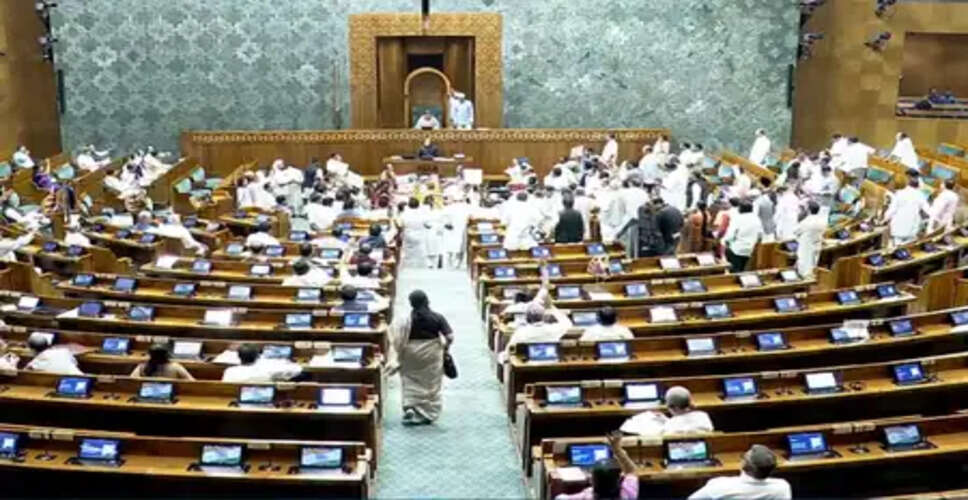
New Delhi: This week, the government plans to introduce 'The Delimitation Bill, 2026' during a special session of Parliament, aiming to replace the existing 2002 legislation. This new bill will empower the Centre to establish a delimitation commission that will allocate seats in the Lok Sabha and state assemblies based on the most recent census data.
The proposed legislation has been shared with Members of Parliament alongside 'The Constitution (One Hundred and Thirty-First Amendment) Bill, 2026' and 'The Union Territories Laws (Amendment Bill), 2026'. This initiative is part of a broader effort to implement the women's reservation law by the upcoming 2029 elections.
Many aspects of the new delimitation bill echo the provisions of the 2002 law, which is set to be repealed.
As outlined in the draft Delimitation Bill, 2026, the Central Government will have the authority to periodically establish a Commission known as the Delimitation Commission.
The Commission will consist of several members, including a Chairperson who is or has been a Supreme Court Judge, appointed by the Central Government, along with the Chief Election Commissioner or a nominated Election Commissioner, and the State Election Commissioner of the relevant state.
The bill also allows the central government to define the Commission's term through notifications.
Furthermore, the central government can extend the Commission's term upon its request if deemed necessary.
The bill specifies that the Election Commission will serve as the Delimitation Commission for delineating constituencies in the Jammu and Kashmir Legislative Assembly, particularly when the region under Pakistani occupation is no longer occupied.
The Commission's responsibility will include readjusting the allocation of seats in the Lok Sabha and state assemblies based on the latest census figures, as well as dividing states and union territories into electoral constituencies for elections.
Additionally, the bill mandates that the Commission will collaborate with ten individuals from each state—five from the House of the People and five from the state Legislative Assembly—to assist in its duties.
In cases where a state has five or fewer representatives in the House of the People, all such members will serve as associate members, reducing the total number of associate members accordingly.
The nomination of these associate members will be conducted by the respective Speakers of the House of the People and the Legislative Assembly, considering the composition of each.
The Commission will have the authority to summon various officials, including the Registrar-General and Census Commissioner, or any expert in geographical information systems, to aid in its tasks.
The bill emphasizes that the Commission will allocate seats in the Lok Sabha and state assemblies to single-member constituencies based on the latest census data, while also considering geographical compactness and existing administrative boundaries.
Every Assembly constituency must fall entirely within a single Parliamentary constituency.
The Commission is required to publish its delimitation proposals, including any dissenting opinions from associate members, in the Gazette of India and the official gazettes of the relevant states, specifying a date for further consideration.
It will also review all objections and suggestions received before the specified date and may hold public sittings in each state to gather input before finalizing the delimitation of constituencies.
The provisions of this Act will take precedence over any other existing laws concerning the Commission's duties and powers.