
What Sparked the Tense Standoff Between Delhi and Shimla Police Over Youth Congress Activists?
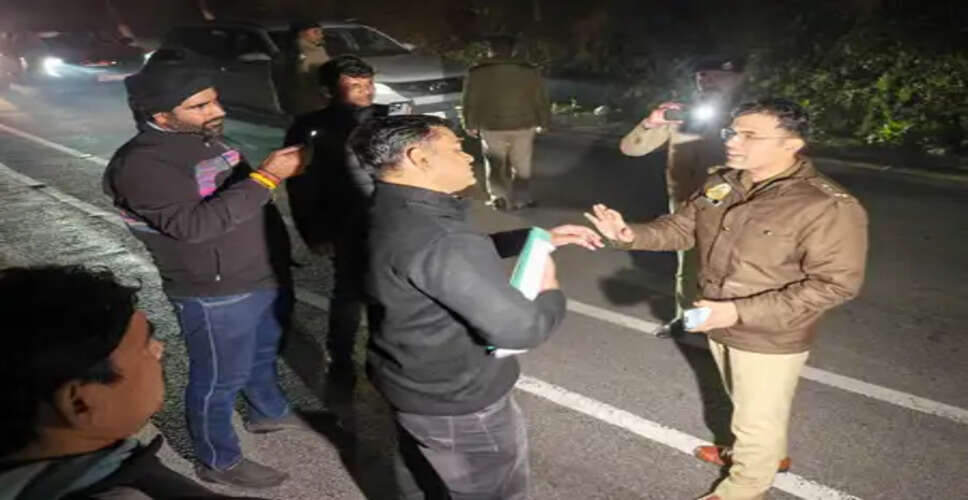
Dramatic Police Standoff in Shimla
Shimla: A tense situation unfolded between the police forces of Delhi and Shimla, culminating in a resolution after a dramatic 24-hour period. The Delhi Police were finally permitted to return to the capital with three Youth Congress activists who had been detained during a protest at the AI Summit.
The standoff lasted for nearly a day, during which the Delhi Police were held for about five hours despite having obtained a transit remand from the Additional Chief Judicial Magistrate (ACJM).
On Wednesday evening, the Himachal Pradesh Police initiated a kidnapping case against the Delhi officers and detained their vehicles at the Shogi border while they were transporting the arrested activists.
The three individuals, arrested in connection with the protest, were taken to the residence of ACJM II Ekansh Kapil around 1:30 AM after medical examinations at the Deendyal Upadhyay Zonal Hospital in Shimla. They were granted transit remand and continued their journey.
However, early Thursday, the Delhi Police faced another detention in Kanlog, Shimla, where they were instructed to return with the accused and a few additional officers, while others were asked to remain and assist with the investigation into the kidnapping allegations.
The Shimla police requested a copy of the digital evidence collected during the activists' arrest in Rohru, which the Delhi Police insisted was their responsibility to safeguard.
Despite the ongoing tensions, the Delhi team pressed on towards Shoghi, only to be stopped again at 4 AM by Shimla police, who barricaded a vehicle containing crucial evidence, including CCTV footage.
The Shimla police sought access to the vehicle's keys, but the Delhi officers refused, asserting that they had provided a seizure memo and shown the necessary documentation to the ACJM.
The standoff concluded when the Delhi Police shared a copy of the seizure memo, although they withheld the digital evidence. Delhi Police ACP Rahul Vikram stated that the Shimla police could not legally seize their vehicle or evidence without a formal request.
After the Delhi team departed, the Shimla police withdrew from the Shogi border. The Delhi Police are now preparing to present the activists before a local magistrate in the capital to seek remand.
On Wednesday, the defense attorney for the accused, Sandeep Dutta, claimed the arrests were unlawful due to procedural violations, opposing the transit remand based on illegal detention and insufficient documentation.
In contrast, Advocate Nand Lal, representing the Delhi Police, confirmed that the transit remand application had been properly submitted and approved.
The conflict began when Delhi Police arrested the three Youth Congress activists linked to a protest on February 20 at the AI Impact Summit from a hotel in the Chirgaon area of Rohru. They were intercepted by local police and brought back to Shimla.
The activists—Saurabh, Siddharth, and Arbaz—were not residents of Himachal Pradesh and were subsequently presented before a local court after being intercepted in Shimla and Solan districts.
When the Delhi Police attempted to transport the activists to New Delhi on Wednesday evening, they were halted again at the Shoghi border, causing significant disruption for local commuters.
A case has been filed against 15-20 unidentified individuals for allegedly abducting the three activists from a resort in Rohru, with claims that they also took the resort's CCTV without providing a receipt.
While the Delhi Police maintained they had the necessary transit remand, the Himachal Police contended that no proper documentation was presented, labeling the operation illegal due to a failure to notify local authorities prior to the arrests.
Both police departments accused each other of obstructing the investigation.
In a video from the Shogi border, Delhi Police officers were heard explaining their actions regarding the arrests made earlier that day. They emphasized the urgency of presenting the accused in court within 24 hours, while Shimla Police insisted on the legality of their abduction case.
Leader of Opposition in the Himachal Pradesh Assembly, Jai Ram Thakur, criticized the situation, stating it was disgraceful to protect individuals from outside the state who allegedly sought to damage India's reputation internationally. He accused Chief Minister Sukhwinder Singh Sukhu of engaging in 'politics of anarchy' to curry favor with Congress leader Rahul Gandhi, asserting that the Himachal Pradesh Police should have cooperated with their Delhi counterparts instead of attempting to detain them.
The protest at Bharat Mandapam on February 20 had prompted a significant security response, with police previously invoking charges such as rioting and promoting enmity under relevant provisions of the Bharatiya Nyaya Sanhita (BNS).