
What Sparked the Opposition's Protest in Parliament Over Electoral Reforms?
Opposition Leaders Rally Against Electoral Reforms
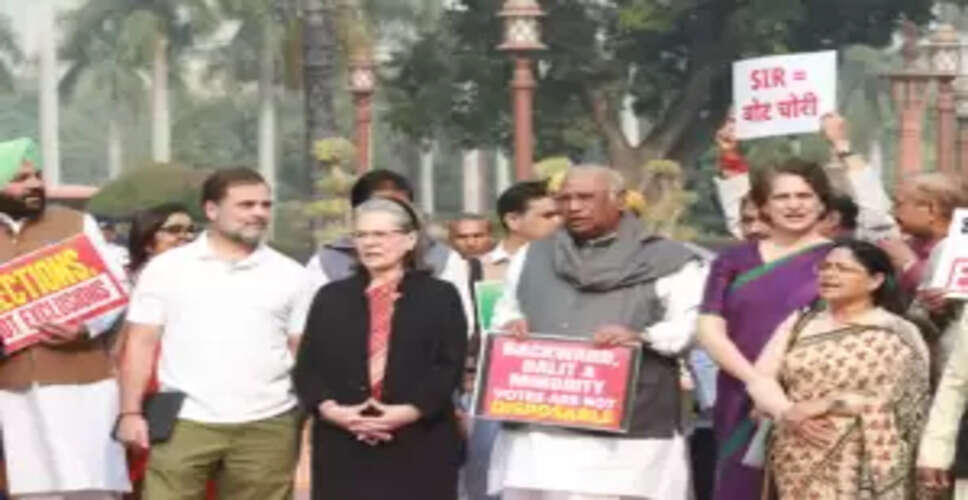
New Delhi: On Tuesday, a group of opposition leaders, including Congress president Mallikarjun Kharge, along with former party heads Sonia Gandhi and Rahul Gandhi, organized a protest within the Parliament House complex. Their aim was to voice concerns regarding the Special Intensive Revision (SIR) of electoral rolls and to push for a discussion on electoral reforms.
The protestors displayed various posters and placards opposing the SIR, with a prominent banner stating 'Stop SIR-Stop Vote Chori', while chanting slogans directed at the government.
Among those participating in the demonstration were Kharge, Sonia Gandhi, Rahul Gandhi, Priyanka Gandhi Vadra, and DMK leaders K Kanhimozhi and T R Baalu, who gathered at Makar Dwar in front of Parliament.
The opening day of the Winter session was marked by multiple adjournments in the Lok Sabha and a walkout by the opposition in the Rajya Sabha, all stemming from demands for a debate on the SIR. The government maintained that while it is open to discussion, it cannot commit to a specific timeline.
Before the session commenced, Prime Minister Narendra Modi criticized the opposition, claiming they have turned Parliament into a 'warm-up arena' for elections and suggested he could offer advice on fostering a more positive political atmosphere.