
What Pakistan's Defence Minister Says About the New Makkah Defence Alliance Amid Houthi Attacks
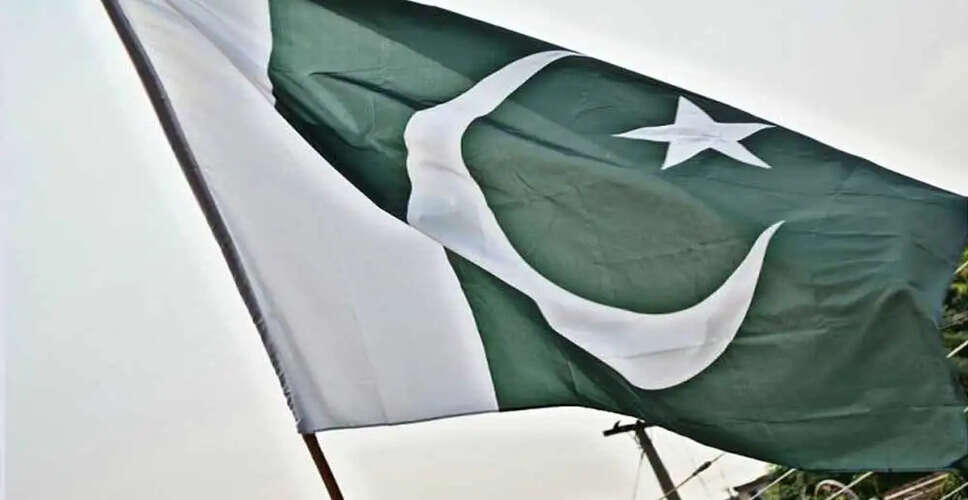

Pakistan's Strong Stance on Makkah Defence Alliance
Islamabad: Pakistan has made it clear that any attack on a member of the newly established Makkah Defence Alliance will be regarded as an attack on all members. This warning comes in light of recent missile and drone strikes by Yemen's Houthi forces targeting Saudi Arabia, which resulted in injuries to at least 73 civilians.
Defence Minister Khawaja Asif emphasized that any unprovoked aggression against a member state or a spillover of the Yemen conflict into Saudi territory would trigger the collective defence measures outlined in the agreement signed by Pakistan, Saudi Arabia, and Turkiye last month.
In an interview with a media channel, Asif stated, "There should be no ambiguity; this is a joint defence agreement." He reaffirmed Pakistan's commitment to Saudi Arabia under this pact.
"We are bound by the terms of this agreement, and we will uphold them if necessary," he asserted.
However, he noted that he was unaware of any recent communications between Pakistan and Saudi Arabia following the Houthi attacks.
Asif clarified that the agreement is defensive and does not permit the three nations to initiate attacks against other countries independently.
"This is not an aggressive pact; if one member state is attacked, all three will respond," he explained.
He expressed hope for de-escalation but warned the Houthis against extending the conflict beyond Yemen's borders.
"If they attempt to export their conflict, the clauses of this agreement to counter aggression will come into play," he reiterated.
Asif referred to the Houthis as "non-state actors" and acknowledged the sympathy for Iran in the Muslim world, including Yemen, due to its ongoing conflict with the United States.
He cautioned against allowing such sentiments to exacerbate existing disputes.
The Makkah alliance, he suggested, could act as a deterrent without necessarily leading to military responses.
"We don’t need to respond to a brick with a stone," he remarked, highlighting the combined military strength of Pakistan, Saudi Arabia, and Turkiye as a deterrent.
He urged that Saudi Arabia should not be entangled in Yemen's internal conflicts and expressed hope for diplomatic solutions to prevent further escalation.
For over a decade, a Saudi-led coalition has supported Yemen's internationally recognized government in its battle against the Houthis.
The Houthis claimed that their recent attacks were in retaliation for numerous Saudi airstrikes on their controlled areas in northwestern Yemen. They also accused Saudi Arabia of bombing a prison in Al Hazm, resulting in at least 11 fatalities.