
What Led to the US-Iran Ceasefire? Unpacking the Latest Developments
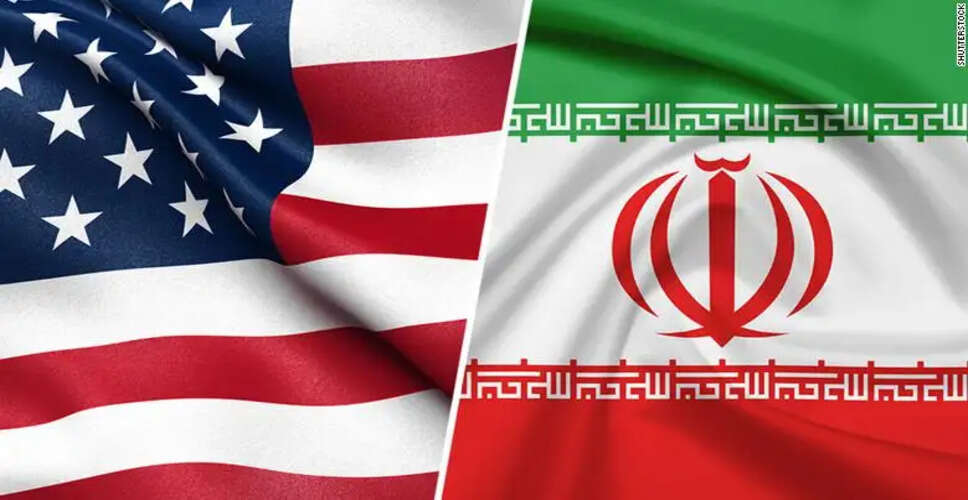
Ceasefire Agreement Between US and Iran
In a significant turn of events, US President Donald Trump decided to ease his aggressive stance towards Iran late Tuesday, as both nations reached a two-week ceasefire agreement that includes the reopening of the vital Strait of Hormuz.
This de-escalation came just hours before the deadline Trump had imposed for Iran to agree to a deal or face military strikes targeting its infrastructure.
Iran's Supreme National Security Council confirmed its acceptance of the ceasefire and announced plans to engage in negotiations with the US in Pakistan starting Friday. However, the exact commencement of the ceasefire remains unclear, as attacks continued in Israel, Iran, and the Gulf region early Wednesday.
Israel expressed support for the US-Iran ceasefire but clarified that it does not extend to the ongoing conflict with Hezbollah in Lebanon, as stated by Prime Minister Benjamin Netanyahu.
Netanyahu's office indicated that Israel backs Trump's decision to halt military actions, contingent upon Iran's immediate reopening of the Strait of Hormuz and cessation of attacks on the US, Israel, and regional allies. Additionally, Israel supports US initiatives aimed at neutralizing Iran's nuclear and missile threats.
The ceasefire also calls for a cessation of hostilities between Israel and Hezbollah, according to the Pakistani Prime Minister, who has been facilitating the discussions.
However, the ceasefire process faced complications as Iran released conflicting versions of a proposed 10-point plan for negotiations. The Farsi version included a reference to 'acceptance of enrichment' for its nuclear program, a phrase that was notably absent in the English translations provided to journalists.
Initially, Trump had described Iran's proposal as a 'workable' plan that could potentially end the conflict initiated by the US and Israel in February. Yet, he later dismissed it as fraudulent without further explanation, emphasizing that dismantling Iran's nuclear program was a primary objective of the war.
Following the ceasefire announcement, pro-government demonstrators in Tehran expressed their anger, chanting slogans against the US and Israel and burning their flags, reflecting the sentiments of hard-liners who had anticipated a major confrontation with the US.
Iran and Oman to Manage Shipping Fees in the Strait
Iranian Foreign Minister Abbas Araghchi stated that passage through the Strait of Hormuz would be under Iranian military oversight. It remains uncertain whether this implies a complete easing of Iran's control over the waterway.
The agreement allows both Iran and Oman to impose fees on vessels passing through the strait, according to a regional official who requested anonymity due to the sensitive nature of the negotiations. The revenue generated is intended for reconstruction efforts.
Iran's demands for concluding the war also include the withdrawal of US troops from the region, lifting of sanctions, and the release of its frozen assets.
Throughout the conflict, Trump has repeatedly extended deadlines just before they expire.
In his latest decision, Trump cited discussions with Pakistan's Prime Minister Shehbaz Sharif and General Asim Munir, the army chief, as influencing his choice to extend the deadline. Sharif had previously urged Trump to allow two more weeks for diplomatic efforts and requested Iran to reopen the Strait.
"Most of the contentious issues have been resolved between the US and Iran, but this two-week period will facilitate finalizing the Agreement," Trump stated.
Concerns persist in Israel regarding the agreement, as a source familiar with the situation indicated that Israel seeks more comprehensive outcomes.
Iran's stockpile of highly enriched uranium remains at enrichment sites, a key concern that both Israel and the US cited as justification for initiating the war.
Trump's Earlier Threats Raised Concerns
Trump had previously warned that failure to reach a deal could result in catastrophic consequences, stating, "A whole civilization will die tonight, never to be brought back again." However, he also hinted at the possibility of a positive resolution, suggesting that "maybe something revolutionarily wonderful can happen."
His alarming threats did not seem to consider the potential civilian casualties, prompting criticism from Democrats in Congress, UN officials, and military law experts who argued that such strikes would breach international law.
Iran's representative at the UN, Amir-Saeid Iravani, condemned the threats as incitement to war crimes and potential genocide, asserting that Iran would respond with immediate and proportional measures if Trump proceeded with military strikes.
The US and Israel have conducted numerous attacks targeting Iran's military capabilities, leadership, and nuclear program, while Iran has retaliated with strikes against Israel and Gulf Arab nations, leading to regional instability and significant economic and political repercussions.
Late Tuesday, Pakistan's Prime Minister reiterated his call for Trump to extend the deadline to facilitate diplomatic progress, also urging Iran to keep the Strait of Hormuz open for two weeks.
China, Iran's largest trading partner, encouraged Tehran to pursue a ceasefire as negotiations continued, according to two officials who spoke on condition of anonymity.
Before the deadline, airstrikes targeted two bridges and a train station, while the US struck military installations on Kharg Island, a crucial site for Iranian oil production.
Although Iran lacks the advanced weaponry and air dominance of the US and Israel, its control over the Strait since the war's onset has disrupted the global economy and increased pressure on Trump to resolve the standoff.
Continued Hostilities Amid Ceasefire
Despite the ceasefire announcement, missile alerts persisted in the UAE, Israel, Saudi Arabia, Bahrain, and Kuwait early Wednesday, indicating ongoing turmoil surrounding the diplomatic efforts. A gas processing facility in Abu Dhabi was reported to be on fire following Iranian attacks.
Israeli military officials confirmed that operations against Iran continued, while Iran maintained its assaults on Israel.
The US military has ceased offensive operations against Iran but remains engaged in defensive actions, according to an official who spoke on condition of anonymity.
Earlier on Tuesday, the Israeli military reported strikes on an Iranian petrochemical facility in Shiraz, marking the second consecutive day of such attacks. They also targeted bridges in various cities used by Iranian forces for transporting weapons and military supplies.
Since the conflict began, over 1,900 fatalities have been reported in Iran, although the government has not updated the casualty figures recently.
In Lebanon, where Israel is engaged in combat with Iran-backed Hezbollah, more than 1,500 individuals have died, and over one million have been displaced. Eleven Israeli soldiers have also lost their lives in the conflict.
In Gulf Arab states and the occupied West Bank, more than two dozen fatalities have been recorded, while 23 deaths have been reported in Israel, along with 13 US service members killed.