
What Led to the Tragic Midair Collision? Insights from the NTSB Hearings
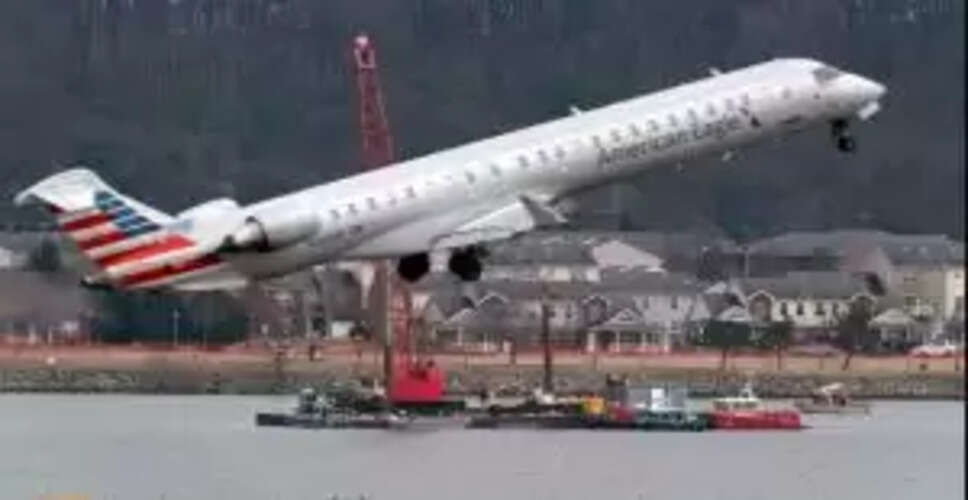
NTSB Investigates Fatal Helicopter and Jet Collision
In Washington, the National Transportation Safety Board (NTSB) is concluding its public hearings regarding the tragic midair collision that occurred in January between an Army helicopter and a commercial aircraft. This marks the third day of testimony focused on the incident that resulted in the loss of all 67 lives on board both planes.
During the previous sessions, several critical factors contributing to the crash were highlighted, prompting NTSB Chairwoman Jennifer Homendy to call on the Federal Aviation Administration (FAA) to improve its oversight, referencing past warnings that were overlooked.
Key issues identified include the Black Hawk helicopter operating at altitudes above the designated limits near Ronald Reagan National Airport, alongside longstanding alerts to FAA officials about the dangers posed by heavy helicopter traffic in the area.
While the board has yet to pinpoint the exact cause of the crash, it is evident that the margin for error was minimal for helicopters navigating the route taken by the Black Hawk during this deadly incident, the worst since November 2001.
This January crash is part of a concerning trend of accidents and near misses this year, raising alarms among officials and the flying public, despite the overall safety statistics of air travel.
Concerns Over Military Helicopter Operations
The hearings have also scrutinized air traffic control practices, revealing that pilots often request visual separation, relying on their own sight, similar to the Black Hawk pilots who used night vision goggles during the incident.
FAA representatives indicated that controllers frequently depend on pilots to maintain visual separation to manage the complex airspace filled with helicopters in Washington, D.C.
Rick Dressler, a representative from medevac operator Metro Aviation, expressed concerns about the challenges of spotting other aircraft in the dark skies around Ronald Reagan National Airport, particularly when military helicopters disable their onboard locator systems.
Dressler, a former Army aviator and retired Air Force officer, voiced the discomfort shared by civilian helicopter pilots regarding the operations of Army and Air Force helicopters in the vicinity.
He emphasized the inexperience of military pilots who may not be familiar with the intricate airspace dynamics of Washington, D.C., noting that they lack the necessary experience to navigate safely.
The Department of Defense directed inquiries about the testimony to the Army, which has not yet responded. However, Army officials at the hearing did engage with Dressler, suggesting he share his concerns at the Pentagon.
The American Airlines flight involved in the incident had arrived from Wichita, Kansas, carrying a group of young figure skaters, their families, and several union steamfitters from the D.C. area.
Final Communications Before the Collision
The hearings also reviewed the last audio exchanges between the Black Hawk crew and the airport control tower. Although the helicopter pilots were in contact with the tower, they did not fully receive the controller's instructions.
In the moments leading up to the crash, the Black Hawk pilots reported seeing the American Airlines jet and assured the tower they would maintain safe separation. However, they missed the crucial instruction to 'pass behind' the jet due to a microphone issue.
Just before impact, an instructor pilot aboard the helicopter instructed the pilot to turn left, but it remains unclear if there was sufficient time to execute the maneuver.
Concerns About Aircraft Distances
Aviation safety expert John Cox remarked that the hearings are progressing positively towards understanding the causes of the crash and preventing future occurrences. His primary concerns revolve around the Black Hawk's altitude exceeding the 61-meter limit for that route and its positioning relative to the Potomac River.
Cox noted that he has frequently flown over the east bank of the Potomac without issues, highlighting the importance of professional pilot training in maintaining safe distances.
Investigators revealed that the flight data recorder indicated the helicopter was actually flying 24 to 30 meters higher than what the pilots believed based on their altimeter readings.