
What Key Decisions Emerged from the Winter Session of Parliament?
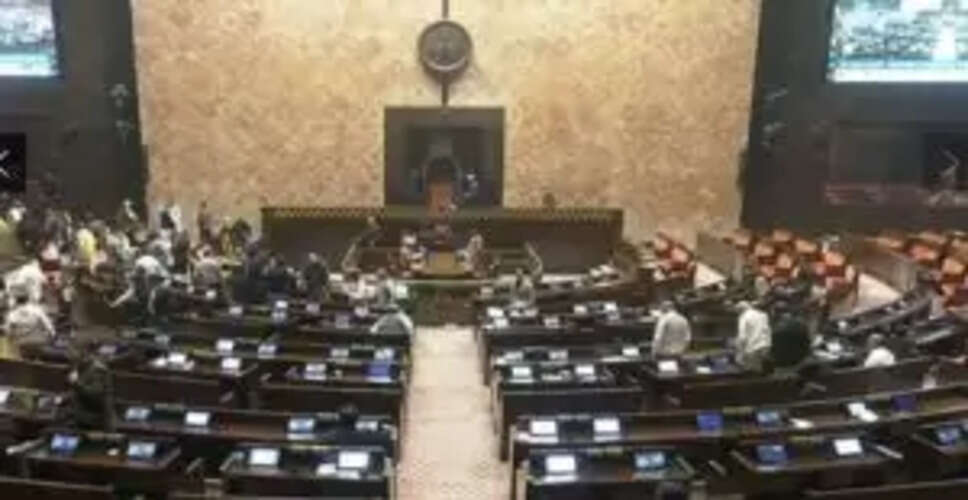
Winter Session Concludes with Significant Legislative Progress
New Delhi: The Winter Session of Parliament wrapped up on Friday, with both the Rajya Sabha and Lok Sabha experiencing a lively yet fruitful period, culminating in several important legislative outcomes.
The 18th Lok Sabha was adjourned sine die as it convened for its final session. Speaker Om Birla announced the closure shortly after the proceedings commenced, marking the end of a session that included 15 sittings.
In his closing remarks, Speaker Birla praised the members for their enthusiastic involvement and collaboration throughout the session. He noted, “All members participated and cooperated in the House, even working late into the night on several occasions,” emphasizing the commitment displayed despite their busy schedules.
He acknowledged that this collaborative spirit facilitated meaningful discussions on crucial legislative issues.
Birla proudly reported that the Lok Sabha achieved a productivity rate of 111%, showcasing effective time management and focused debates.
The session saw the passage of significant legislation, including the Viksit Bharat Guarantee for Rozgar and Ajeevika Mission (Gramin) Bill, 2025 (VB-G RAM G Bill), which replaces the MGNREGA with an enhanced guarantee of 125 days of rural employment, and the Sustainable Harnessing and Advancement of Nuclear Energy for Transforming India (SHANTI) Bill, 2025, aimed at promoting clean energy through private sector involvement.
Other notable discussions included supplementary demands for grants, air pollution issues, and amendments to insurance laws.
Law Minister Arjun Ram Meghwal also introduced motions concerning vital reforms.
Despite some disruptions typical of democratic processes, the overall atmosphere was one of constructive dialogue.
Members from both the ruling and opposition parties contributed to late-night sessions, ensuring that pending matters were addressed.
The Winter Session, which began with high expectations, concluded successfully, with the Lok Sabha demonstrating resilience and productivity.
The next session is anticipated to take place during the Budget Session in early 2026.
The 269th session of the Rajya Sabha, part of the ongoing Winter Session, was also adjourned sine die on Friday by Chairman and Vice-President C.P. Radhakrishnan, marking the end of a notably productive period.
As the Upper House convened, Chairman Radhakrishnan addressed the scheduled business. After laying out the necessary documents, he announced the conclusion of the 269th session and expressed deep appreciation to Prime Minister Narendra Modi, Leader of House J.P. Nadda, Leader of Opposition Mallikarjun Kharge, and all members for their cooperation.
This marked his first session presiding over the Upper House since taking office.
Describing the session as 'very productive,' he highlighted remarkable achievements, including an unprecedented average of over 84 Zero Hour notices per day—a 30.1% increase compared to the previous two sessions—and more than 15 matters raised daily during Zero Hour, reflecting nearly a 50% rise.
The House operated late or skipped lunch breaks on five occasions to complete its business, functioning for approximately 92 hours with an impressive productivity rate of 121%.
Key discussions included a special commemorative debate on the 150th anniversary of 'Vande Mataram,' which lasted over two days and involved 82 members, as well as a three-day discussion on electoral reforms with 57 members participating.
The Rajya Sabha passed eight bills, including the Water (Prevention and Control of Pollution) Amendment Act, 2024, with contributions from 212 members.
A record 59 Private Members' Bills were introduced, highlighting vibrant democratic engagement. Radhakrishnan commended members for their sincere use of parliamentary tools and expressed hope for continued fruitful debates in future sessions, emphasizing their role as guardians of democracy.