
What Happened in the Latest Russia-Ukraine Peace Talks in Istanbul?
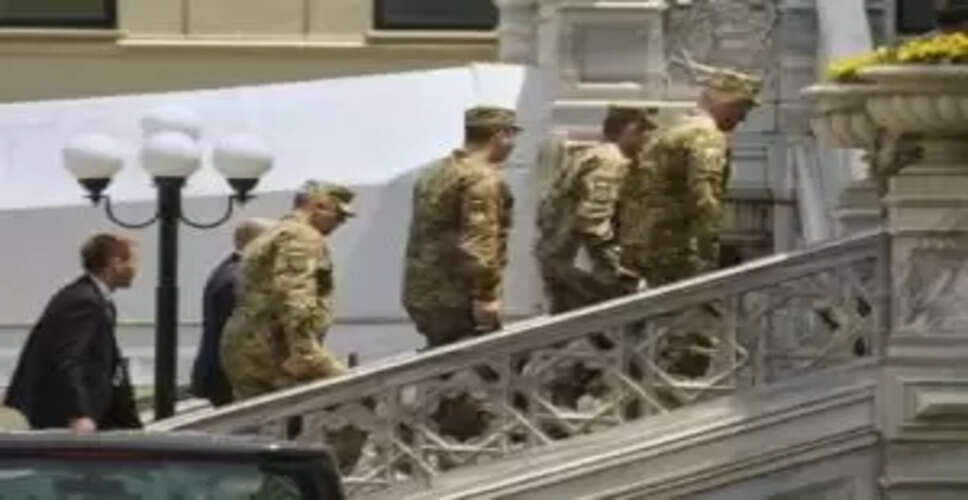
Peace Talks Conclude in Istanbul
Istanbul: The latest round of peace negotiations between Russia and Ukraine wrapped up in Turkey on Monday, lasting just over an hour, as reported by Ukrainian President Volodymyr Zelenskyy and Russian state media.
During a speech in Vilnius, Lithuania, Zelenskyy mentioned that both parties exchanged documents via Turkey and are preparing for a new prisoner release.
Additionally, an agreement was reached to exchange 6,000 bodies of soldiers who lost their lives in the conflict.
Expectations for significant progress in resolving the three-year-long war were low, especially following a series of unexpected attacks over the weekend.
Ukrainian officials reported that a surprise drone assault on Sunday resulted in damage or destruction of over 40 warplanes at various air bases deep within Russia, including remote Arctic, Siberian, and Far East locations, situated more than 7,000 kilometers from Ukraine.
This complex and unprecedented operation, which was executed simultaneously across three time zones, took over a year and a half to plan and was described by Vasyl Maliuk, head of the Ukrainian security service, as a significant blow to Russia's military strength.
Zelenskyy hailed the operation as a 'brilliant maneuver' that would be remembered in history, claiming it severely impacted nearly a third of Moscow's strategic bomber fleet.
In response, Russia launched its largest drone attack—472 drones—against Ukraine since the onset of its full-scale invasion in 2022, aiming to overwhelm Ukrainian air defenses. This was part of an escalating campaign targeting civilian areas in Ukraine.
Limited Expectations for Peace Progress
In Lithuania, Zelenskyy indicated that preparations for a new prisoner exchange were underway following the Istanbul discussions. The previous direct talks on May 16 had also resulted in a prisoner swap, with 1,000 individuals exchanged from each side.
Ukraine provided Russia with an official list of children it claims were forcibly deported and need to be returned, according to Andriy Yermak, head of Zelenskyy's office.
The peace talks were chaired by Turkish Foreign Minister Hakan Fidan at the Ciragan Palace in Istanbul, a historic residence from the Ottoman era.
The discussions aimed to address ceasefire terms, with Fidan noting that 'the entire world is watching the interactions and discussions taking place here.'
Despite US-led efforts to encourage both sides to agree to a ceasefire, these attempts have not yielded results. While Ukraine has shown willingness, the Kremlin has effectively dismissed the proposal.
The Ukrainian delegation was led by Defence Minister Rustem Umerov, while Vladimir Medinsky, an aide to President Vladimir Putin, represented the Kremlin.
Both delegations, consisting of over a dozen members each, were seated at a U-shaped table with Turkish officials positioned between them, with many Ukrainians dressed in military uniforms.
Recent statements from high-ranking officials in both nations suggest that they remain significantly apart on the essential conditions for halting the conflict.
The Institute for the Study of War, a think tank based in Washington, stated that 'Russia is attempting to delay negotiations and prolong the war to gain further advantages on the battlefield.'
Ukraine Celebrates Successful Strikes
Ukraine expressed satisfaction following its successful strikes on distant Russian air bases. The official Russian reaction was subdued, with limited coverage on state-controlled media.
The Russia-1 TV channel dedicated just over a minute to the incident, featuring a brief statement from the Defence Ministry before shifting focus to Russian drone strikes on Ukrainian positions.
Zelenskyy asserted that the Kremlin's setbacks would compel it to engage in negotiations, even as it continues its summer offensive on the battlefield.
'Russia must understand the implications of its losses. That will drive it toward diplomacy,' he stated on Monday in Vilnius during a meeting with leaders from Nordic nations and NATO's eastern flank.
Since the war's beginning, Ukraine has occasionally targeted air bases housing Russia's nuclear-capable strategic bombers, prompting Moscow to relocate most of them to areas further from the front lines.
The drones used in Sunday’s attack were launched from trucks positioned near the bases in five Russian regions, leaving military defenses with little time to respond.
Many Russian military bloggers criticized their military for failing to establish protective measures for the bombers despite prior attacks, although the large size of the aircraft complicates such efforts.
The attacks were described as 'a significant blow to Russian strategic airpower' and revealed considerable weaknesses in Moscow's military capabilities, according to Phillips O'Brien, a strategic studies professor at the University of St. Andrews in Scotland.
Edward Lucas, a senior fellow at the Centre for European Policy Analysis in Washington, labeled it 'the most audacious attack of the war' and 'a military and strategic game-changer.'
'Worn down, beleaguered, and outnumbered, Ukrainians have, at minimal cost, in complete secrecy, and over vast distances, destroyed or damaged dozens, perhaps more, of Russia's strategic bombers,' he remarked.
Ongoing Conflict and International Reactions
Zelenskyy emphasized that 'if the Istanbul meeting yields no results, it clearly indicates that strong new sanctions are urgently needed' against Russia.
Global concerns regarding the war's ramifications, coupled with trade tensions, led to a decline in Asian share prices on Monday, while oil prices surged.
Intense fighting has persisted along the approximately 1,000-kilometer front line, with both sides conducting deep strikes into each other's territories.
Russian forces shelled Ukraine's southern Kherson region, resulting in three fatalities and injuring 19 others, including two children, as reported by regional officials on Monday.
Additionally, missile strikes and shelling around the southern city of Zaporizhzhia led to five deaths and nine injuries, according to officials.
Russia's Defence Ministry stated that its air defenses intercepted 162 Ukrainian drones across eight Russian regions overnight, as well as over the Crimean Peninsula, which Russia annexed in 2014.
Meanwhile, the Ukrainian air force reported damaging 52 out of 80 drones launched by Russia overnight.