
What Happened at Jantar Mantar? Protesters Face Heavy Security in Delhi
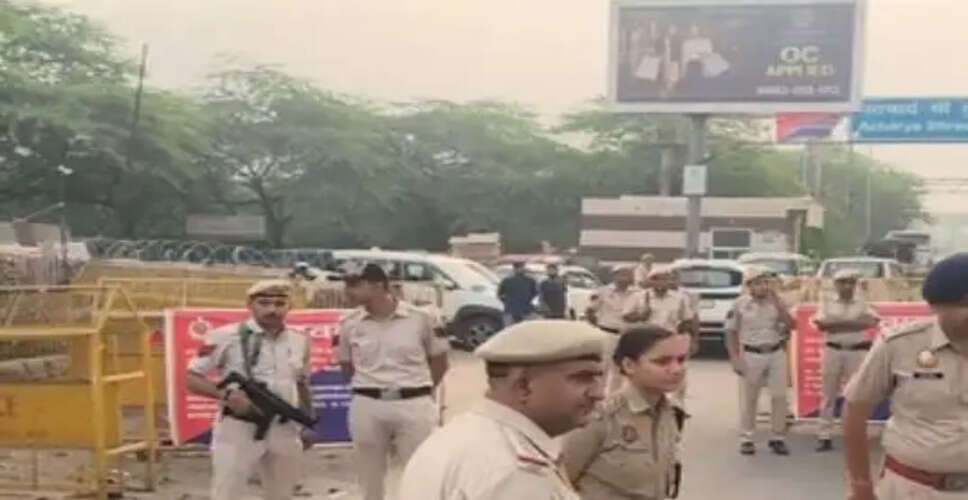

Protest Disrupted by Heavy Security Measures
New Delhi: The planned gathering at Jantar Mantar faced significant obstacles on Saturday.
A heavy presence of security forces, including khaki and blue-green uniforms, along with barricades and misaligned buses, transformed the area into a fortified zone, scattering demonstrators throughout the city. Small groups attempted to chant slogans and regroup but were quickly detained.
By 5 PM, authorities had detained approximately 3,000 individuals.
The Cockroach Janta Party (CJP) organized the protest to demand the resignation of Chief Election Commissioner Gyanesh Kumar, accusing him of orchestrating voter-list manipulation during the Special Intensive Revision (SIR) of the electoral roll and other irregularities related to voter registration.
However, the heavy security measures prevented protesters from reaching their intended location, leading to a disjointed series of gatherings across various parts of Delhi.
This protest is part of a wave of demonstrations that have taken place in New Delhi recently, including one led by Congress activists and Rahul Gandhi.
Another protest by the INDIA opposition coalition is set for Monday.
A previous CJP protest in July, which addressed competitive exam paper leaks, resulted in the resignation of then Education Minister Dharmendra Pradhan after demonstrators camped at Jantar Mantar for several days. In response to this, the government heightened security measures on Saturday, restricting metro services, halting incoming trains, and blocking mobile internet access.
Protesters moved from Connaught Place to various locations, including Gurdwara Bangla Sahib, Dilli Haat, and Minto Bridge, searching for places to gather and connect with others heading to Jantar Mantar.
At multiple locations, slogans were shouted before police intervened, dispersing and detaining protesters. Unlike the previous protests in July, there were no reports of violence this time.
For those who participated in the July protests, the contrast was evident. Previously, they had gathered at Jantar Mantar before marching, but this time, even determining a meeting point proved challenging.
One protester noted the difficulty in coordinating, stating that most updates were communicated through social media, leading to confusion about when and where to gather. Despite the challenges, the protester expressed determination to continue fighting for democracy.
By the afternoon, the planned assembly at Jantar Mantar had devolved into smaller protests scattered across the city. Streets and intersections became temporary gathering spots as demonstrators sought to maintain momentum despite ongoing dispersals and detentions.
The protest was initially scheduled for 10:30 AM, but security forces blocked access to Jantar Mantar, where prohibitory orders were in effect. Some protesters were detained near the venue, while others dispersed into nearby areas to continue their demonstration.
Locations such as Connaught Place, Hanuman Mandir, Sansad Marg, and the vicinity of Shivaji Stadium metro station saw protesters gathering or attempting to mobilize. Many were detained near Regal Cinema in Connaught Place, while others were turned away or chased as they tried to regroup.
The pattern of gathering at new locations, chanting slogans, and attempting to attract others continued throughout the morning, with protesters relying on social media to coordinate their movements.
The detention of CJP leaders Abhijit Dipke, Saurav Das, and Ashutosh Ranka at the airport upon their arrival added to the confusion, leaving other organizers to manage the protest under rapidly changing conditions.
Ajinkya Shinde, appointed as the national organization in-charge of the CJP following the leaders' detention, urged citizens to continue protesting wherever they were stopped.
"We call upon every citizen to march towards Jantar Mantar. If your movement is blocked by barricades or police personnel anywhere on the streets, do not stop—start your protest right where you are stopped. The nation’s movement to safeguard democracy and demand the resignation of CEC Gyanesh Kumar will go on," Shinde stated.
At Gurdwara Bangla Sahib, the situation became chaotic as some protesters sought refuge inside, while those who exited faced the risk of detention nearby. Elsewhere, demonstrators attempted to breach barricades as police pursued groups moving between locations.
The All India Students' Association (AISA) announced a change in their destination to Dilli Haat after several protesters were detained near Jantar Mantar. Its president, Neha Bora, marched towards the new location, encouraging others to join her.
"Dilli Haat becomes Jantar Mantar today! See you there!" Bora posted on social media.
This call provided an alternative meeting point for those unable to reach Jantar Mantar, but the effort to regroup was also disrupted, with Bora reportedly detained.
In another attempt to find a new venue, Rajya Sabha MP A A Rahim, along with detained activists from the Students' Federation of India (SFI), announced "Jantar Mantar 2.0" at Nangloi Stadium.
Delhi Police had anticipated around 7,000 protesters to arrive in the capital on Saturday. Senior officers instructed personnel to exercise maximum restraint and manage the situation professionally.
Extensive preparations were made, with approximately 25,000 police and paramilitary personnel deployed throughout the city. Entry and exit restrictions were enforced at 45 metro stations, and surveillance was heightened at Delhi's borders, railway stations, bus terminals, and other sensitive areas ahead of the planned demonstration.