
What Does the New Islamabad MoU Mean for India's Foreign Policy?
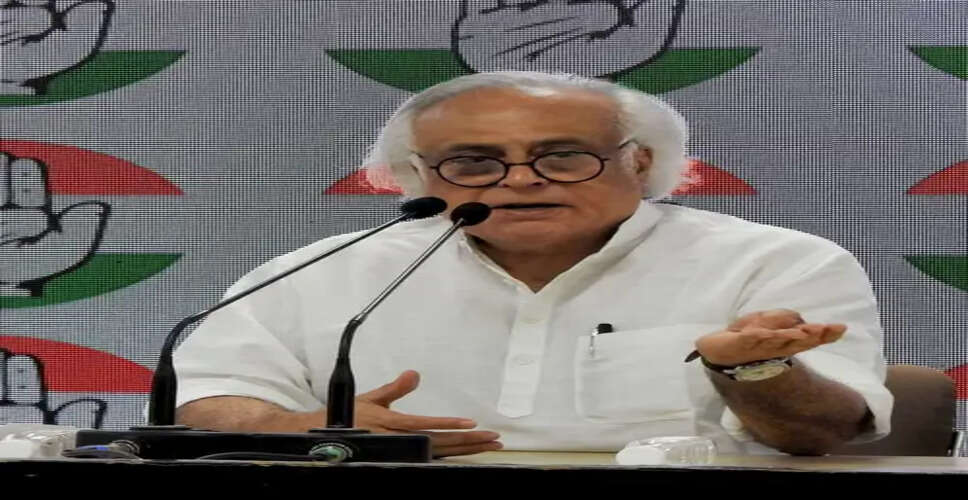

Congress Criticizes Government Over Islamabad MoU
New Delhi: The Congress party expressed strong disapproval of the government following the signing of a peace agreement between the US and Iran, referred to as the 'Islamabad MoU'. They argue that this development highlights Pakistan's enhanced regional influence and poses a significant challenge to Prime Minister Narendra Modi's foreign policy approach.
Jairam Ramesh, the Congress general secretary, pointed out that the 14-point memorandum has been officially made public.
He emphasized that the designation of the agreement as the Islamabad MoU signifies Pakistan's regained prominence on the global stage, a stark contrast to its previous isolation after the Mumbai terror attacks in 2008, which was largely attributed to the actions of former Prime Minister Dr. Manmohan Singh.
Ramesh stated that this situation represents a considerable setback for Modi's foreign policy, as Pakistan is now more integrated into the geopolitical dynamics of West Asia, which could have serious implications for India.
He noted that if the MoU is implemented as intended, it could signify a substantial diplomatic achievement, although it also risks devolving into a 'Memorandum of Misunderstanding'. He indicated that the next two months will be critical in determining its success.
Ramesh remarked that the MoU brings unexpected advantages for Iran, showcasing its resilience amid ongoing tensions.
He mentioned that Gulf Cooperation Council (GCC) nations, which have faced Iran's counteractions, have cautiously welcomed the agreement but may reconsider their foreign relations moving forward.
The Congress leader also pointed out that this agreement represents a setback for Israeli Prime Minister Benjamin Netanyahu, who remains isolated internationally, even facing criticism from former President Trump.
Ramesh criticized Modi's unwavering support for Netanyahu's policies in the region, suggesting that this allegiance is detrimental to India's interests.
He argued that the MoU is a significant blow to the US, which, alongside Israel, initiated hostilities with Iran earlier this year with ambitious objectives that have not materialized.
He further claimed that the limitations of military power have been highlighted once again, criticizing Modi's continued alignment with Trump, which he described as shameful and potentially harmful to national interests.
These comments followed President Trump's signing of an agreement with Iran aimed at reducing its stockpile of enriched uranium and lifting US sanctions, allowing Iran to resume oil sales.
In a statement on X, Pakistan's Prime Minister Shehbaz Sharif announced the electronic signing of the historic Islamabad MoU, emphasizing the commitment of both nations to resolve their conflicts diplomatically.
Sharif noted that the agreement would take effect immediately, with Iran reopening the Strait of Hormuz and the US lifting its naval blockade.