
What Does the New Ceasefire Mean for Iran, the US, and Israel?
Ceasefire Agreement Amid Tensions
Dubai: A last-minute agreement has been reached for a two-week ceasefire involving Iran, the United States, and Israel, allowing President Donald Trump to step back from threats of a military strike that could devastate Iran.
However, uncertainty looms over whether the ceasefire has commenced, its specific terms, and its potential to foster lasting peace, as the involved parties have presented conflicting interpretations of the agreement.
Shortly after the ceasefire was announced, reports emerged from the United Arab Emirates of an incoming missile attack from Iran, while Kuwait's military responded to drone incursions. Iran also reported an assault on one of its oil refineries.
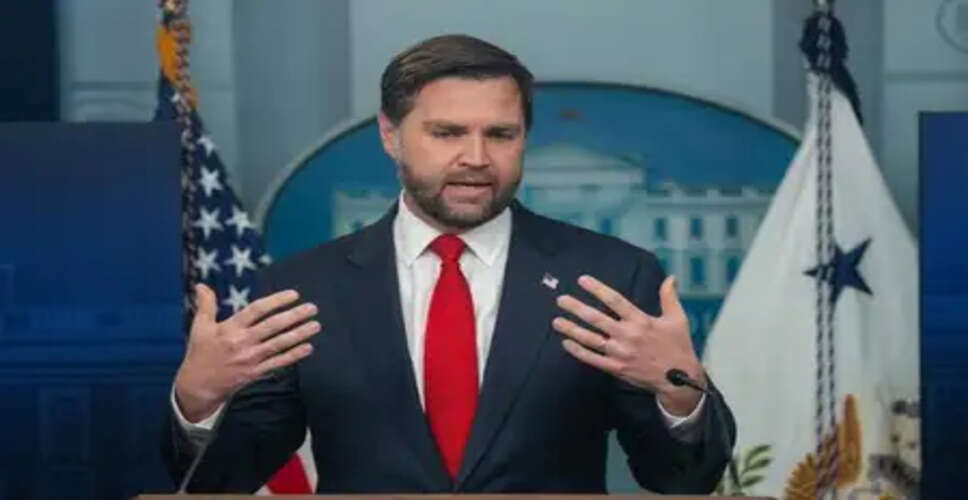
US Vice President JD Vance characterized the ceasefire as a tenuous peace.
Despite indications that negotiations might commence soon, many details surrounding the agreement remain ambiguous.
Iran has indicated that the ceasefire would allow it to formalize its practice of charging vessels passing through the Strait of Hormuz, but the specifics of this arrangement are unclear, including whether other nations would accept these terms.
Pakistan, which played a role in mediating the ceasefire, stated that hostilities in Lebanon would be paused, where Israel has been engaged in ground operations against Hezbollah. However, Israel has denied any such agreement.
Public Reaction and Ceasefire Terms
In Tehran, pro-government crowds expressed their anger by chanting slogans against the US and Israel, burning flags in protest of the ceasefire announcement. This reflects the sentiments of hard-liners who have been preparing for a significant confrontation with the US, especially after Trump's warning that a civilization could be lost if a deal was not reached.
Conflicting Reports on Ceasefire Conditions
Initially, Trump mentioned that Iran had proposed a viable 10-point plan to conclude the conflict initiated by the US and Israel on February 28. However, a Farsi version of the plan suggested that Iran would continue its uranium enrichment activities, prompting Trump to label it as fraudulent without further details.
Trump also hinted that American naval forces would remain in the Strait of Hormuz, a critical route for global oil and gas trade, raising concerns about potential future conflicts.
Iran's conditions for ending hostilities include the withdrawal of US troops from the region, lifting sanctions, and the release of its frozen assets—demands likely unacceptable to Trump and Western allies.
Pakistan announced that discussions for a permanent resolution could take place in Islamabad as early as Friday.
While Israel supports the US-led ceasefire, Prime Minister Benjamin Netanyahu clarified that it does not extend to the conflict with Hezbollah in Lebanon, where military operations are ongoing.
Economic Implications and Control Over the Strait
Iran and Oman to Charge Shipping Fees
Despite its military limitations compared to the US and Israel, Iran's control over the Strait of Hormuz has provided it with a strategic advantage since the onset of the conflict, impacting the global economy and increasing pressure on Trump to resolve the standoff.
The ceasefire may formalize Iran's control over the strait and introduce a new revenue stream, allowing both Iran and Oman to impose fees on ships passing through, according to a regional official involved in the negotiations. The funds are expected to be used for reconstruction efforts.
This arrangement could disrupt decades of international norms regarding free passage through the strait, likely facing opposition from Gulf Arab states that also seek to recover from Iranian attacks on their oil infrastructure.
Trump remarked on social media that significant financial gains could be realized, enabling Iran to initiate reconstruction.
Iranian Foreign Minister Abbas Araghchi stated that transit through the strait would be under Iranian military oversight, further complicating the situation regarding shipping rights.
Uncertain Future for Iran's Nuclear Program
Despite the US and Israel's military actions against Iran, the threats posed by its nuclear program and missile capabilities remain unresolved. Both nations have cited these threats as justifications for their military engagement.
Iran continues to maintain the capability to resume its nuclear program, which it claims is for peaceful purposes, although it has enriched uranium to levels close to weapons-grade.
The stockpile of highly enriched uranium is believed to be concealed, and Tehran has presented differing narratives regarding its nuclear program in the ceasefire documents, with the Farsi version acknowledging uranium enrichment while the English version omitted this detail.
A senior Israeli official indicated that the US had coordinated the ceasefire with Israel beforehand, attributing the agreement to the significant damage inflicted on Iran's military infrastructure.
The official, speaking anonymously, noted that the US is committed to advocating for the removal of nuclear materials and the dismantling of Iran's missile program.
Continued Hostilities Following Ceasefire Announcement
Airstrikes and Ongoing Violence
Following the ceasefire announcement, missile alerts were triggered across the UAE, Israel, Saudi Arabia, Bahrain, and Kuwait. Reports indicated that a gas processing facility in Abu Dhabi was set ablaze due to incoming Iranian fire.
Although the fire subsided temporarily, it reignited later.
The UAE confirmed that its air defenses intercepted an Iranian missile barrage, while Kuwait's military reported responding to a series of drone attacks.
Additionally, Iranian state media reported that an oil refinery on Lavan Island was attacked, with firefighters working to control the blaze, though the source of the attack remains unspecified.
As of late March, over 1,900 fatalities have been reported in Iran, with the government not updating the casualty figures recently.
In Lebanon, where Israel is engaged with Hezbollah, more than 1,500 individuals have died, and 1 million people have been displaced. Eleven Israeli soldiers have also lost their lives.
In the Gulf Arab states and the occupied West Bank, over two dozen fatalities have been reported, alongside 23 deaths in Israel and 13 in the US.