
What Did Xi Jinping and Modi Discuss at the BRICS Summit? Key Takeaways Revealed!

Significant Developments from the BRICS Summit
Beijing: During a recent meeting at the BRICS summit, President Xi Jinping and Prime Minister Narendra Modi established a crucial agreement emphasizing that China and India should collaborate as partners, according to a senior Chinese diplomat.
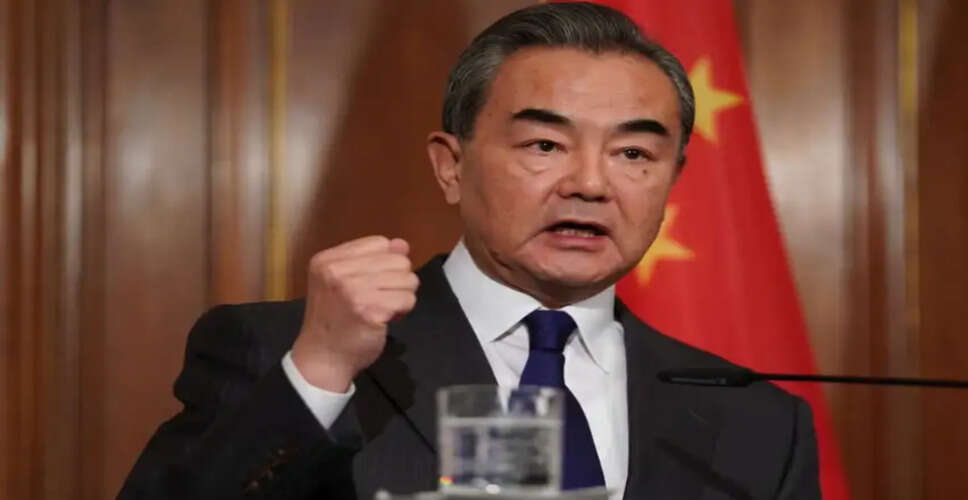
Foreign Minister Wang Yi summarized Xi's two-day visit to New Delhi on September 12-13 for the 18th BRICS Summit, highlighting the leaders' open and thorough discussions on strategic and long-term issues affecting their bilateral relations.
Wang noted that the primary consensus reached was the commitment to partnership between the two nations.
Xi expressed that both countries could leverage each other's strengths, support one another, and work towards mutual development, as stated by Wang, who is also a member of the Political Bureau of the Communist Party of China.
The two leaders agreed to work together to maintain peace and stability in border regions, while also supporting each other during their respective BRICS chairmanships.
Wang emphasized that the meeting between Modi and Xi garnered significant international attention.
Under the strategic direction of both leaders, relations between China and India have gradually improved, moving from a low point to a renewed phase of cooperation, as detailed in a statement from the Chinese Foreign Ministry.
The scope of collaboration between the two nations continues to grow, with trade reaching unprecedented levels and cultural exchanges becoming increasingly vibrant.
Wang remarked that the enhancement of China-India relations is welcomed not only by the 2.8 billion citizens of both countries but also serves as a vital foundation for strengthening cooperation within the Global South.
He reiterated the commitment from both sides to cultivate political trust, manage differences effectively, and uphold peace along their borders.
Wang highlighted that the developmental paths of China and India present shared opportunities, and their cooperation has significant implications beyond bilateral relations, impacting the Global South and the world at large.
He acknowledged that the normalization of relations has been a challenging process and should be valued.
Wang expressed hope that India would collaborate with China to turn the leaders' shared vision into actionable steps, reinforcing the idea that both nations should act as partners rather than rivals, ensuring steady progress in their relationship.
He also stressed the importance of viewing border issues within the broader context of bilateral relations, advocating for dialogue and cooperation as the prevailing approach.
In his discussions with Modi, Xi urged both nations to utilize political wisdom rooted in mutual respect to navigate challenges, advocating for simultaneous advancements in bilateral relations and border issues.
Wang reported that Modi responded positively, affirming India's strategic and long-term perspective on its relationship with China.
Modi indicated that India is prepared to be a partner to China, viewing each other's growth as an opportunity rather than a threat, as per Wang's statements.
India's stance on its relationship with China is independent of external influences, and it will not permit any entities to engage in anti-China activities on its soil, Wang quoted Modi.
India remains dedicated to fostering high-level exchanges with China, enhancing strategic communication, and expanding people-to-people connections based on mutual respect and trust to further advance bilateral relations.
The two leaders agreed to prioritize development as a cornerstone of shared interests, deepen friendly relations, and enhance cooperation in cultural exchanges and direct air connectivity to foster greater understanding between their peoples.
They also committed to supporting each other's BRICS leadership, strengthening coordination in multilateral platforms such as the United Nations, the Shanghai Cooperation Organization, and the G20, and promoting a multipolar world order to act as a stabilizing force amid global uncertainties.
Chinese Foreign Ministry spokesman Guo Jiakun elaborated on Wang's remarks, stating that with the leaders having set a course for future relations, China will collaborate with India to implement their shared understandings.
Guo added that China aims to expand cooperation, deepen cultural exchanges, and enhance collaboration in multilateral settings to contribute to regional and global peace and prosperity.