
What Did MK Stalin Tell Rahul Gandhi About Tamil Nadu's Future?
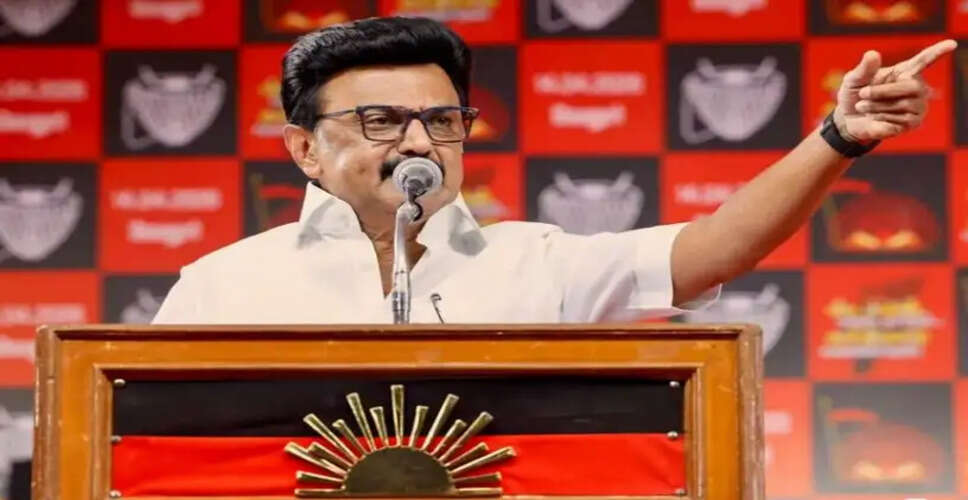

Stalin's Strong Message to Rahul Gandhi
Chennai: On Sunday, President M K Stalin conveyed to prominent Congress figure Rahul Gandhi that the decisions made by the Dravidian party are primarily focused on the welfare of Tamil Nadu and its residents, asserting that history will remember them as Kattabommans rather than Ettappans.
Veerapandiya Kattabomman, a courageous Tamil king, fiercely resisted British colonial rule and was executed after his capture, while the term Ettappan is used colloquially in Tamil to denote a traitor.
Stalin's remarks to Rahul came just before a scheduled meeting with a Congress delegation, which included AICC president Mallikarjuna Kharge, Sonia Gandhi, and the Leader of Opposition in the Lok Sabha, to urge the DMK leader to retract his party's support for the Centre's Delimitation Bill.
In a post on social media, Stalin emphasized that his party will steadfastly defend the interests of Tamil Nadu and uphold the rights of states.
Addressing Rahul as 'brother,' Stalin expressed gratitude for recognizing the Dravidian party's significant role in protecting the Constitution and federal rights.
The former Chief Minister reiterated that every decision made by his party prioritizes the welfare of Tamil Nadu and its people.
He stated, 'We will not waver from this path, and I am confident that history will regard us as Kattabommans and not Ettappans,' referencing the 18th-century leader celebrated in Tamil Nadu for his resistance against British rule, contrasting with Ettappan, a term associated with betrayal in Tamil culture.
Earlier, Rahul Gandhi announced on X that he, along with senior leaders from the INDIA bloc, would visit Chennai to formally request Stalin and the DMK's opposition to the delimitation Constitutional amendment Bills.
Rahul stated, 'Senior leaders of the INDIA bloc and I are heading to Chennai to meet Thiru @mkstalin and ask him and the DMK to oppose the Delimitation Constitutional amendment Bills. An increase to 850 seats will undermine democracy in India, allowing the BJP-RSS to manipulate the electoral landscape to their benefit.'
'Brother Stalin has consistently stood firm against anti-Tamil forces. For the sake of national interest, Tamil Nadu's welfare, and to uphold the Constitution, we must collectively oppose this Bill,' he added.
In August, Rahul Gandhi urged the people of Tamil Nadu and political parties to vehemently resist the delimitation proposal, labeling it a conspiracy by the BJP-RSS against the state and its citizens. He had previously referred to supporters of delimitation as 21st-century Ettappans.
The Sunday meeting followed the Dravidian party's announcement of support for the Centre's Delimitation Bill, amidst ongoing tensions between former allies over Congress's decision to exit the alliance to support the ruling TVK after the April elections and join its coalition government.
Stalin had stated on Saturday that the DMK's backing of the Delimitation Bill was due to its inclusion of the party's two key demands, describing it as a victory for the party's efforts and a win for all southern states.
The DMK firmly opposes any reduction in its 7.18 percent share of Lok Sabha seats and insists on maintaining the current distribution of Parliamentary representation among states based on the 1971 Census.
Previously, the DMK had vehemently opposed an earlier delimitation proposal, with Stalin, then Chief Minister, famously burning a copy of the Bill while dressed in black.