
What Did EAM Jaishankar Say About India's Relations with Neighbors?
India's Stance on Neighbor Relations
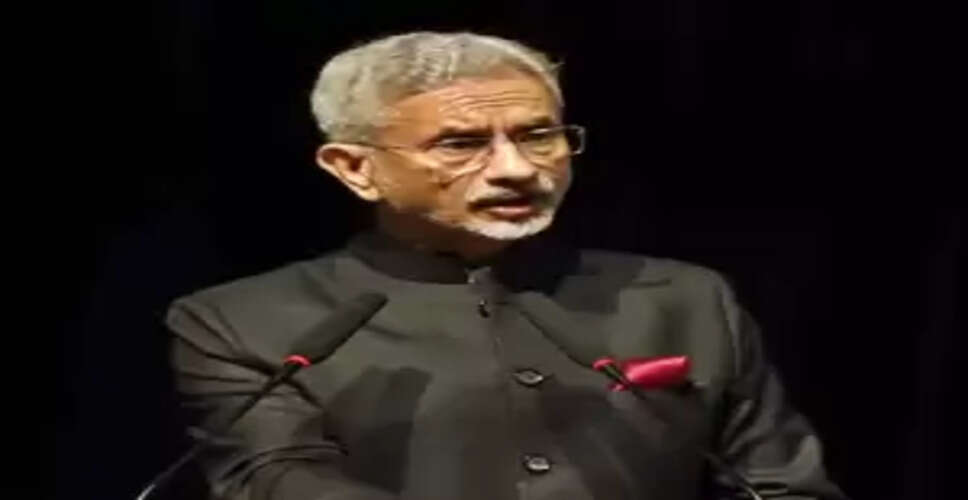
Chennai: On Friday, External Affairs Minister S. Jaishankar emphasized that India has the right to protect its citizens from threats posed by 'bad neighbors.' He stated that a neighboring nation cannot demand water sharing while simultaneously engaging in terrorism against India.
Jaishankar highlighted that with 'good neighbors,' India is willing to invest and assist, citing examples such as vaccine distribution during the COVID-19 pandemic, food and fuel support amid the Ukraine crisis, and a substantial $4 billion aid to Sri Lanka during its economic turmoil.
While not directly naming Pakistan, he reiterated India's right to defend itself against terrorism, asserting that the growth of India benefits the entire region. He stated, "You cannot ask us to share our water and simultaneously promote terrorism in our nation."
The minister also stressed the importance of clear communication with other countries to prevent misunderstandings about India's intentions.
He remarked that many nations take pride in their cultural heritage, and India should do the same, noting that very few ancient civilizations have evolved into significant modern states, with India being one of them.
Jaishankar pointed out that India's choice of a democratic political framework has contributed to the global understanding of democracy. He emphasized the importance of partnerships with Western nations in shaping the world.
Recently, he represented India at the funeral of former Bangladeshi Prime Minister Khaleda Zia, showcasing India's diplomatic engagement.
He also launched the 'IITM Global Research Foundation' at the Indian Institute of Technology Madras, aimed at establishing the institute as a global hub for education and innovation.
Jaishankar concluded by discussing the need for countries to grow domestically while engaging internationally, and how India aims to maximize its impact with limited resources in its foreign policy.