
What Changes Are Coming to Digital Payments? Parliamentary Panel Pushes for New Merchant Discount Rate
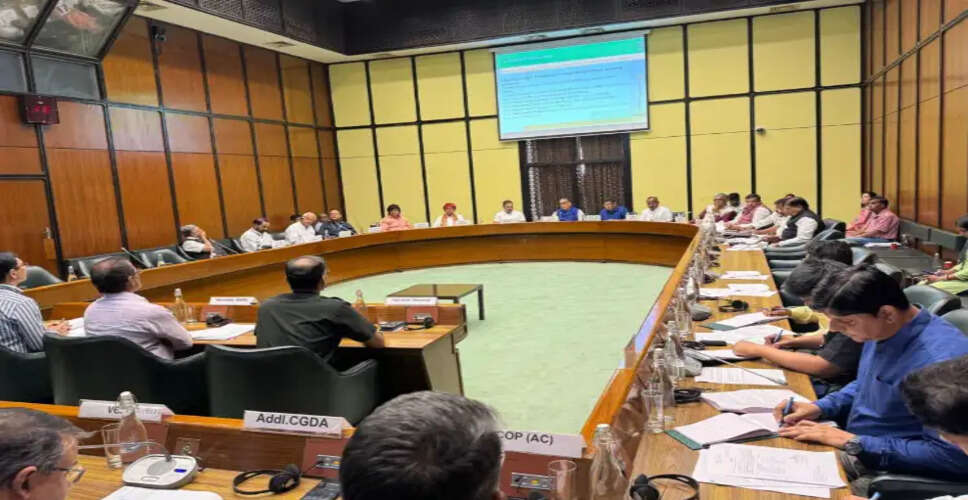

Parliamentary Panel's Recommendations on Digital Payments
New Delhi: A recent report from a Parliamentary Panel has urged for the swift implementation of a structured Merchant Discount Rate (MDR) for high-value transactions. This move aims to enhance the financial viability of the payments sector and alleviate pressure on government finances.
The Standing Committee on Finance presented its findings on Wednesday, recommending that the Department of Financial Services, part of the Ministry of Finance, should closely monitor the allocation of funds under the Pradhan Mantri Vaya Vandana Yojana (PMVVY) and the Atal Pension Yojana (APY). This is crucial for assessing the long-term sustainability of defined-benefit and incentive programs.
The Committee raised concerns regarding the incentive program designed to promote RuPay Debit Cards and low-value BHIM-UPI transactions. They noted that the proposed Rs 2,000 crore budget to cover zero-MDR losses unnecessarily inflates the Department's overall financial requests, addressing only about 10% of the actual operational expenses.
To address this, the Committee suggested that the Department should investigate a self-sustaining, tiered revenue model to maintain financial health without continually burdening the exchequer.
The report highlighted that, following previous recommendations for a viable revenue model, legislative provisions for a tiered MDR structure have been introduced.
However, the Committee, led by senior BJP figure Bhartruhari Mahtab, expressed alarm over the significant gap between the Rs 2,000 crore allocation and the industry's projected operational costs of Rs 20,700 crore.
While the legal framework now allows for a calibrated MDR on high-value transactions, any delays in implementing this system could leave payment service providers reliant on insufficient subsidies, jeopardizing essential investments in cybersecurity, fraud prevention, and network infrastructure.
The Committee reiterated its call for the prompt establishment of a self-sustaining, tiered revenue system for high-value merchant transactions, while also protecting small merchants and peer-to-peer transfers. This transition is vital for evolving the digital payments landscape into a self-sufficient model.
Earlier this week, Parliament approved a Bill to amend the Payment and Settlement Systems Act of 2007, which empowers the government to allow banks and service providers to impose charges on payments made through the Unified Payments Interface (UPI) and other designated electronic payment methods.
The amendments aim to eliminate the current legal restrictions that prevent banks and payment service providers from charging MDR on specified electronic payment methods.
The government's strategy is to introduce a nominal fee for digital payment services aimed at consumers and small enterprises, while also ensuring a sustainable revenue framework for banks, payment service providers (PSPs), and firms that support the digital payments ecosystem.
The Bill proposes modifications to Section 10A of the Payment and Settlement Systems Act, 2007, which currently prohibits banks and system providers from levying charges on electronic payments, and Section 269SU of the Income Tax Act, which mandates large businesses with a turnover exceeding Rs 50 crore to accept payments through certain electronic methods, including RuPay debit cards and BHIM-UPI QR codes.