
West Bengal's Voter Roll Shake-Up: What Does It Mean for Upcoming Elections?
Significant Changes in Voter Registration Ahead of Elections
In Kolkata, the Special Intensive Revision (SIR) has resulted in the removal of approximately 63.66 lakh names, accounting for nearly 8.3% of the electorate in West Bengal. This adjustment has reduced the total voter count to over 7.04 crore as the Assembly elections approach in April, according to officials from the Election Commission.
The updated voter rolls, made public after a 116-day revision process, indicate that over 60 lakh voters are currently categorized as 'under adjudication,' with their status pending resolution by judicial authorities in the upcoming weeks. This situation could significantly impact constituency dynamics.
Previously, the draft rolls released on December 16 had already decreased the electorate from 7.66 crore to 7.08 crore, with over 58 lakh names removed due to reasons such as death, migration, duplication, and untraceability. Following the review of claims and objections, an additional 5,46,053 deletions were made through Form-7 applications, bringing the total deletions linked to the SIR to around 63.66 lakh.
Despite these deletions, more than 1.82 lakh electors were added through Form-6 and Form-6A applications, somewhat balancing the losses. Officials noted that these figures might still change as new applications and objections are processed.
Earlier, a senior official from the Chief Electoral Officer's office indicated that the Election Commission might remove nearly eight lakh additional names beyond the 58 lakh already excluded in the draft rolls, potentially raising the total deletions to around 66 lakh.
Notably, approximately 60.06 lakh voters have been placed in the 'under adjudication' category due to what officials termed 'logical discrepancies' in their registration forms. These names remain on the rolls while awaiting adjudication.
During the revision, over 58 lakh enumeration forms were not submitted, including cases of deceased, relocated, and duplicate voters. Out of the 7.08 crore names in the draft rolls, around 6.4 crore have been marked as 'approved' so far.
The Election Commission emphasized that the SIR, the first comprehensive statewide revision since 2002, is a necessary statutory clean-up aimed at ensuring a 'pure and error-free' voter roll ahead of a significant election.
Beyond the overall statistics, district and constituency-specific data highlight the extent of the changes.
In the Bhabanipur constituency, represented by Chief Minister Mamata Banerjee, 47,094 names were removed—44,786 during the draft phase and an additional 2,324 in the final publication—while over 14,000 voters remain under adjudication.
The total deletions in this constituency are approximately 11,000 fewer than Banerjee's victory margin of over 58,000 votes in the 2021 by-election.
Nadia district, which borders Bangladesh and is often at the center of discussions regarding migration and citizenship, saw around 2.73 lakh deletions, reducing the electorate from 44.18 lakh at the start of the SIR to 41.45 lakh in the final rolls.
Bankura experienced a net decrease of about 1.18 lakh names, with the voter count dropping from 30,33,830 in November to 29,01,009 in the draft rolls, and finally settling at around 29.15 lakh.
North Kolkata, which includes seven assembly constituencies currently held by the TMC, recorded approximately 4.07 lakh deletions during the SIR, with 3.9 lakh removed in the draft stage and another 17,000 in the final list.
Alipurduar saw 1,02,835 deletions, leaving 11,96,651 names in the final rolls.
In Hooghly, the electorate decreased from 47,75,099 at the beginning of the process to 44,40,293 now, reflecting a total deletion of 3,34,806 names, while 1,73,064 voters remain under adjudication. The draft rolls had initially recorded the district's electorate at 44,56,224.
The significant number of deletions and the unusually large pool of voters under adjudication have turned the SIR into a contentious political issue in a state preparing for another polarized election.
The TMC has claimed that 'harassment in the name of SIR' has reached extreme levels and has warned of political and legal actions if legitimate voters are removed.
The party accused the BJP of trying to gain electoral advantages through these deletions, a claim that the BJP has denied.
The BJP argues that political parties should contest elections based on the finalized rolls and should not challenge a statutory revision process.
However, beyond the political rhetoric lies the reality of Bengal's closely contested elections. In the 2021 assembly elections, many seats were decided by narrow margins.
In border districts like Nadia and North 24 Parganas, as well as in tribal and urban areas, demographic changes and migration patterns have historically influenced election outcomes.
A shift of even 2,000-3,000 voters in a tightly contested constituency can change the election result.
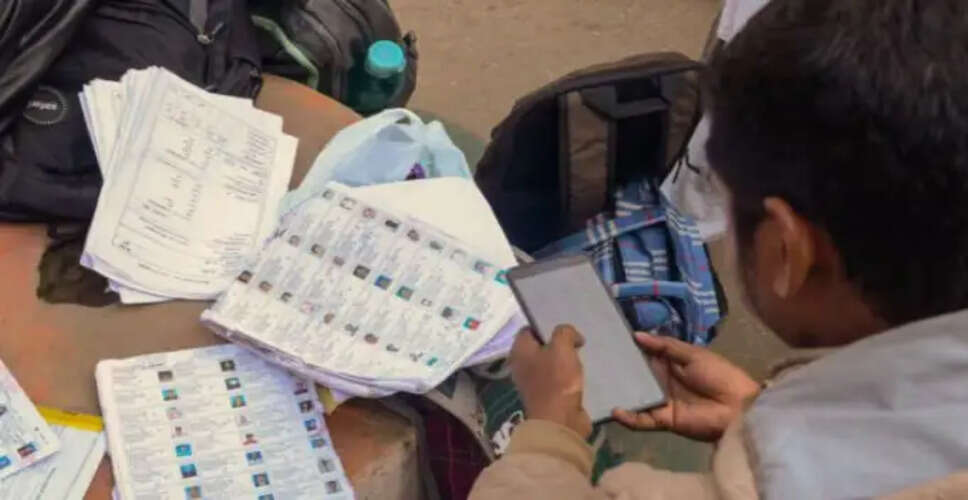
Political parties have ramped up their scrutiny at the booth level, with members meticulously reviewing printed rolls, cross-checking names, and preparing appeals.
For the TMC, which dominated north Kolkata in the last assembly election, the more than 4 lakh deletions in the area are being evaluated against urban turnout trends and organizational strength.
For the BJP, which has made strides in border and tribal regions in recent years, the adjudication of over 60 lakh pending cases could significantly alter dynamics in various districts.