
West Bengal Politics Intensifies: A Battle of Identity and Faith
Political Landscape of West Bengal Heats Up
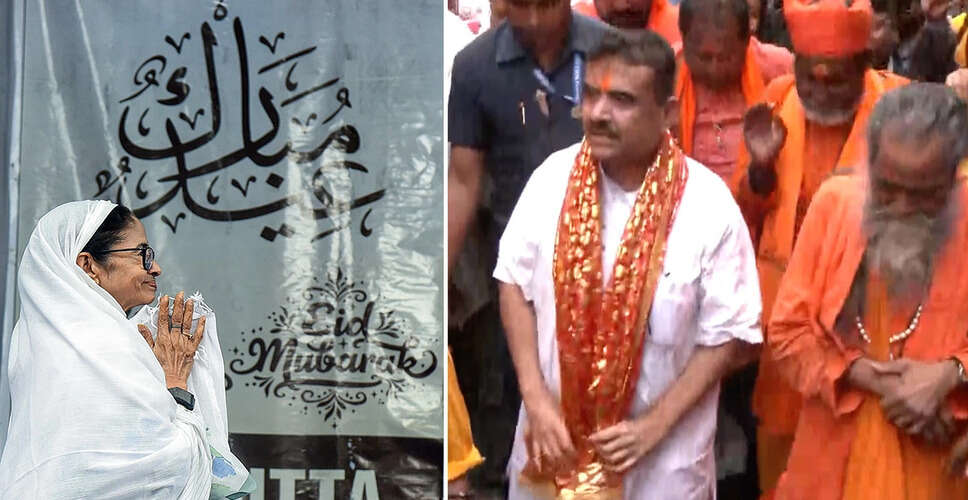
The political climate in West Bengal is currently charged, transforming the electoral arena into a contest centered around religion, identity, and influence. The clash between Chief Minister Mamata Banerjee and BJP leader Suvendu Adhikari has evolved beyond a mere battle for votes; it has become a significant confrontation of symbols, emotions, and narratives. Today has been particularly pivotal in Bengal's political scene. While Mamata Banerjee celebrated Eid, her main rival, Suvendu Adhikari, visited the Kalighat temple to pay his respects. The images of both leaders today send powerful messages to their respective voter bases.
Mamata's Strategic Move During Eid
Mamata Banerjee's participation in Eid prayers was not just a routine political event; it was a calculated strategy aimed directly at the BJP and the central government. In her speech, she raised concerns about voter rights and even questioned the Election Commission. This statement clearly indicates her intention to position herself not merely as a leader but as a guardian of democracy. By invoking blessings from Allah and extending Eid greetings, she aimed to convey to minority voters that the TMC is their true ally. Furthermore, her political rhetoric from a religious platform targeted Prime Minister Modi and the BJP, signaling to her party cadre that she stands firmly in the political arena.
Suvendu's Religious Outreach
On the other hand, Suvendu Adhikari's worship at the Kalighat temple has shifted the political narrative in a different direction. He openly proclaimed the victory of Sanatan Dharma and asserted a claim for a change in power in Bengal. His act of seeking blessings from Maa Kali was not merely a display of religious faith but also a strong political message that the BJP intends to center its campaign around Bengal's cultural identity.
The Significance of Timing and Messaging
The timing and manner of these events are crucial. On one side, there is an effort to engage the minority community, while on the other, there is a push to strengthen the majority identity. This marks a dangerous turn in Bengal's politics, leaning towards polarization. It is now evident that the upcoming elections in West Bengal will not be confined to development, schemes, or promises. Instead, it has transformed into a battle of identity, where every image, platform, and statement carries significant political weight.
The Voter's Dilemma
The people of Bengal now face a direct question: will they align with this religious and symbolic politics, or will they seek an alternative path? One thing is certain: the coming days will see an escalation in rhetoric, deepening conflicts, and a more aggressive political landscape in Bengal. This election has evolved into a test of ideas, emotions, and influence, transcending mere power struggles.