
West Bengal Intensifies Crackdown on Illegal Immigration from Bangladesh

Decisive Action Against Illegal Immigration
The campaign against Bangladeshi infiltration and illegal immigration in West Bengal has reached a critical phase. Chief Minister Shubhendu Adhikari has made it clear that there will be no compromises regarding state security, population balance, and the stability of border areas. According to state government reports, nearly 4,800 illegal Bangladeshi immigrants have been repatriated so far, with the process for an additional 836 individuals currently underway.
National Security Concerns Addressed
This initiative is a long-awaited response to national security concerns. For years, lax border controls, political appeasement, and vote bank politics have allowed infiltration to proliferate in West Bengal. The demographic structure in border districts has rapidly changed, leading to identity and security crises for local residents. For the first time, the state government has openly acknowledged that illegal immigration is not just a law and order issue but a significant question of national internal security and social balance.
Enhanced Border Security Measures
Chief Minister Adhikari has prioritized the fortification of the India-Bangladesh border, announcing the allocation of nearly 100 kilometers of land to the Border Security Force (BSF). Special attention is being given to the sensitive Siliguri corridor in North Bengal, a strategic area that connects Northeast India to the rest of the country. Any lapse in security here could have repercussions for the entire nation's safety.
No More Protection for Illegal Immigrants
Crucially, illegal immigrants will no longer receive government protection or benefits. Individuals who do not qualify under the Citizenship Amendment Act are being handed over directly to the BSF. The Chief Minister has criticized previous administrations for nurturing illegal immigrants at the expense of state resources and allowing the demographic situation to deteriorate. As enforcement actions ramp up in areas like Hakimpur, many illegal immigrants have begun to flee.
India's Firm Stance on Infiltration
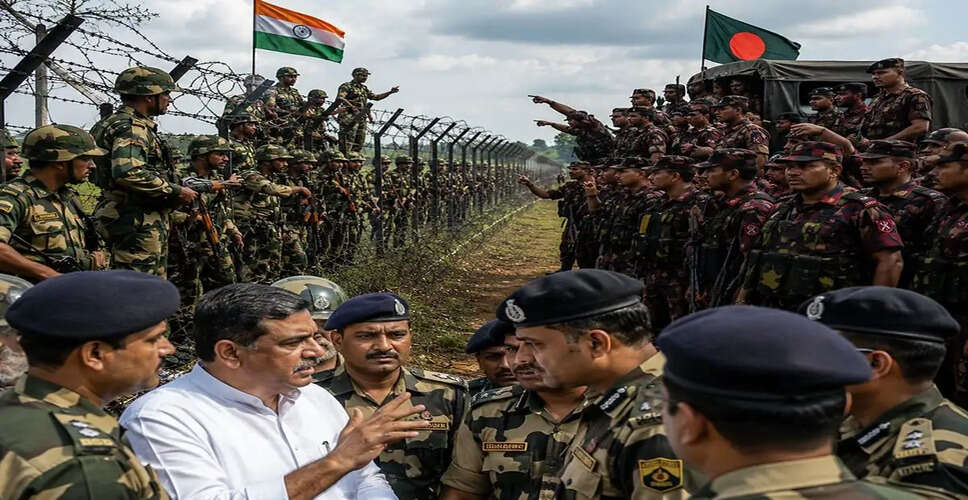
Recent developments at the border indicate that India is no longer in a mood to be lenient regarding infiltration. In the Panishala area of Cooch Behar, a tense standoff occurred between the BSF and the Bangladesh Border Guard at four different border points. Dozens of Bangladeshi nationals were stranded in the no man's land, with the Bangladeshi forces reluctant to retrieve them. Ultimately, they had to retreat in the face of India's firmness, signaling that India will not bear the burden of illegal immigrants any longer.
Political Reactions in Bangladesh
On the other side, there has been a flurry of statements from Bangladesh. Various so-called experts and political parties are raising concerns about India's actions, labeling them as human rights issues or threats to bilateral relations. However, the fundamental question remains: why should those who cross borders illegally be granted protection? Entering another country without valid documents is a legal violation, and taking action against such individuals is a natural response. India is obligated to ensure the safety of its citizens and protect its borders.
Political Tensions in Bangladesh
In Bangladesh, political tensions surrounding this issue have escalated. The opposition party NCP has criticized Home Minister Salahuddin Ahmed for stating that labeling deaths in illegal border crossings as 'border killings' is inappropriate. NCP leaders have called this statement a national disgrace, accusing the government of adopting a soft stance towards India. This controversy highlights that both the ruling and opposition parties in Bangladesh recognize that border infiltration is no longer just a local issue but a significant matter affecting bilateral relations.
Zero Tolerance Policy on Infiltration
India has made it clear that a zero-tolerance policy will be enforced against illegal immigration, border encroachment, and anti-national activities. Bangladeshi infiltrators must understand that India's borders are no longer porous, and there will be no place for lawbreakers here.
Strengthening Border Security
India has provided Bangladesh with information and documents regarding thousands of suspected infiltrators, but the verification process has been stalled for years. This delay has allowed the infiltration network to strengthen. Both the central and West Bengal governments have now stated that actions will not be halted due to delays in verification or political pressure. The vigilance of the Border Security Force has been heightened, and every attempt at infiltration is being thwarted.
Local Sentiments on Border Security
In Meghalaya's border villages, residents are also advocating for stronger borders and enhanced security. Villagers have expressed that they are not opposed to border fencing but want their villages to remain within India's security perimeter. This sentiment underscores how seriously border communities perceive the issues of infiltration and insecurity.
A Clear Message to Illegal Immigrants
It is time to send a clear message to Bangladeshi infiltrators: India is not an open field where anyone can enter illegally and hide their identity for years. Those residing illegally in India must either comply with legal processes or return to their home country. There is no longer any room in India for those who spread chaos, disrupt population balance, and challenge national security.
A National Campaign for Security
Ultimately, the West Bengal government's initiative is not just a state action but a campaign to protect national interests. If the same determination and political will are demonstrated across the country, the crisis of infiltration can be significantly controlled. National borders are not merely lines on a map; they represent the last line of defense for a nation's identity and security. Strengthening that defense is the duty of every government, and this is precisely what is now being witnessed in West Bengal.