
West Bengal Government Takes Strong Stance Against Illegal Immigration
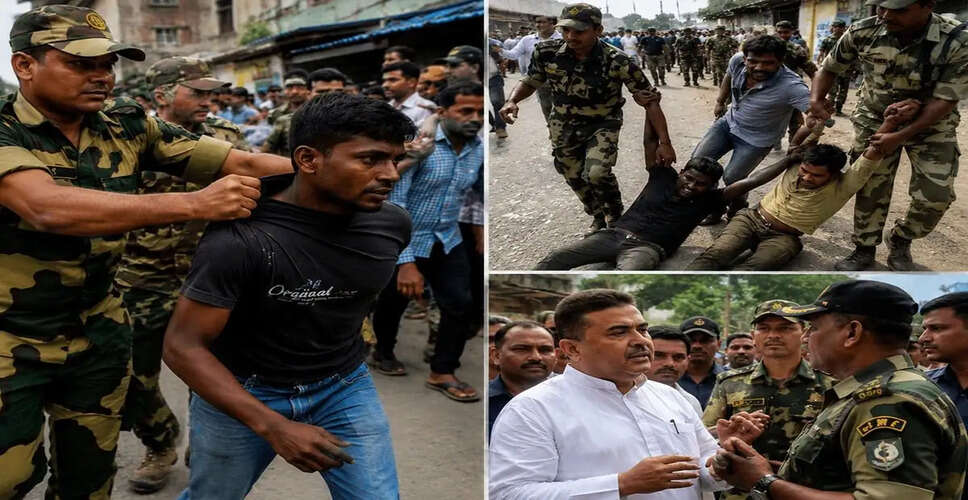

Decisive Action Against Border Infiltration
With the new government in West Bengal taking office, a significant and stringent action plan has been initiated, signaling zero tolerance for cross-border infiltration, smuggling, and illegal activities. Chief Minister Shubhendu Adhikari has announced an aggressive policy of 'Identify, Remove, and Exile,' sending a clear message across the nation that infiltrators will no longer be tolerated.
Direct Transfer of Infiltrators to BSF
During a press conference held at Nabanna with senior Border Security Force (BSF) officials present, Adhikari stated that infiltrators apprehended by the state police would be handed directly to the BSF, initiating their expulsion process. He noted that the central government had previously communicated this directive to the state government on May 14 of last year, but the former administration failed to implement it due to vote bank politics. The new government has now put this into immediate effect.
Protection for Certain Communities Under CAA
The Chief Minister clarified that communities covered under the Citizenship Amendment Act (CAA) would not face any issues. Individuals from Hindu, Sikh, Buddhist, Jain, Parsi, and Christian backgrounds who fled religious persecution from Bangladesh, Pakistan, and Afghanistan will be granted legal protection. However, those who do not fall within this category will be classified as infiltrators and face strict actions. The state police will detain such individuals and transfer them directly to the BSF, which will coordinate with the Bangladesh Border Force for their expulsion.
Historic Changes in Bengal's Security Framework
Adhikari's decision is viewed as a historic shift in Bengal's security framework. For years, the open borders have led to increased infiltration, cattle smuggling, illegal trade, and crime in border districts, leaving local residents living in fear and insecurity. The new government has made it clear that securing the borders is a top priority.
Strengthening Border Security Infrastructure
In a significant move to bolster security along the India-Bangladesh border, the West Bengal government has initiated the process of transferring land to the BSF for erecting a 27-kilometer-long fence. The Chief Minister emphasized that this is just the beginning, with plans for extensive infrastructure development for border security in the future. The Shubhendu government has demonstrated its commitment to action rather than mere rhetoric by making this decision in its first cabinet meeting.
Land Acquisition for Border Security
Reports indicate that 43 acres of purchased land and approximately 31.9 acres of vested land have been handed over to the BSF. The BSF Director General, Praveen Kumar, welcomed this initiative, noting improved coordination between the state government and the BSF, which will further strengthen border security.
Addressing Long-Standing Border Issues
West Bengal shares a lengthy border of approximately 2,217 kilometers with Bangladesh, of which around 1,600 kilometers is already fenced. However, about 600 kilometers remained open. Chief Minister Adhikari accused the previous government of failing to provide land for fencing due to political reasons and appeasement policies, which exacerbated issues of infiltration and smuggling.
Local Support for New Government's Measures
Residents in the border areas of North Bengal have warmly welcomed the new government's decisions. For years, people in regions like Jalpaiguri lived in fear due to the open border, making it difficult to return home at night. Many villagers had to pass through BSF checkpoints to reach their homes. Locals believe that the installation of barbed wire along the border will not only enhance security but also simplify their daily lives.
Resolving Land Transfer Issues
Local panchayat representatives and administrative officials acknowledged that the lack of land transfer during the previous government delayed the fencing work for years. The new government is now swiftly addressing all land-related issues, with the Jalpaiguri administration aiming to resolve all pending matters within the next 45 days.
Infiltration as a National Security Challenge
Furthermore, Chief Minister Adhikari has identified infiltration as not just a border issue but a serious challenge to law and order and national security. He pointed out that a significant number of those apprehended in cases of women's safety, forced conversions, and other crimes are Bangladeshi infiltrators. Therefore, there will be no leniency moving forward.
A New Direction for Bengal's Governance
It is evident that the Shubhendu Adhikari government has showcased strong will and decisive leadership since taking office, altering the trajectory of both Bengal's politics and administration. Issues that were suppressed for years due to vote bank politics are now being addressed openly. This step towards border security, preventing infiltration, and ensuring a safe environment for citizens is being hailed as historic. The people of Bengal are beginning to trust that their borders will be secure and that there will be no place for infiltrators.