
West Bengal Government Takes Firm Stance Against Illegal Immigrants

Strict Measures Against Illegal Immigration in West Bengal
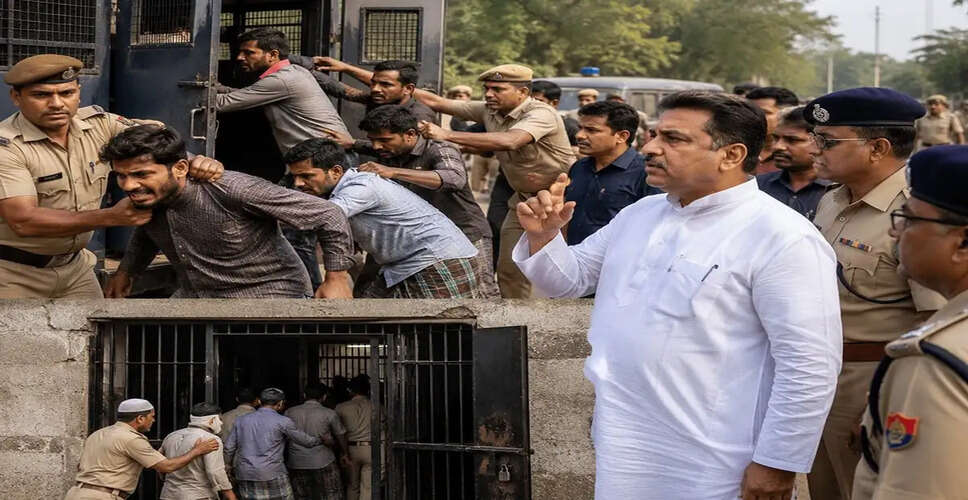
The government of West Bengal has adopted a stringent approach towards illegal immigrants. Orders have been issued to establish holding centers across all 23 districts, signaling that the state will no longer serve as a safe haven for illegal Bangladeshi, Rohingya, and other foreign infiltrators. Under Chief Minister Shubhendu Adhikari's policy of 'Identify, Remove from the List, and Deport,' illegal immigrants apprehended will be detained and subjected to deportation procedures. The government has warned that those residing illegally in Bengal and not covered under the citizenship law will face strict action and will be sent back as per legal provisions.
Establishment of Holding Centers
The state's Home and Hill Affairs Department has instructed all district magistrates to create special holding centers for illegal Bangladeshi, Rohingya, and other foreign nationals, including those released from prison, until their deportation. This initiative aligns with the guidelines from the central government's Home Ministry, which urged states to expedite the identification, verification, and deportation processes for illegal foreign nationals.
Implementation of Deportation Policy
This decision from the state government follows Chief Minister Shubhendu Adhikari's recent statement emphasizing the need for a policy focused on identifying and deporting illegal immigrants. He clarified that individuals not falling under the Citizenship Amendment Act would be classified as illegal immigrants. The state police will detain such individuals and hand them over to the Border Security Force (BSF), which will coordinate with the Bangladesh Border Guard to facilitate their return.
Guidelines for Holding Centers
According to the notification issued by the state government, establishing holding centers at the district level is essential to accommodate apprehended foreign nationals and those awaiting deportation. These centers will allow for the detention of suspected foreign nationals for a maximum of thirty days, during which their citizenship, documentation, and identity will be verified. The final decision regarding their status will be made at the level of the district magistrate or an equivalent authority.
Previous Government Stance
Last year, in May, the central government directed all states and union territories to identify illegal immigrants from Bangladesh and Myanmar, particularly from the Rohingya community, and complete the verification process within thirty days. Additionally, instructions were given to establish holding centers at the district level and to record biometric data to expedite the deportation process. However, the then ruling Trinamool Congress government, led by Mamata Banerjee, refused to implement these measures, claiming they were an extension of the National Register of Citizens and the Citizenship Amendment Act, potentially questioning the citizenship of Indian nationals.
Political Reactions
Former Chief Minister Mamata Banerjee has repeatedly stated that no one would be sent to detention centers while her government was in power. She has also accused the central government of exaggerating the issue of infiltration for political gain, asserting that the responsibility for border monitoring lies with the BSF. In January of this year, she even suggested that illegal entries from Bangladesh were occurring due to the BSF's laxity.
Election Promises and Border Security
The Bharatiya Janata Party (BJP) made illegal immigration a key electoral issue during the West Bengal assembly elections, promising to secure the Bangladesh border and take strict action against illegal immigrants upon coming to power. West Bengal shares a lengthy border of approximately 2,216 kilometers with Bangladesh, of which about 550 kilometers remains unfenced. Recently, the state government has also provided land to the BSF to construct a fence over a 27-kilometer stretch.
Statistics on Foreign Nationals in Custody
According to the National Crime Records Bureau's 2024 report, 905 individuals were detained under the Foreigners Act and the Foreign Registration Act in West Bengal. Previous reports indicated that around nine percent of the total prisoners in the state's jails were foreign nationals, with the largest group being Bangladeshi citizens. This included 778 convicted prisoners and 1,440 undertrial prisoners identified as Bangladeshi.
Comparison with U.S. Immigration Policies
The West Bengal government's policy has drawn comparisons to former U.S. President Donald Trump's approach, which promised large-scale deportation campaigns against illegal immigrants. The U.S. also faced controversies regarding the detention of illegal immigrants and strict immigration policies. However, the Bengal government asserts that its aim is solely to identify illegally residing foreign nationals and return them through legal channels.
Conclusion
In conclusion, Chief Minister Shubhendu Adhikari's firm stance on illegal immigration sends a clear message that no one is above the law in West Bengal. Amid ongoing concerns regarding cross-border infiltration, the government's actions are deemed crucial for national security and demographic balance. Bangladeshi and Rohingya infiltrators must now recognize that their days of residing illegally in Bengal are over. The government has made it clear that anyone found in the state without valid documentation will face stringent legal action and will be deported without exception.