
West Bengal Elections: A Historic Turnout and Political Showdown
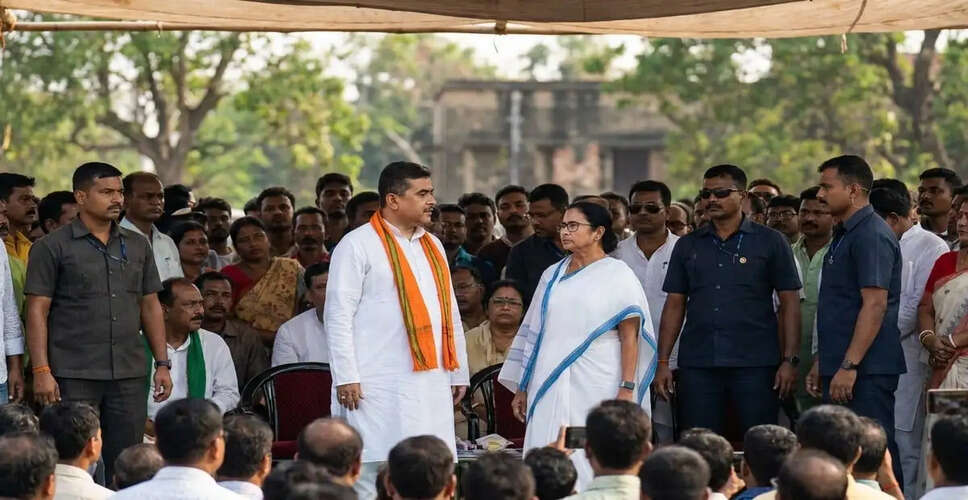

Historic Elections in West Bengal
On March 15, just 46 days after the election commission announced the polls, West Bengal witnessed one of its most intense and high-stakes electoral battles, culminating on Wednesday. The voting, conducted in two phases, not only heightened political tensions but also set a new record with a remarkable 92.47% voter turnout. All eyes are now on the counting scheduled for May 4. The enthusiastic participation of voters in this election has surpassed all previous records, showcasing a vibrant celebration of democracy.
This election transcends the mere question of who will reach the state secretariat at Nabanna; it has become a referendum on whether Chief Minister Mamata Banerjee can maintain her central political influence in Bengal after 15 years in power. A fourth consecutive victory could position her as the strongest opposition figure against the BJP ahead of the 2029 Lok Sabha elections, or it might pave the way for the BJP to gain control in the state.
The assembly elections recorded an impressive overall turnout of 92.47%, with the first phase achieving 93.13% and the second phase 91.66%. This marks the highest voter turnout since independence, surpassing the previous record of 84% set in 2011 when Banerjee first came to power, ending 34 years of Left Front rule.
For Banerjee, this election is seen as a pivotal moment in her political career. After three consecutive terms and a decade and a half in power, she is not only fighting to retain her position but also to safeguard her established political framework. The distinction between the Trinamool Congress and Banerjee has nearly vanished.
In the 2021 assembly elections, despite being injured, Banerjee campaigned from a wheelchair against an aggressive BJP led by Prime Minister Narendra Modi and Home Minister Amit Shah, ultimately securing victory and enhancing her stature as a prominent opposition leader on the national stage. The upcoming battle in 2026 is anticipated to be even more challenging, as she faces anti-incumbency sentiments, allegations of corruption, recruitment scandals, and governance issues.
A senior minister from the Trinamool stated, 'This election is about preserving Bengal's political identity. If Didi wins again, it will demonstrate that welfare politics and Bengali identity can overcome communal polarization.' Conversely, the BJP views Bengal as an unfinished political objective, believing that gaining power in the state could help them cross their 'final ideological frontier.' The party's vote share has surged from around 4% in 2011 to nearly 40% in 2019, and they won 77 seats in 2021, establishing themselves as the main rival to the Trinamool.
A BJP leader remarked, 'For us, Bengal is an incomplete political mission. From Syama Prasad Mukherjee to today, it is about completing a political journey.' The most significant controversy during the elections revolved around the Special Intensive Revision (SIR) of voter lists, which led to the removal of approximately 9.1 million names, disenfranchising about 12% of voters. The Trinamool criticized this move as an infringement on the voting rights of minorities, migrants, women, and the poor, while the BJP defended it as a necessary step to eliminate fraudulent names.
Analysts believe that the SIR has impacted not only the electoral mathematics but also the psychology of the voters. Political analyst Vishwanath Chakraborty stated that elections are determined not just by numbers but also by the psychological effects they generate. The counting on May 4 will reveal whether Banerjee's long-standing political dominance continues or if the BJP finally succeeds in establishing power in the state.