
West Bengal Court Convicts 13 in Lynching Case Linked to Waqf Protests
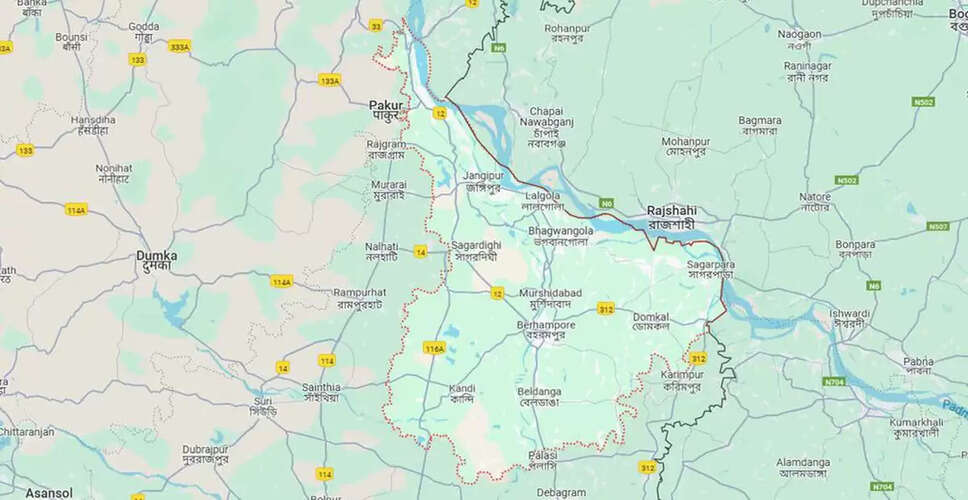
Conviction in Murshidabad Lynching Case
A court in Murshidabad district, West Bengal, has found 13 individuals guilty of the brutal murder of a father and son during a protest against the Waqf Amendment Act in April, according to reports from local media.
Harogobind Das, aged 72, and his 40-year-old son Chandan Das were violently killed by a mob on April 11 in the Samserganj area of the district.
Authorities stated that the unrest leading to the murders erupted following false claims that security forces had fired shots near a mosque, which incited further violence and arson in the vicinity.
Judge Amitabh Mukhopadhyay of the Jangipur Sub-Divisional Court convicted the accused under various sections of the Bharatiya Nyaya Sanhita, including murder, robbery, and rioting with deadly weapons, as confirmed by special public prosecutor Bivas Chatterjee.
The protests against the Waqf Amendment Act, which was enacted by Parliament on April 4, resulted in violence on April 11 and 12, claiming three lives, including that of Ijaz Momin, who was reportedly shot by police in Suti town.
The widow of Harogobind Das claimed in her police report that a mob forcibly took her husband and son from their home before killing them, asserting that while many were present, only a few were responsible for the act.
A Special Investigation Team (SIT) compiled a comprehensive 983-page chargesheet after six months of investigation, conducting raids across West Bengal, Odisha, and Jharkhand to apprehend the suspects.
The victims' family has called for the harshest penalties and has approached the Calcutta High Court to request a Central Bureau of Investigation inquiry, which is currently under review.
The riots in Murshidabad prompted a significant number of Hindus, who are a minority in the area, to seek refuge in the neighboring district of Malda.
The Waqf Amendment Act limits the powers of waqf boards, increasing government oversight. Critics argue that the revised law infringes on the right to equality and the freedom to manage religious matters.
A waqf is an endowment established under Islamic law for religious, educational, or charitable purposes, with each state having a waqf board led by a legal entity authorized to manage property.