
West Bengal Chief Minister Criticizes Previous Government Amid Budget Session

Chief Minister's Strong Allegations Against Former Government
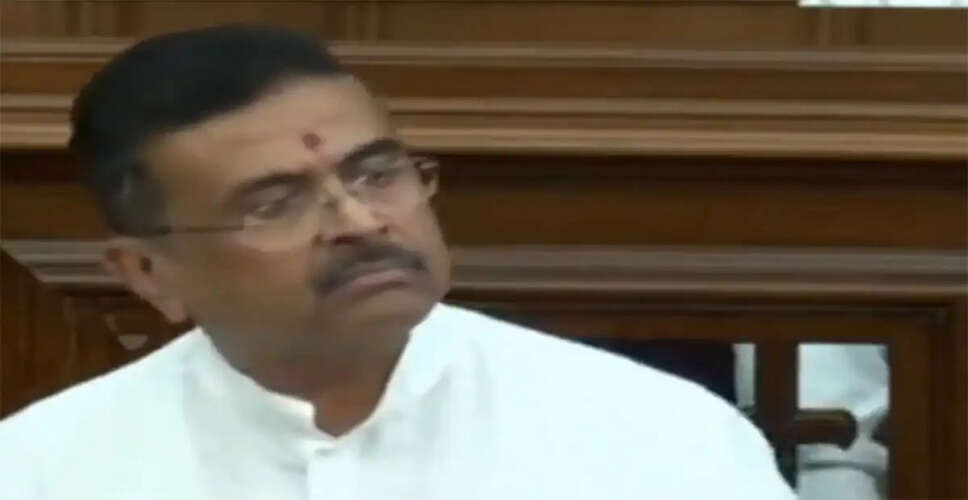
During the budget session of the West Bengal Assembly, Chief Minister Shubhendu Adhikari launched a fierce attack on the previous Trinamool Congress government and former Chief Minister Mamata Banerjee, accusing them of corruption, misuse of public funds, and administrative irregularities. In a speech lasting nearly fifty-seven minutes, he emphasized that his government's motto would not only be 'Sabka Saath, Sabka Vikas' (Together with All, Development for All) but also 'Sabka Hisab' (Accountability for All). He asserted that the public had taught the Trinamool Congress a lesson and that investigations into all instances of corruption during the previous administration would be conducted.
Allegations of Misappropriation of Funds
Adhikari displayed a document in the assembly, alleging that approximately ₹324.7 crores had been transferred to FICCI under the guise of the Bengal Global Business Summit. He questioned whether government funds could be allocated to private entities in such a manner. Furthermore, he claimed that numerous welfare schemes had seen significant irregularities during the previous government. He referenced programs such as Lakshmir Bhandar, Ujjwala Yojana, old-age pensions, Shikshashree, Medhashree, Taposhi Bandhu, Jai Johar, MGNREGA, and minority scholarships, asking who had embezzled the public's money.
Legislative Measures Against Corruption
The Chief Minister stated that no one involved in corruption would be spared. He announced that a bill would be introduced in the current session allowing for the seizure and auction of properties belonging to those convicted of corruption. He mentioned that luxurious residences on Harish Mukherjee Road and Harish Chatterjee Street would be allocated to those currently forced to sleep on the streets and under flyovers, a comment interpreted as a jab at Mamata Banerjee and Abhishek Banerjee.
Targeting Abhishek Banerjee
Adhikari also identified Abhishek Banerjee, the national general secretary of the Trinamool Congress, as a key figure in corruption. He cited the example of stone quarries in Birbhum, claiming that his government had generated ₹83 crores in revenue within just one month, while the previous government reported only ₹60 crores for the entire year. He alleged that the remaining funds were funneled to Dubai via Camax Street. Additionally, he claimed that a contractor from the Public Health Engineering Department had paid ₹10 crores to IPAC before the elections.
Comments on Mamata Banerjee's Political Future
In his speech, Adhikari also commented on Mamata Banerjee's political future, asserting that she would never return to power and that her political chapter was over. He reminded the assembly that she had been expelled multiple times over the past five years and faced 102 cases against her. Although many of these cases were later dismissed by the High Court and Supreme Court, she still had to disclose thirty-five cases in her election affidavits.
Controversial Midday Meal Scheme
Meanwhile, another decision by the West Bengal government has sparked political and social controversy. The state government announced that the ISKCON organization would now manage the midday meal scheme in government and aided schools within the Kolkata Municipal Corporation area. Consequently, it was clarified that eggs would no longer be included in the meals served to students. This scheme will be implemented through ISKCON's Annamitra Foundation, providing meals to approximately one lakh students.
Opposition to the New Meal Policy
ISKCON's Vice President and spokesperson, Radharaman Das, stated that instead of eggs, the meals would include soy, kidney beans, paneer, lentils, beans, and other vegetarian protein sources. He claimed that the meals would be prepared with the help of nutritionists to ensure that children receive equal or greater nutritional benefits than those provided by eggs. He also noted that ISKCON has been running midday meal programs in various states and 22 cities since 2004, serving millions of children.
Political Reactions and Future Outlook
However, this decision has faced backlash. Trinamool Congress leader Derek O'Brien accused the government of depriving children of nutrition and imposing vegetarianism on them. He argued that West Bengal's social and cultural traditions embrace diverse dietary practices, and removing eggs could adversely affect children's nutrition. Political analysts believe that since Shubhendu Adhikari became Chief Minister, there has been a noticeable shift in administrative and political dynamics in West Bengal. Continuous actions against corruption are underway, and illegal collections such as 'cut money' and 'bhai-po tax' have been completely halted. The campaign against illegal infiltrators has intensified, and actions to remove encroachments are ongoing. The state government has made it clear that every penny from the public treasury will be spent solely for the welfare and development of the people. The provisions made in this budget for job creation, industry promotion, and increased investment have instilled new hope among the state's populace, suggesting that West Bengal may be heading towards a new direction economically and administratively.