
West Bengal Assembly Elections: Enhanced Surveillance Measures for a Peaceful Polling Experience
Kolkata Prepares for Two-Phase Assembly Elections
Kolkata: In preparation for the upcoming two-phase Assembly elections in West Bengal, scheduled for next month, electoral officers will be closely monitored at all levels during polling days.
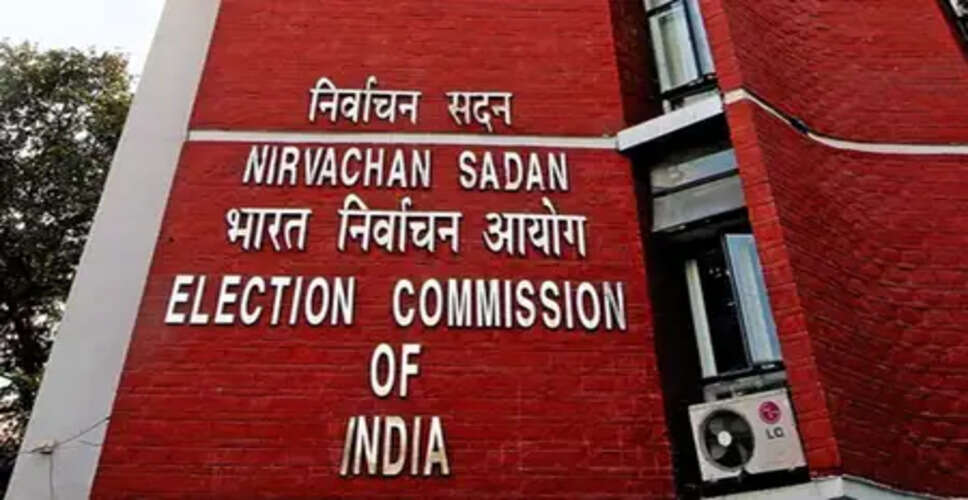
Chief Election Commissioner Gyanesh Kumar, during a press briefing on Sunday, emphasized the commitment to ensuring a violence-free election process. To achieve this goal, the Election Commission of India (ECI) has implemented a strategy for continuous and layered surveillance of electoral officers on April 23 and April 29.
The Chief Electoral Officer (CEO) office detailed that the surveillance will commence with a control room setup, featuring two distinct levels.
Each district will have a control room located at the District Magistrate's (DM) office, which also serves as the District Electoral Officer (DEO). This control room will oversee activities at polling booths and stations to ensure compliance with ECI guidelines by returning and polling officers.
Additionally, an integrated control room will be established at the CEO's office in Kolkata, tasked with monitoring the responsiveness of DEO electoral officers to complaints from the public and political entities regarding polling practices.
On polling days, a dual surveillance system will be operational. Observers assigned to each of the 294 Assembly constituencies will oversee the polling process at the booth and station levels, while district-specific central observers will maintain overall oversight from the DEO's control room.
The highest level of monitoring will be conducted by ECI-appointed central observers and their teams.
Regarding security personnel deployment, both Central Armed Police Forces (CAPF) and state forces will be managed at the district level by specialized teams to assess the specific needs for CAPF presence. The decisions made by police observers will be final.
To optimize the use of central security forces for the elections, the ECI has removed the district administration's authority to dictate CAPF movements from the start of the model code of conduct until its conclusion.
Previously, District Magistrates and District Electoral Officers had the power to manage CAPF movements during the election period. However, this time, the ECI has designated police observers to oversee CAPF deployments in their respective districts. This decision was communicated to the CEO's office during a recent two-day review by the ECI's full bench.
The first phase of voting on April 23 will cover 152 Assembly constituencies, while the second phase on April 29 will include 142 constituencies. The ECI anticipates deploying at least 2,300 companies of CAPF for each phase.