
West Bengal Assembly Elections: A High-Stakes Battle Begins with Unprecedented Security Measures
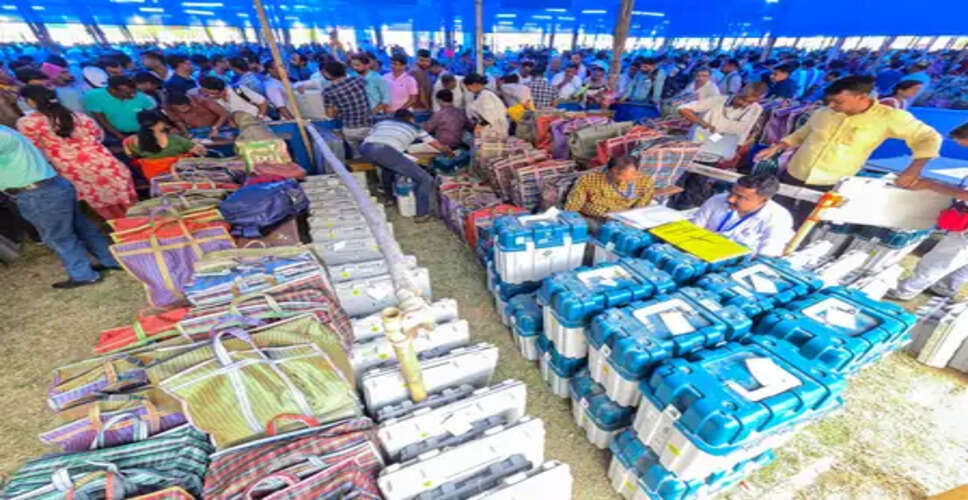

Kolkata Gears Up for Assembly Elections
On Thursday, West Bengal will hold its Assembly elections, marking the first phase of a two-part electoral process. Approximately 36 million voters are anticipated to cast their votes at around 44,000 polling stations across 152 constituencies in 16 districts.
In contrast to previous elections, this year's voting will occur in just two phases, a significant reduction from the eight phases in 2021 and six in 2016, where the initial phase was split over two days.
A competitive race is expected in at least 80 constituencies during this phase, primarily between the ruling Trinamool Congress and the Bharatiya Janata Party (BJP), the main opposition.
Additionally, the political landscape may see multi-cornered contests due to the separation of the Left Front and Congress, along with the involvement of religion-based groups.
The constituencies participating in this phase include regions such as Darjeeling, Kalimpong, Jalpaiguri, Alipurduar, Cooch Behar, and several others.
A total of 1,478 candidates are contesting in this election.
Voter turnout in areas with significant minority populations and tea gardens, as well as the management of sensitive polling booths, will serve as immediate indicators of the effectiveness of the enhanced security measures.
The Trinamool Congress faces the challenge of maintaining its dominance from 2021 in a fragmented electoral landscape, where revisions to the electoral rolls and heightened security could influence voter turnout.
The party aims to secure its hold on rural and minority-heavy regions, which are vital for achieving a majority.
Conversely, the BJP sees this phase as a chance to strengthen its position in North Bengal, border districts, and key urban areas, where a strong performance could reinforce its narrative of a two-party contest and apply pressure on the ruling party.
The Election Commission has deployed an extensive security presence, including approximately 2,407 companies of Central Armed Police Forces (CAPF) with over 240,000 personnel, a move deemed unprecedented for a state not under extraordinary security laws.
Quick Reaction Teams (QRTs) have been stationed near polling locations, and around 7,384 booths have been designated as 'super-sensitive' or 'critical.'
The large number of CAPF personnel marks a notable increase compared to previous elections, raising discussions about the implications and visibility of such a presence.
The Election Commission has also set up a dedicated toll-free number and email for complaints, enhanced voter assistance with Braille-enabled EVMs, ramps, and priority queues, and increased observer deployment.
The Special Intensive Revision (SIR) of the voter list has sparked political controversy, with the Trinamool Congress alleging that the process targets specific communities and their supporters. Similar claims have emerged from other non-BJP parties, including Congress leader Rahul Gandhi's criticisms ahead of last year's Bihar elections.
The BJP has labeled the initiative as an effort to eliminate fraudulent voters, asserting that many are migrants from Bangladesh. Approximately 9.1 million names have been removed from the rolls, while new voters have been added and pending records processed, a change that analysts believe could significantly impact closely contested seats.
While many of the removed names belong to deceased individuals, those who have moved, or duplicates, a new category termed 'logical discrepancy' has generated controversy. This includes mismatches in name spellings and age differences with parents, identified using artificial intelligence.
Judicial officials are currently reviewing appeals related to these discrepancies, with 126 out of about 2.7 million names approved for inclusion in the electoral roll for the first phase as of now. Appellate tribunals are addressing cases for the second phase.