
Wealth Inequality in India: Study Reveals 400% Increase for Rich Families
Significant Wealth Growth Among India's Elite
A recent report indicates that five of India's wealthiest families experienced a staggering 400% increase in their fortunes from 2019 to 2025. This finding comes from a study released by a non-profit organization focused on financial accountability.
The report, titled Wealth Tracker India 2026, highlights that implementing a progressive wealth tax on the top 1,688 ultra-wealthy individuals could potentially raise over Rs 10 lakh crore for social welfare initiatives.
Individuals classified as ultra-rich are those with a net worth exceeding Rs 1,000 crore.
According to the study, the wealth share of the bottom half of the population remained stagnant at 6.4% by 2024. The report states, “India is experiencing inequality reminiscent of colonial times,” noting that the richest 1% control over 40% of the nation's wealth.
The cumulative wealth of the ultra-rich has now exceeded Rs 166 lakh crore, nearly half of India's Gross Domestic Product.
The study suggests that a progressive tax rate of 2%-6% on these ultra-rich families, along with a one-third inheritance tax, could allow the government to allocate Rs 10.6 lakh crore annually for welfare programs.
Such benefits could include an immediate increase in health and education spending by 1% of GDP and a monthly pension of Rs 12,000 for the elderly.
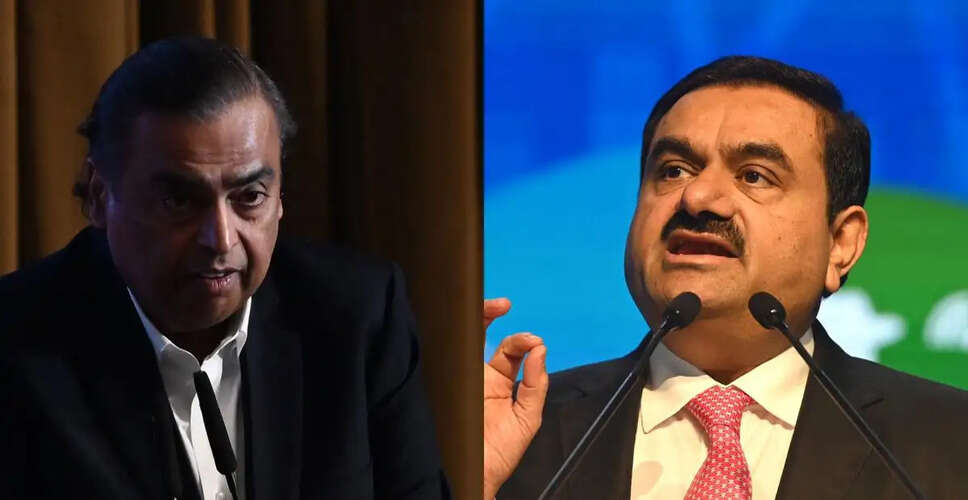
Notably, the wealth of Mukesh Ambani rose by 153% during this period. The report claims that a 2% wealth tax on him could have funded free laptops for all Class 10 students for three years.
Similarly, Gautam Adani's wealth surged by 625%, and a 2% tax on his fortune could finance two years of primary healthcare for the entire nation, as well as provide air purifiers for nearly eight crore families affected by pollution.
The findings challenge the government's assertion that there are insufficient resources to enhance welfare investments. The report criticizes the government for reducing corporate taxes while ordinary citizens bear a heavier tax burden.
Additionally, the Union government has written off Rs 19.6 lakh crore in loans over the past 11 years.
In light of these revelations regarding wealth inequality, the organization advocates for the introduction of a wealth tax to bridge the gap between the ultra-wealthy and the impoverished, ensuring basic needs are met through welfare measures.
Anirban Bhattacharya, the campaign director, emphasized the existence of two distinct Indias: one where a select few amass wealth, and another where many struggle with debt and precarious employment.
He warned that as this divide widens, the principles enshrined in the Constitution drift further away.
Raj Shekhar from the campaign stressed the urgency of imposing a wealth tax on the super-rich to generate necessary resources for enhancing public services and addressing the inequality that jeopardizes democracy.
Jacob Joshy, a researcher involved in the report, acknowledged that while a wealth tax is not a complete solution, it could help secure basic rights for the underprivileged.