
Violence Erupts in Dhaka Following Death of Radical Leader
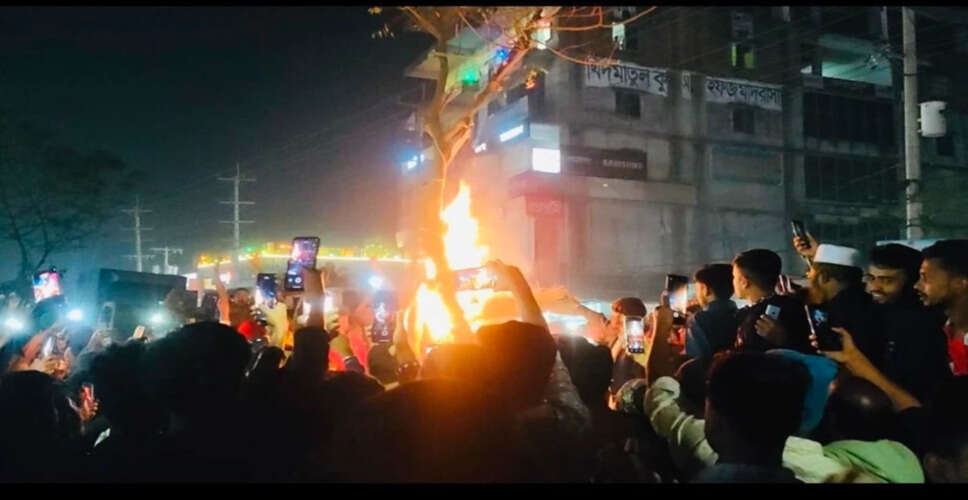
Unrest in Dhaka After Leader's Death
On Thursday night, Dhaka experienced sudden unrest, with violence reported in several areas. This turmoil was triggered by the news of the death of Sharif Osman Hadi, a leader of the radical group Inquilab Manch, which spread rapidly across Bangladesh. Hadi was shot by unidentified assailants on December 12 in Dhaka and was subsequently taken to Singapore for treatment, where he passed away on Thursday.
According to available information, Professor Mohammad Yunus, the chief advisor of Bangladesh's interim government, confirmed Hadi's death and announced that special prayers would be held at all religious sites across the country on December 19. Additionally, he instructed that Saturday be observed as a national day of mourning, with flags at government and private buildings flown at half-mast.
Notably, this attack occurred as the country approaches general elections. The election commission had just announced that the 13th parliamentary elections would take place on February 12, 2026. Police reported that Hadi was campaigning as an independent candidate in the Bijoynagar area when three assailants on motorcycles opened fire before fleeing the scene.
A police spokesperson indicated that Hadi was rushed to Dhaka Medical College Hospital in critical condition, where he was placed on life support. He was later transferred to Singapore for advanced treatment, but unfortunately, the 32-year-old could not be saved.
Hadi was a prominent figure in the mass movement during July-August 2024, which aimed to oust then-Prime Minister Sheikh Hasina from power. Local media reports suggest he hailed from the Nalchity sub-district in Jhalokati and was known for his vocal criticism of India. His organization, Inquilab Manch, had been actively campaigning over the past year for the dissolution of the Awami League and the arrest of its leaders.
It is important to note that the interim government led by Yunus had declared the Awami League ineligible to contest elections in May. Hadi had previously accused the Awami League of orchestrating secret killings of students involved in the July movement and had reported receiving continuous threats.
This entire incident has also impacted India-Bangladesh relations. On December 14, Bangladesh's foreign ministry summoned the Indian High Commissioner to express concerns and fears that the attackers might flee to India. In response, India summoned the Bangladeshi High Commissioner regarding the security of its mission in Dhaka.
During the protests on Thursday night, anti-India slogans were raised in several locations. Some organizations alleged that Hadi's killers had escaped to India and even called for the closure of the Indian High Commission. However, Professor Yunus urged the public to maintain peace and avoid spreading rumors.
In his address, Yunus made it clear that the perpetrators would not be spared under any circumstances. He described the attack as a conspiracy to derail the electoral process and asserted that such attempts would fail, allowing the democratic process to continue.