
Violence Erupts in Bangladesh Following Shooting of Student Leader
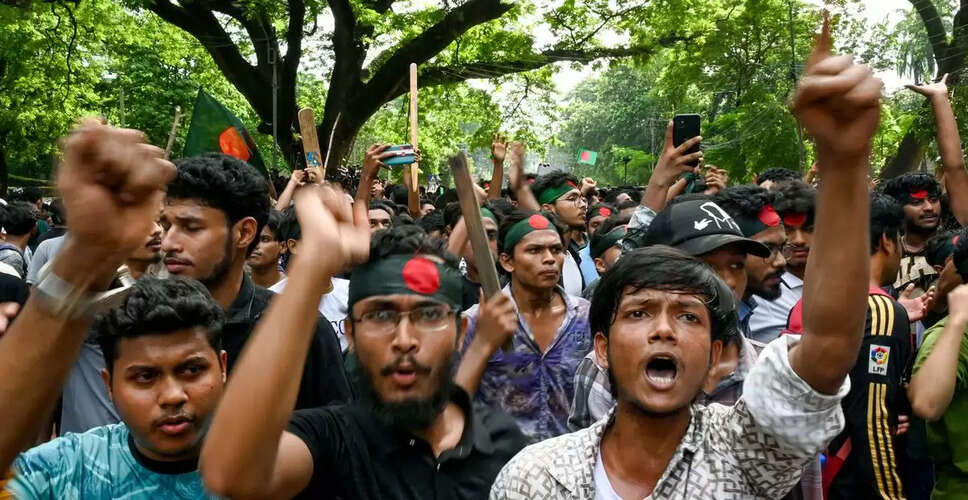
Shooting Incident in Khulna
On Monday, Muhammad Motaleb Shikder, a prominent figure in Bangladesh's student-led National Citizen Party, was shot in Khulna, as reported by local news sources. He was promptly transported to a medical facility for treatment.
Shikder serves as a central leader within the party's labor division, known as Jatiya Sramik Shakti, which was established in February.
Escalating Violence in Bangladesh
This incident occurred amidst a surge of violence in the nation, which was ignited by the assassination of student leader Sharif Osman Bin Hadi on December 12 in Dhaka. Hadi succumbed to his injuries in Singapore on December 18.
His death, a significant loss for the student-led movement opposing the government of former Prime Minister Sheikh Hasina, sparked widespread protests, vandalism, and confrontations across various regions of Bangladesh.
Attacks on Indian Diplomatic Missions
In a related development, stones were hurled at the residence of the assistant Indian high commissioner in Chittagong last Thursday. Additionally, properties associated with Hasina's Awami League and several newspaper offices faced attacks.
In response to the escalating violence, New Delhi suspended visa operations at its Chittagong center and increased security measures around its diplomatic missions.
Hasina's Accusations Against Interim Government
On Sunday, Hasina attributed the recent violence to the interim government led by Muhammad Yunus, cautioning that the deteriorating law and order situation could jeopardize relations with India. She expressed concerns regarding the safety of Indian diplomats in Bangladesh.
Hasina remarked, 'When a government fails to maintain basic order within its borders, its credibility on the international stage diminishes,' emphasizing that India is observing the turmoil with 'justified concern.'
Concerns Over Extremism and Diplomatic Safety
The former prime minister accused Yunus's administration of appointing individuals with extremist affiliations to positions of authority, claiming that such actions have emboldened attacks on religious minorities and media establishments. This has contributed to the recent strain in relations between Dhaka and New Delhi.
She stated, 'India's concerns regarding the safety of its personnel are valid. A responsible government should safeguard diplomatic missions and hold accountable those who threaten them. Instead, Yunus provides protection to troublemakers and labels them as warriors.'
Political Turmoil and Diplomatic Tensions
Hasina fled to India on August 5, 2024, after enduring weeks of protests against her Awami League government, which had been in power for 16 years. Yunus, a Nobel laureate in economics, assumed the role of chief adviser to the interim government shortly after her departure.
Last week, India summoned Bangladesh's high commissioner to express concerns over calls from groups in Bangladesh for heightened security around the Indian High Commission in Dhaka. The Indian government also raised alarms about attacks on religious minorities during the unrest, including the murder of a Hindu man named Dipu Chandra Das.
India's Response to Allegations
On Sunday, India's Ministry of External Affairs dismissed claims from Bangladeshi media suggesting that Indian citizens had threatened Bangladeshi diplomats in New Delhi, labeling these allegations as 'misleading propaganda.'
In response to inquiries about a protest outside the Bangladeshi High Commission, ministry spokesperson Randhir Jaiswal clarified that a small group had gathered to protest the killing of Das and to advocate for minority protections in Bangladesh. He confirmed that there was no breach of security at the High Commission and that the gathering was dispersed quickly, reiterating India's commitment to the safety of foreign missions and diplomatic personnel under the Vienna Convention.