
Venezuela's Earthquake Catastrophe: A Race Against Time to Find Survivors
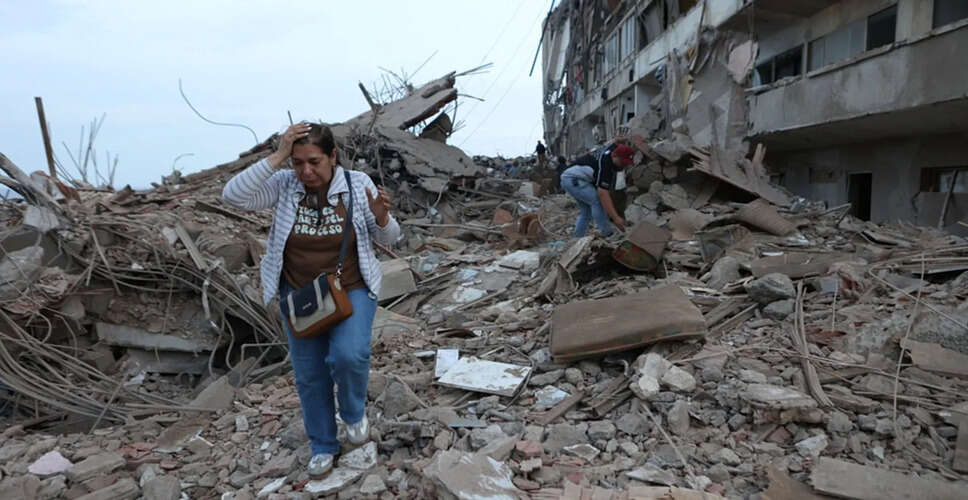

Desperate Search for Survivors in Venezuela
In La Guaira, Venezuela, rescue operations intensified as locals searched for survivors trapped under the rubble following two significant earthquakes that struck the region. The tremors, measuring 7.2 and 7.5 on the Richter scale, have reportedly claimed around 235 lives and left over 4,300 individuals injured.
Health Minister Carlos Alvarado confirmed that many victims arrived at medical facilities without vital signs, indicating the severity of the situation. The death toll is anticipated to rise as rescue efforts continue, with thousands still unaccounted for.
The earthquakes, among the most powerful to hit Venezuela in over a century, were felt across a wide area, prompting evacuations as far as Brazil's Amazon region.
In a bid to facilitate relief efforts, the US Treasury announced a temporary waiver of certain sanctions until October 23, allowing for transactions related to earthquake assistance.
As panic spread, residents in northern Venezuela flooded the streets, desperately searching for missing loved ones amidst the debris. Distressing scenes unfolded as rescuers pulled injured individuals from the wreckage, including children and pets. State television broadcasted harrowing footage of rescues, highlighting the urgency of the situation.
Dayana Delgado, a mother of three, expressed her frustration over the lack of heavy machinery promised by officials, as neighbors took it upon themselves to dig through the rubble in search of survivors.
The coastal area of La Guaira, located north of Caracas, experienced some of the worst destruction. The main airport in the region was closed due to damage, complicating the delivery of aid.
Retired teacher Juan Alberto Mendano recounted his experience navigating through the wreckage, where he encountered a woman signaling for help. He expressed his helplessness in the face of the disaster.
International offers of aid have poured in, including assistance from the United States, which had previously apprehended former President Nicolas Maduro earlier this year.
This natural disaster adds to the challenges faced by acting President Delcy Rodriguez, who took office in January amid ongoing economic turmoil and political instability in Venezuela.
Rescue Operations Intensify in Affected Areas
Authorities are redirecting rescue teams from other regions to La Guaira, a location familiar with natural disasters, having previously experienced a devastating mudslide in 1999.
Rodriguez has called on businesses to provide heavy construction equipment for rescue efforts, emphasizing the need to save as many lives as possible.
The first rescue teams from the Dominican Republic are expected to arrive shortly, with additional support from other nations on the way.
Despite Venezuela's location near several fault lines, significant earthquakes are relatively rare due to its position between the South American and Caribbean tectonic plates.
The US Geological Survey reported that the initial quake struck west of Moron, approximately 170 kilometers from Caracas, at a depth of 22 kilometers, followed by a second quake just a minute later.
The combination of these quakes, along with their shallow depths, exacerbated the destruction, according to geophysicist Marcos Ferreira.
Residents Grapple with the Aftermath
As the tremors subsided, many residents fled from swaying buildings, only to return to find their homes reduced to ruins. In La Guaira, Cristian Carreno lamented the loss of everything he owned, fearing for those who may still be trapped inside.
In downtown Caracas, hundreds sought refuge in parks and open spaces, fearing further collapses. Maria Cristina Diaz, a janitor, described the cold night spent outside with her family, unable to sleep.
Power outages and disrupted communication services were reported across parts of the capital, leading to the suspension of subway services and the shutdown of natural gas supplies. Schools will remain closed for several days, with some being converted into shelters and donation centers.
Families began posting flyers to locate missing persons, while others shared lists of names in their search for loved ones. Venezuelans abroad faced difficulties in contacting relatives back home.
Following calls from UN officials for the government to lift social media restrictions, access to X was restored, allowing for crucial information sharing among those affected.
International Support and Emergency Measures
In a national address, Rodriguez declared a state of emergency and announced the establishment of a USD 200 million fund for the reconstruction of damaged infrastructure.
Countries including Mexico, Qatar, Brazil, Spain, Portugal, and Canada pledged to provide aid, with shipments of emergency supplies and personnel already en route.
US Secretary of State Marco Rubio confirmed that the United States would deploy search and rescue teams and medical resources, although logistical challenges remain due to the airport's closure.