
Uttarakhand's Solar Self-Employment Initiative Boosts Local Economy
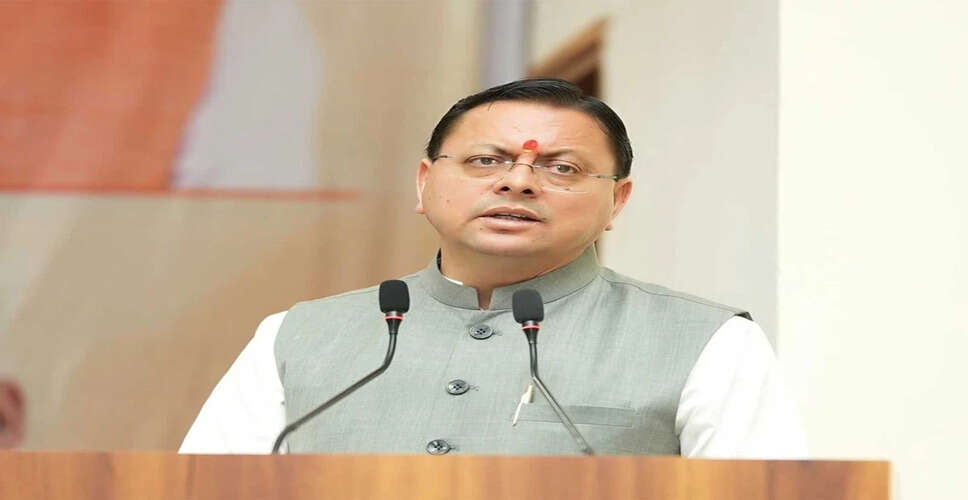

Chief Minister Launches Solar Self-Employment Scheme
The Chief Minister of Uttarakhand, Pushkar Singh Dhami, has introduced the Chief Minister Solar Self-Employment Scheme (MSSY), aimed at connecting the youth and residents of Uttarakhand with self-employment opportunities. He emphasized that the state government is actively working to enhance entrepreneurship and job prospects in sectors like solar energy. This initiative not only promotes green energy but also strengthens economic activities in hilly regions, addressing the issue of migration from these areas.
The MSSY is emerging as a significant initiative to foster green energy while creating new job opportunities for the local population. By June 2026, the plan includes the establishment of solar power plants with a total capacity of 210 MW, which has already provided employment to over 3,500 individuals. The Chief Minister has set a target of developing 250 MW of solar energy capacity under this scheme, allowing locals to install solar power plants with capacities of 20, 25, 50, 100, and 200 kW. Beneficiaries are also receiving all applicable benefits under the MSME Policy-2023.
Current Progress and Future Goals
As per the latest data, by June 2026, Uttarakhand is set to have a total of 1,132 solar power plants with an overall capacity of 210,420 kW, approximately 210 MW. Work is ongoing on additional projects. The Tehri district leads the state in terms of solar power projects, with 369 plants installed, totaling a capacity of 69,050 kW. In Uttarkashi, there are 227 plants with a capacity of 43,660 kW, while Champawat has 144 plants generating 28,200 kW.
Additionally, Haridwar has 86 plants with a capacity of 16,900 kW, Pauri has 88 plants with 15,440 kW, Chamoli has 72 plants with 11,725 kW, and Almora has 32 plants with a capacity of 5,600 kW. Solar projects have also been implemented in Dehradun, Rudraprayag, Bageshwar, Nainital, Pithoragarh, and Udham Singh Nagar districts. The Chief Minister Solar Self-Employment Scheme is not limited to solar power generation; it is also viewed as a crucial avenue for enhancing self-employment and entrepreneurship opportunities in rural and hilly areas, currently benefiting around 3,500 individuals directly and indirectly.