
Uttar Pradesh's Voter Roll Overhaul: What You Need to Know About the Changes
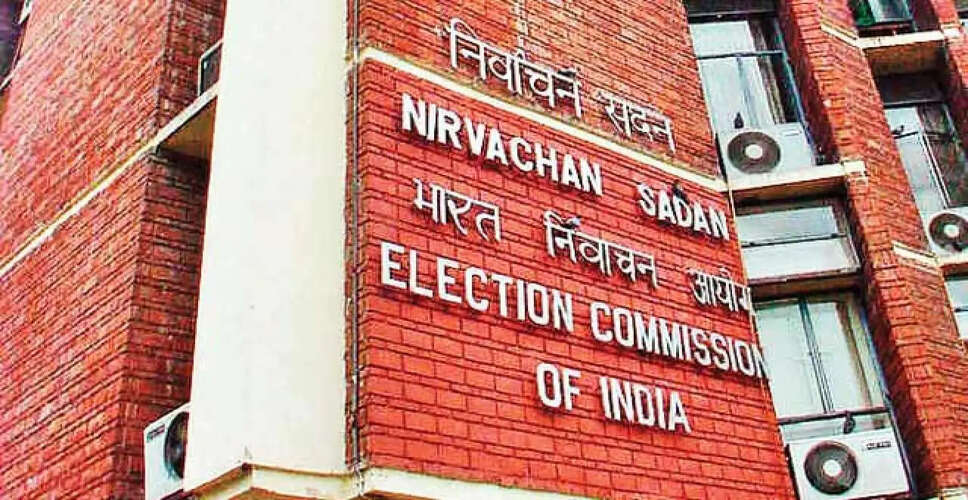

Significant Changes in Uttar Pradesh's Voter Rolls
Lucknow: In a recent electoral revision, Uttar Pradesh has seen the removal of over 2.04 crore voters from its rolls, primarily affecting urban areas and notably impacting female voters.
The Election Commission of India (ECI) reported that more than 84 lakh new voters have been added, bringing the total electorate to 13,39,84,792.
The updated electoral roll includes 7,30,71,071 male voters (approximately 54%), 6,09,09,525 female voters (around 45.46%), and 4,206 voters identifying as third gender.
Despite an improvement in the gender ratio to 834 females for every 1,000 males from 824 in the draft roll, it has decreased from 877 prior to the revision due to a higher number of deletions among women.
The count of voters aged 18-19 surged to 17,63,360, marking an increase of 14,29,379 from the draft roll, which now constitutes 1.32% of the total electorate.
Previously, the state had 15.44 crore voters as of October 27, 2025, which decreased to 12,55,56,025 in the draft roll published on January 6, showing a breakdown of 6.88 crore male, 5.67 crore female, and 4,119 third gender voters.
Following the claims and objections phase, the final roll reflected a net increase of 84,28,767 voters compared to the draft, with 42,27,902 male voters, 42,00,778 female voters, and 87 third gender voters added.
Lucknow experienced the most significant decline in voter numbers, losing over 9.14 lakh, followed by Prayagraj (over 8.26 lakh), Kanpur Nagar (over 6.87 lakh), Agra (over 6.37 lakh), and Ghaziabad (over 5.74 lakh).
In terms of percentage, Lucknow (22.89%), Ghaziabad (around 20%), and Kanpur Nagar (19.42%) were the most affected.
Urban areas faced the steepest declines, with Lucknow Cantonment seeing a drop of 34.18%, closely followed by Allahabad North at 34.01%.
Other urban constituencies like Lucknow East, Lucknow North, and Agra Cantonment also recorded reductions of around 30% or more.
Conversely, rural constituencies such as Mehroni, Barkhera, Kundarki, Tindwari, and Sirsaganj showed minimal changes, with reductions between 4-5%.
The ECI data indicated that more women voters were removed than men during the draft phase, contributing to the decline in the gender ratio. Districts like Hamirpur, Mahoba, Lalitpur, Chitrakoot, and Shrawasti reported the least deletions, with significantly smaller reductions compared to urban centers.
At the constituency level, the highest deletions occurred in Sahibabad, Noida, Lucknow North, Agra Cantonment, and Allahabad North, while Barkhera, Tindwari, Sirsaganj, Kundarki, and Mehroni had the least.
The data showed no clear link between deletions and demographic factors such as the Muslim population percentage, and the process was largely free from the prolonged disputes seen in other states.
Prayagraj saw the highest increase in voters, adding 3,29,421, followed by Lucknow (2,85,961), Bareilly (over 2,57,000), Ghaziabad (2,43,666), and Jaunpur (2,37,590).
At the assembly segment level, Sahibabad in Ghaziabad recorded the most significant increase of 82,898 voters, followed by Jaunpur segment (56,118), Lucknow West (54,822), Loni in Ghaziabad (53,679), and Firozabad (47,757).
Chief Electoral Officer Navdeep Rinwa stated that the 166-day revision process, conducted from October 27, 2025, to April 10, 2026, encompassed all 75 districts and 403 assembly constituencies across the state.
Rinwa was unavailable for comment on Saturday.
He noted that approximately 1.04 crore electors were identified as non-mapped during the revision, while 2.22 crore cases had logical discrepancies.
Notices were issued starting January 14, with hearings concluding on March 27 before finalizing the rolls. He assured that no names were deleted without following due process.
The revision involved 75 district election officers, 403 electoral registration officers, 12,758 assistant electoral registration officers, 18,026 booth-level officer supervisors, and 1,77,516 booth-level officers.
A total of 5,82,877 booth-level agents from recognized political parties participated, including representatives from major parties like BJP, SP, BSP, and Congress.
Rinwa mentioned that five meetings were held with recognized political parties during the exercise, along with 904 district-level meetings to ensure coordination and feedback. A total of 107 memoranda from political parties were reviewed and addressed.
Voters whose names are missing can still apply for inclusion using Form-6, while those dissatisfied with the decisions of electoral registration officers can appeal to the district magistrate within 15 days and subsequently to the Chief Electoral Officer within 30 days.