
Uttar Pradesh Bans Animal Sacrifice in Public Spaces for Bakri Eid
Strict Measures for Bakri Eid in Sambhal District
The authorities in Uttar Pradesh's Sambhal district have declared that animal slaughter will be prohibited in public areas during the upcoming Bakri Eid festival, with stern warnings issued against any actions that could disrupt public peace.
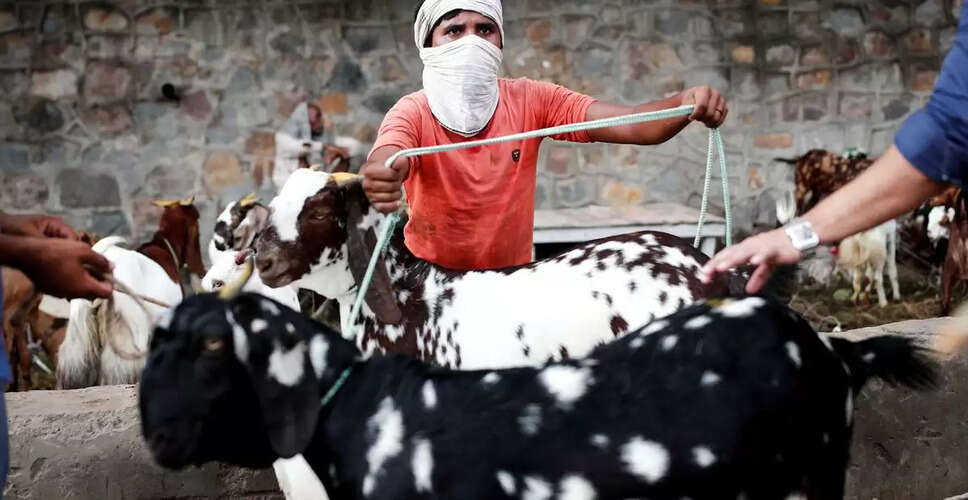
Bakri Eid, also referred to as Eid-al-Adha, celebrates the essence of sacrifice and involves the ritual slaughter of goats.
This year, the festival is set to take place on June 7.
A peace committee meeting was convened to discuss the necessary arrangements for Eid prayers in Sambhal, involving representatives from various local communities.
District Magistrate Rajender Pensiya informed the media that consultations were held with all relevant parties. He stated, "Animal sacrifices will only be permitted at 19 designated locations. Public spaces will not be utilized for this purpose."
Pensiya also mentioned that preventive measures are in place concerning approximately 950 individuals, emphasizing that any attempts to disrupt the peace will face strict legal repercussions.
Religious leaders have been instructed to complete sacrificial rites by 3 PM from June 7 to June 9, and a warning has been issued against sharing videos of animal sacrifices on social media platforms.
Previously, Sambhal experienced unrest on November 24, when violence erupted after a group of Muslims protested against a court-ordered survey of the Shahi Jama Masjid in Chandausi town.
A trial court had mandated the survey based on a lawsuit claiming that the mosque was constructed in 1526 by Mughal emperor Babar on the site of the ancient Shri Hari Har Temple dedicated to Lord Kalki.
During the unrest, five individuals lost their lives.
In March, local police had prohibited prayers on streets or rooftops in anticipation of the Eid-ul-Fitr festival, with similar directives issued in other districts across the state.
Eid-ul-Fitr signifies the conclusion of the Islamic holy month of Ramadan.
In a related development, the Maharashtra Goseva Ayog, established for the welfare of cattle, has ordered that livestock markets in the state remain closed from June 3 to June 8 to prevent illegal slaughter during Bakri Eid.
A circular was sent to Agriculture Produce Market Committees, instructing that no livestock markets should operate during this period.