
US Vice President's Visit to Islamabad: A New Chapter in US-Iran Relations?
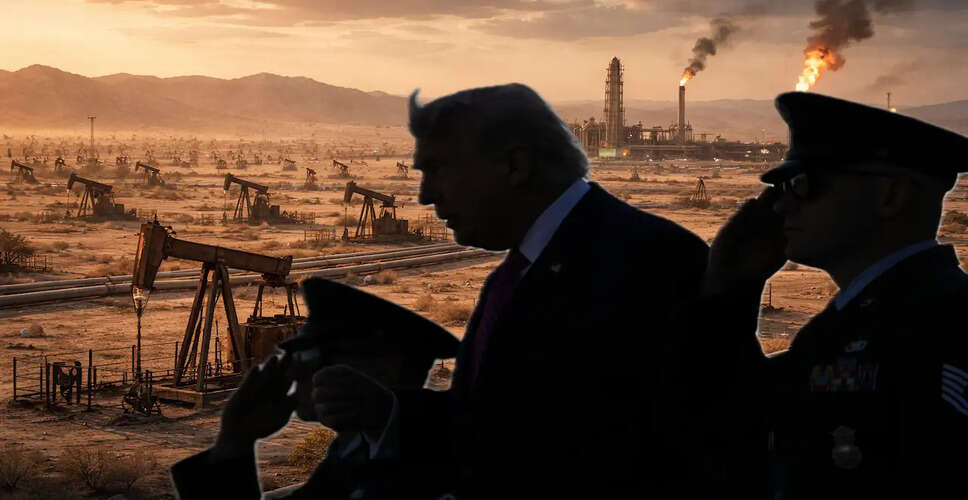

US Vice President's Diplomatic Mission
In a significant diplomatic move, US Vice President JD Vance has arrived in Islamabad to negotiate an exit strategy for President Donald Trump and to discuss a ceasefire. This marks a pivotal moment in US-Iran relations, reminiscent of the critical discussions that took place following the 1979 Islamic Revolution. A pressing question looms over these negotiations: is Washington genuinely pursuing peace, or is it merely attempting to reinforce its dominance?
Dr. Waiel SH Awwad, a seasoned foreign journalist with extensive experience in South Asia, asserts that the roots of this situation extend back to 1953. He explains, "The United States became deeply involved in Iranian affairs after the CIA and MI6 orchestrated the overthrow of Iran's democratically elected Prime Minister, Mohammad Mosaddegh, primarily due to oil interests." Following Mosaddegh's nationalization of Iranian oil, he was ousted in a covert operation known as Operation Ajax, leading to the installation of a pro-Western Shah, Mohd Reza Pahlavi. For 26 years, Iran aligned with American strategic interests until the Islamic Revolution disrupted this relationship.
Dr. Awwad elaborates, stating that the Revolution represented a significant loss for the US, as Iran had been a crucial ally in the region, overseeing the Persian Gulf and countering Russian influence. In response, Washington implemented a series of punitive measures, including asset freezes and sanctions, alongside covert operations targeting Iranian officials. This escalated into a proxy war, with the US supporting Iraq during its eight-year conflict with Iran, resulting in devastating casualties on both sides.
By 2015, a diplomatic breakthrough occurred with the Joint Comprehensive Plan of Action (JCPOA), which saw Iran significantly reduce its enriched uranium stockpile. However, the situation deteriorated when Trump withdrew from the agreement in 2018, despite Iran's compliance. Dr. Awwad notes, "Trump aimed to surpass Obama's achievements by imposing sanctions that devastated the Iranian economy, leading to widespread unrest." He further claims that the US government acknowledged its support for demonstrators in Iran, indicating a desire for regime change.
Israel's role in this dynamic is also crucial, as it aligns its national security with US interests, both aiming to diminish Iran's influence in the region. The recent Operation Epic Fury has openly pursued objectives that were previously handled covertly, with the Strait of Hormuz remaining a contested area and fragile ceasefire negotiations underway.
As for public sentiment, a Pew Research Center survey from March 2026 reveals that a majority of Americans disapprove of the ongoing conflict. Dr. Awwad concludes that regardless of the administration in power, the US continues its policy of regime change, perpetuating a cycle of provocation and conflict. The central question remains: can Washington accept an Iran that operates independently? Historically, the answer has been a resounding no.