
US Supreme Court's Landmark Ruling on Louisiana's Congressional Map

Supreme Court Decision on Louisiana's Districts
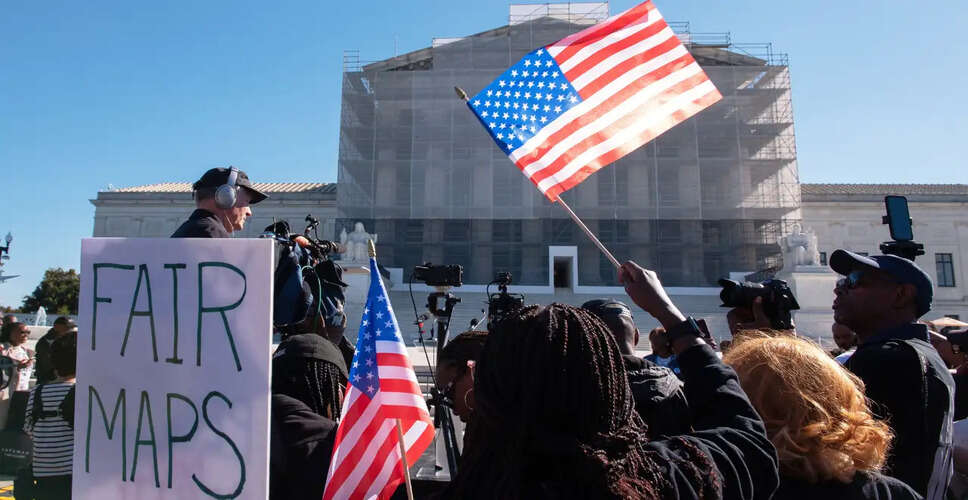
On Wednesday, the United States Supreme Court invalidated Louisiana's congressional map, determining that the state had unlawfully established a second majority-Black House district. This ruling represents a pivotal moment in the judicial interpretation of Section 2 of the Voting Rights Act of 1965, which prohibits racial discrimination in voting practices. Although the court did not declare this provision unconstitutional, it has raised the threshold for future legal challenges. Justice Samuel Alito, writing for the majority, stated that Section 2 "only imposes liability when there is strong evidence suggesting that the State intentionally designed its districts to limit opportunities for minority voters based on race." The ruling, which faced dissent from the court's three liberal justices, is anticipated to significantly impact elections and redistricting efforts nationwide.
Here are five critical implications of this ruling for future elections:
1. Increased Difficulty for Section 2 Lawsuits
The court did not abolish Section 2 but rather redefined its application. Plaintiffs contesting electoral maps will now face stricter standards. Alternative maps presented as evidence can no longer prioritize race as a primary factor; they must also adhere to traditional redistricting principles and align with a state's legitimate political goals. Furthermore, challengers must consider party affiliation when attempting to illustrate racially polarized voting. Justice Elena Kagan, dissenting, cautioned that this ruling could render Section 2 nearly ineffective.
2. Greater Flexibility for States to Cite Political Reasons
The court underscored that states have the right to draw districts based on non-racial factors, including partisan advantage. It reiterated its previous position that claims of partisan gerrymandering are outside the jurisdiction of federal courts, allowing states to justify contested maps on political grounds. This introduces a new legal landscape where states may argue that their maps are influenced by party strategy rather than race, even when both factors intersect. Under this new framework, challengers will need to separate political motives from racial ones, a potentially challenging task.
3. Uncertainty for Minority-Opportunity Districts
This ruling could jeopardize districts intended to enhance minority representation, especially in states where such districts typically favor Democrats. While not all districts are immediately at risk, legal experts suggest that some may become vulnerable if states can convincingly argue that political factors, rather than race, influenced their boundaries. The court determined that Louisiana's second majority-minority district was not mandated by federal law and lacked a compelling justification for its existence. Justice Kagan, in her dissent, warned that such districts might now exist "only on sufferance, and probably not for long."
4. Potential Acceleration of Mid-Decade Redistricting
The ruling arrives at a time when there is a growing trend of redistricting outside the conventional 10-year cycle. The National Conference of State Legislatures reports that several states, including California, Missouri, North Carolina, Ohio, Texas, Utah, and Virginia, have already implemented new maps since 2025. This decision may prompt more states to reconsider their boundaries, particularly if they believe courts will favor political justifications.
5. House Control May Depend on Redistricting Battles
With the US House of Representatives closely divided, even minor adjustments in district boundaries could lead to significant political ramifications. Analysts predict that this ruling will heighten legal and political disputes over redistricting, shifting focus from traditional campaigning to courtroom battles and legislative strategies. As states embark on redrawing maps, the balance of power in Congress may increasingly hinge not only on voter preferences but also on how electoral boundaries are delineated.