
US Supreme Court Upholds Mail-In Ballot Counting After Election Day

Supreme Court Decision on Mail-In Ballots
On Monday, the US Supreme Court ruled that states are permitted to count mail-in ballots that arrive after Election Day, provided they are postmarked by that date. This ruling represents a significant legal defeat for President Donald Trump, who has sought to impose stricter voting regulations ahead of the upcoming midterm elections. In a closely contested 5-4 decision, the court upheld a Mississippi law that allows election officials to accept absentee ballots up to five days post-Election Day if they were mailed on time. This ruling could influence voting practices in numerous states that have similar provisions for mail-in ballots.
Details of the Ruling
Justice Amy Coney Barrett authored the majority opinion, supported by Chief Justice John Roberts and the three liberal justices. Barrett noted that while federal law designates Election Day, it does not mandate that ballots must be received by that date. She stated, "The election-day statutes say nothing about ballot receipt, and we cannot add to the words Congress chose." In contrast, Justice Samuel Alito, in his dissent, expressed concerns that accepting ballots after Election Day could extend the election period and erode public trust. He remarked, "Today's decision leaves open opportunities for voter fraud that may further undermine Americans' faith in the integrity of this country's election."
Trump's Reaction
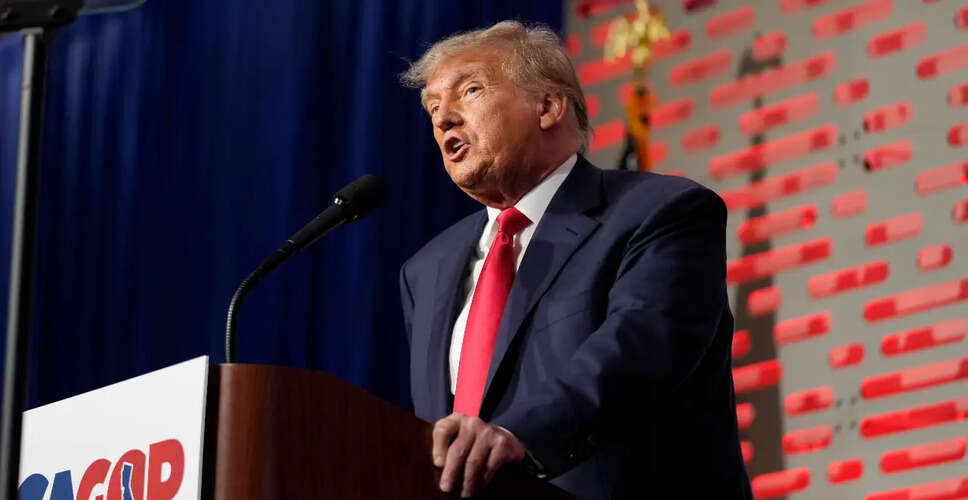
President Trump took to Truth Social to express his discontent with the ruling, labeling it a "tremendous loss" for election integrity. He reiterated his call for Congress to enact the Save America Act, which would mandate photo identification and proof of US citizenship for voters while significantly limiting mail-in voting to specific circumstances such as illness or military service. Trump stated, "There is only one reason to oppose — cheating," despite lacking evidence of widespread fraud in mail-in voting.
Rejection of Republican Challenge
The case originated from a lawsuit backed by the Republican National Committee, which contested Mississippi's ballot receipt deadline. Republicans contended that an 1845 federal law establishing Election Day implies that ballots must be both cast and received by that date. The Trump administration supported this challenge, arguing that requiring ballots to arrive by Election Day would enhance election integrity and voter confidence. However, the Supreme Court ultimately dismissed this interpretation.
Responses from States and Officials
Currently, over a dozen states allow mail-in ballots to be counted if they arrive after Election Day, provided they are postmarked on time. States like California, Alaska, Nevada, Texas, and Virginia are among those with such provisions. California Governor Gavin Newsom praised the ruling, asserting that it ensures legally cast ballots are counted. Conversely, Republican National Committee Chairman Joe Gruters criticized the decision, emphasizing that Republicans will continue advocating for elections to conclude on Election Day.
Mail Voting Fraud Studies
Despite persistent claims from Trump and other Republicans regarding mail-in voting fraud, research consistently shows that such fraud is exceedingly rare. A study by the Brookings Institution revealed an average of only four confirmed cases of mail ballot fraud for every 10 million votes cast in the last five US elections. Interestingly, Trump himself voted by mail in a Florida special election earlier this year, with the White House defending this action by stating that the president has a history of voting by mail while maintaining his residency in Florida.