
US Supreme Court Overturns Campaign Spending Limits Ahead of Midterms
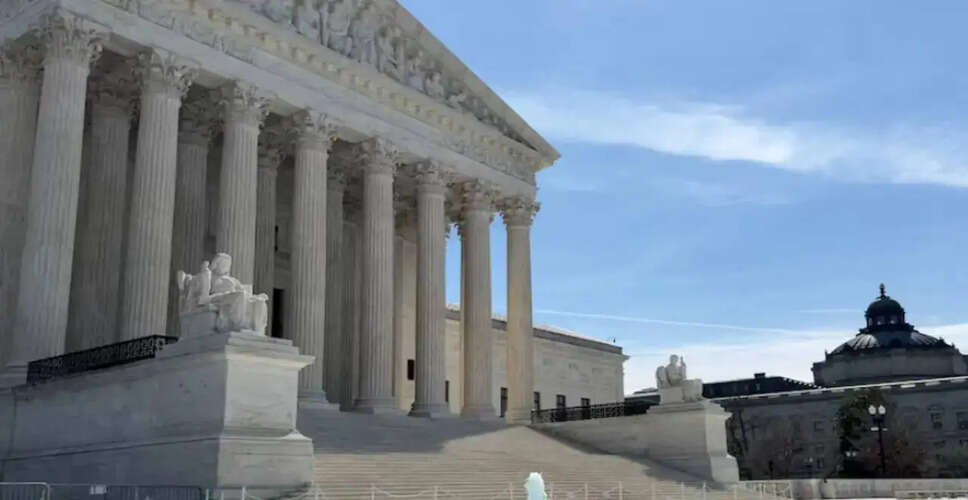

Major Supreme Court Decision
In a landmark decision that could significantly impact the upcoming midterm elections in November, the US Supreme Court ruled on Tuesday to eliminate federal restrictions on coordinated campaign spending between political parties and their candidates. The court determined that these limitations infringe upon the First Amendment's protection of free speech. In a 6-3 ruling, the justices sided with Vice President JD Vance and other Republican plaintiffs, declaring that the limits on coordinated party spending are unconstitutional. Justice Brett Kavanaugh, writing for the conservative majority, stated, "The constitutional text, history, and precedent confirm that the limits on coordinated expenditures by political parties violate the First Amendment." The majority comprised six conservative justices, while three liberal justices dissented.
Overturning Previous Precedent
Court Overrules 2001 Precedent
This ruling reverses a 2001 Supreme Court decision from Colorado that upheld restrictions on coordinated spending. The majority opinion noted that changes in campaign finance law and the court's interpretation of the First Amendment over the last two decades have weakened the justification for the earlier ruling. The lawsuit was initiated in 2022 by JD Vance, who was then a Republican candidate for the US Senate from Ohio, along with former Congressman Steve Chabot and various Republican Party committees. The legal challenge received support from the Trump administration upon its return to power.
Republican Response to the Ruling
Republicans Welcome Verdict
The decision arrives as Republicans prepare for the November midterms, boasting a significant financial edge over Democrats. Campaign finance reports indicate that the Republican National Committee, along with the National Republican Congressional Committee and the National Republican Senatorial Committee, concluded May with $256 million in cash and no debt, more than double the approximately $126 million held by their Democratic counterparts, who also faced over $18 million in debt. Former President Donald Trump celebrated the ruling on his Truth Social platform, labeling it "A BIG WIN FOR REPUBLICANS and, more importantly, The First Amendment!"
Implications of the Ruling
What The Ruling Means
The case focused on "coordinated party expenditures," which involve campaign spending conducted jointly by political parties and candidates. According to the Federal Election Campaign Act of 1971, independent political spending by parties is unrestricted, but expenditures coordinated with candidates have historically been limited to prevent corruption or undue influence. These limits varied based on state size, with coordinated spending caps in 2025 ranging from approximately $127,000 to $3.9 million for Senate candidates and $63,000 to $127,000 for House candidates. The Supreme Court's ruling abolishes these federal limits, potentially enabling political parties to collaborate more closely with candidates and significantly increase their spending on coordinated campaigns. Legal analysts suggest that this decision may also allow party committees to access the same discounted advertising rates for television and radio that candidates currently enjoy, although this aspect remains legally untested.