
US Supreme Court Expands Presidential Power in Landmark Ruling
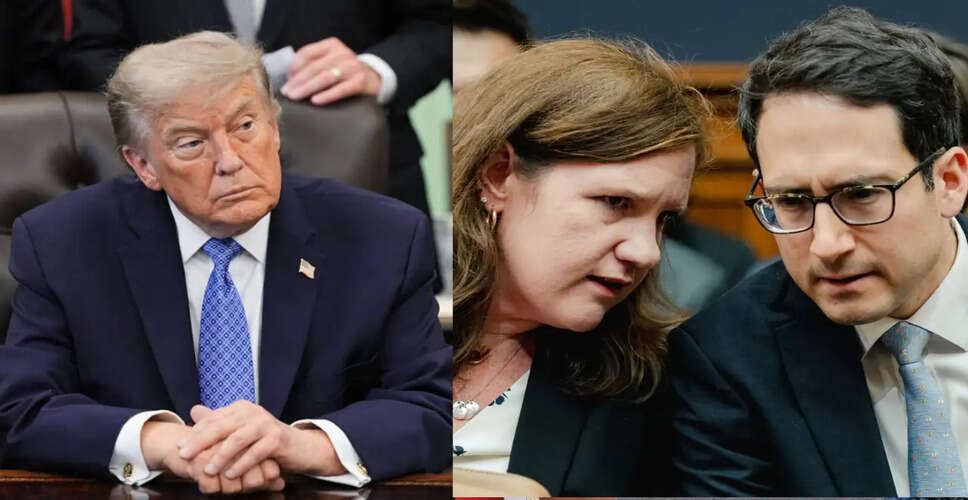

Significant Ruling on Presidential Authority
On Monday, the US Supreme Court issued a pivotal ruling that broadens the powers of the presidency, affirming that President Donald Trump acted within his rights when he dismissed Democratic members of the Federal Trade Commission (FTC). This decision overturns nearly a century of legal precedent that had previously safeguarded independent federal agencies from political firings.
In a 6-3 ruling, the court determined that federal statutes restricting a president's ability to remove leaders of independent agencies without justification infringe upon the Constitution's separation of powers. The case revolved around the dismissal of former FTC Commissioner Rebecca Slaughter, who was removed in March 2025 alongside fellow Democratic Commissioner Alvaro Bedoya, with Trump asserting that their continued roles conflicted with his administration's objectives.
Chief Justice John Roberts, writing for the majority, emphasized that the Constitution grants the president extensive authority over executive branch officials, including the right to dismiss them at will. He stated, "While the Senate has the responsibility to confirm those the President wishes to work with, neither Congress nor the courts can impose restrictions on his ability to work with those he chooses."
This ruling effectively nullifies the Supreme Court's 1935 decision in Humphrey's Executor v. United States, which had protected FTC commissioners and similar officials from being removed without cause. Roberts argued that the previous ruling was based on an outdated perception of the FTC's function and does not align with the current administrative landscape. He remarked, "If any remnants of Humphrey's remain, we overrule them."
Slaughter contested her removal, claiming that the Federal Trade Commission Act allows presidents to dismiss commissioners only for reasons such as inefficiency, neglect, or misconduct. Lower federal courts had sided with her, but the Supreme Court had previously paused those decisions while reviewing the case.
This ruling is anticipated to influence various independent agencies, including the National Labor Relations Board and the Consumer Product Safety Commission, thereby granting presidents increased authority over officials wielding executive power. However, the court refrained from applying the same principle to the Federal Reserve, with Roberts noting its unique constitutional status due to its historical independence in monetary policy.
In a separate decision, the justices permitted Federal Reserve Governor Lisa Cook to retain her position while she contests Trump's efforts to remove her based on allegations of mortgage fraud, which she denies.
The FTC ruling has drawn sharp criticism from the court's liberal justices. In a dissent joined by Justices Elena Kagan and Ketanji Brown Jackson, Justice Sonia Sotomayor contended that the ruling dismantles decades of established constitutional practice and centralizes excessive power within the presidency. She remarked, "Congress and numerous Presidents have relied on Humphrey's to create a functional Government." Sotomayor also questioned the court's decision to potentially exempt the Federal Reserve, labeling the distinction inconsistent and hard to justify.
Trump celebrated the ruling on Truth Social, labeling it a "BIG WIN" and asserting it as one of the most significant decisions regarding presidential authority since the 1930s. He claimed the ruling affirmed a president's constitutional right to remove officials and appointees within the executive branch.
Legal analysts suggest that this ruling represents one of the most significant expansions of presidential power in recent decades, likely altering the dynamics between the White House and independent federal agencies for the foreseeable future.