
US Supreme Court Expands Presidential Authority Over Federal Agencies
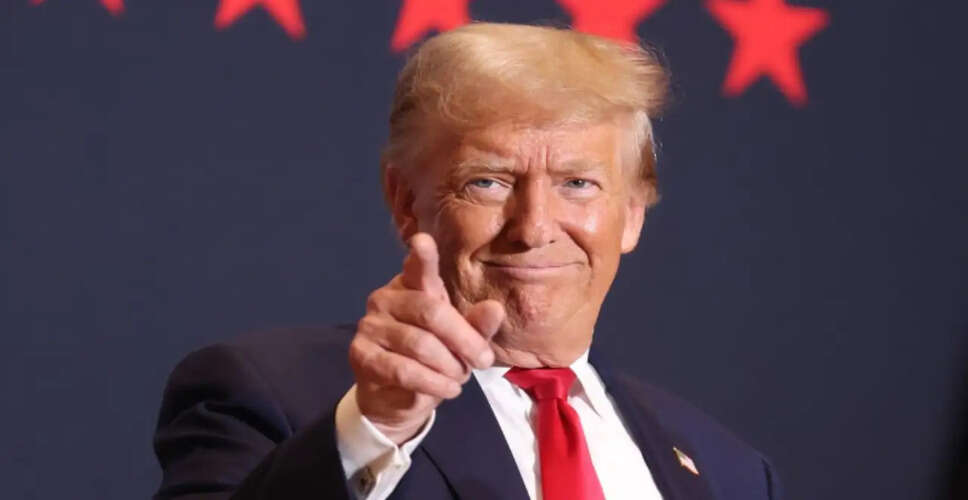

Significant Ruling on Presidential Powers
On Monday, the US Supreme Court delivered a pivotal legal ruling favoring President Donald Trump, affirming his extensive authority to dismiss leaders of most independent federal agencies. However, the court made a notable exception for the Federal Reserve, allowing Governor Lisa Cook to retain her position while her legal battle regarding her dismissal is ongoing.
In a 6-3 verdict, the court determined that federal statutes safeguarding the heads of independent agencies from removal without just cause infringe upon the Constitution's separation of powers. This ruling significantly enhances presidential control over agencies that have historically functioned independently from the executive branch.
Chief Justice John Roberts, who authored the majority opinion, stated that protections preventing a president from dismissing agency heads conflict with the executive powers granted by the Constitution. This decision effectively reverses the court's 1935 ruling in Humphrey's Executor, which had limited presidential removal authority for nearly a century.
The ruling impacts agencies including the Federal Trade Commission (FTC), National Labor Relations Board (NLRB), Merit Systems Protection Board, and Consumer Product Safety Commission. It originated from the case involving former FTC Commissioner Rebecca Slaughter, who was removed by Trump despite a federal law mandating valid cause for her dismissal.
In response to the ruling, Trump celebrated it as a landmark decision regarding presidential authority. He referred to the verdict as "historic and unprecedented" in a post on Truth Social, asserting that it reaffirmed presidential powers.
Conversely, the Federal Reserve was treated differently. In a separate 5-4 ruling, the justices opted not to immediately remove Federal Reserve Governor Lisa Cook, who is contesting Trump's attempt to terminate her over allegations of mortgage fraud. Cook has denied any wrongdoing and has not faced criminal charges.
Chief Justice Roberts noted that allowing Cook's removal prior to a complete judicial review would effectively diminish the statutory protections for Federal Reserve governors to "little more than at-will employment." Consequently, Cook will remain on the Fed's Board of Governors while her lawsuit proceeds.
Cook, nominated by former President Joe Biden, contended that the move to remove her was politically motivated rather than based on legitimate legal grounds. In her statement, she emphasized that the case is crucial for maintaining the Federal Reserve's independence in interest rate decisions without political influence.
The Trump administration argued that mortgage applications Cook submitted before her Federal Reserve appointment justified her dismissal. Solicitor General D. John Sauer asserted that the allegations provided adequate grounds for removal and that courts should refrain from reviewing the president's decision.
The ruling faced strong opposition from the court's liberal justices. In a dissent delivered from the bench, Justice Sonia Sotomayor cautioned that the decision grants the president unprecedented authority over independent agencies, potentially undermining institutional independence and weakening constitutional checks and balances.
This case is anticipated to redefine the power dynamics between the White House and independent federal regulators, while preserving the Federal Reserve's unique protections until Cook's legal challenge is resolved.