
US Strikes Iranian Targets Amid Tensions Before Midterm Elections
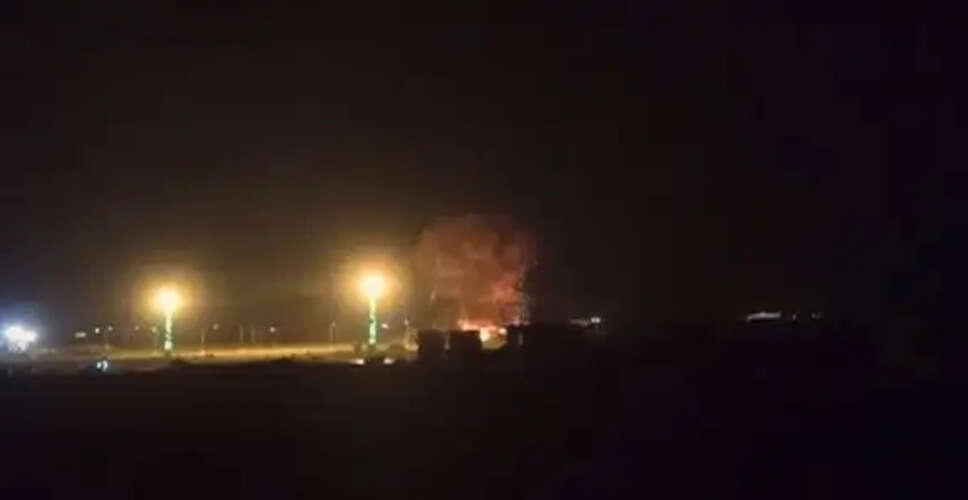

US Conducts Defensive Strikes in the Strait of Hormuz
Washington: A US official has confirmed that defensive strikes were carried out against specific Iranian targets in the Strait of Hormuz.
Reports from Iranian state television indicated that explosions were detected on Qeshm Island. The official, who requested anonymity due to the sensitive nature of the information, stated that the strikes targeted 'Iranians using surface-to-air missiles against US assets.'
These strikes, which seemed limited rather than a full-scale return to conflict, occurred just before significant midterm elections in the United States. Previously, Trump had indicated that no strikes on Iran would take place before the elections.
The contentious Iran conflict and its repercussions on US gasoline prices have posed challenges for Republicans aiming to retain control of Congress.
Vice President JD Vance expressed cautious optimism on Monday, stating that he had recently discussed negotiations with Trump and both felt positive about the potential for a settlement.
Negotiations and Diplomatic Efforts
Vance conveyed that there is still hope for an agreement to avert Trump's threats of new strikes on Iran following the midterm elections. He had sent a letter to Iran's security chief, Mohsen Rezaei, last week, although the White House has not disclosed much about its contents. Trump mentioned that the letter focused on providing Iran with 'medical supplies and various things.'
Vance suggested that there are grounds for optimism regarding US-Iran relations, stating, 'We've had a number of good conversations with the Iranians.' He emphasized the importance of continuing efforts toward a negotiated settlement.
As tensions persist in the region, backchannel discussions are ongoing, with Israel and other Middle Eastern allies urging Trump on the future course of the ongoing conflict that has disrupted global markets and severely impacted Iran.
Israeli Prime Minister's Push for Strikes
Netanyahu's Call for Action
Israeli Prime Minister Benjamin Netanyahu is advocating for further strikes on Iran following the upcoming US elections, according to sources familiar with the situation.
A renewed military campaign against Iran could assist Netanyahu in forming an emergency government after his party lost its parliamentary majority in recent elections. Trump has fluctuated between threatening military action and seeking a diplomatic resolution.
Diplomatic talks have reportedly progressed, with Qatari mediators engaging in discussions with Iranian officials. These talks aim to establish a framework for Iran to halt its attacks in the Strait of Hormuz in exchange for the US lifting its blockade on Iranian ports.
More discussions are anticipated this week, with officials speaking on the condition of anonymity due to the classified nature of the briefings they received.
Concerns Over Regional Stability
One official noted that Netanyahu is collaborating with senior US officials to persuade Trump to initiate a swift and extensive air campaign, although a decision has yet to be made.
During a recent call, Netanyahu urged Trump for military action, but the president did not commit to any strikes.
Other US allies in the Middle East have cautioned against escalating military actions, warning that such moves could destabilize the region and provoke Iran-aligned Houthi rebels in Yemen to intensify their assaults on Saudi Arabia and shipping routes in the Red Sea.
US Elections and the Iran Conflict
Trump's Remarks on the Conflict
Netanyahu had been advocating for renewed strikes even before the Israeli elections, aiming to bolster his security credentials amid public anxiety following Hamas' attack on October 7, 2023.
The ongoing conflict has also been a significant concern for American voters ahead of the midterm elections.
Oil prices saw a notable decline on Monday as diplomatic efforts to resolve the US-Iran conflict appeared to gain traction. The rising fuel prices, a consequence of the war, have been a burden for Trump's Republican Party as they strive to maintain control of Congress.
In a speech in Washington, Trump acknowledged the drop in oil prices and attempted to downplay the conflict's severity, stating, 'I don't know if you even call it a war, because we haven't been doing any fighting for months.'
Iran's Stance on War and Diplomacy
Iran's Preparedness
Iran is seeking assurances that the US will uphold its commitments in any agreement. The US and Israel have previously conducted strikes against Iran while negotiations regarding its nuclear program were ongoing.
Iranian officials have publicly stated their readiness for both war and diplomacy.
The new supreme leader, Ayatollah Mojtaba Khamenei, recently met with military leaders, asserting that any threat from the US or Israel should be met with an immediate response without geographic limitations, and he called for an expansion of potential targets.
An analysis revealed that Iranian attacks on over two dozen US bases since the conflict's inception have resulted in significant equipment damage.
Khamenei has not made a public appearance since the initial strikes by Israel and the US on February 28, which resulted in the death of his predecessor.
Iran's security chief, Mohsen Rezaei, remarked that the tone from the US has shifted significantly, describing it as a 'very good sign.' He did not provide details about the letter from Vance, which Iran acknowledged last week, and mentioned he had not yet responded.
Meanwhile, Vance reiterated that the primary concern of the Republican administration is ensuring Iran takes meaningful action regarding its nuclear program, stating, 'We do think that there is a pathway there, but it really does require a firm commitment and a verifiable commitment that they don't rebuild that nuclear program.'