
US Stance on Iran: No Sanctions Relief Without Uranium Surrender

US-Iran Negotiations and Sanctions
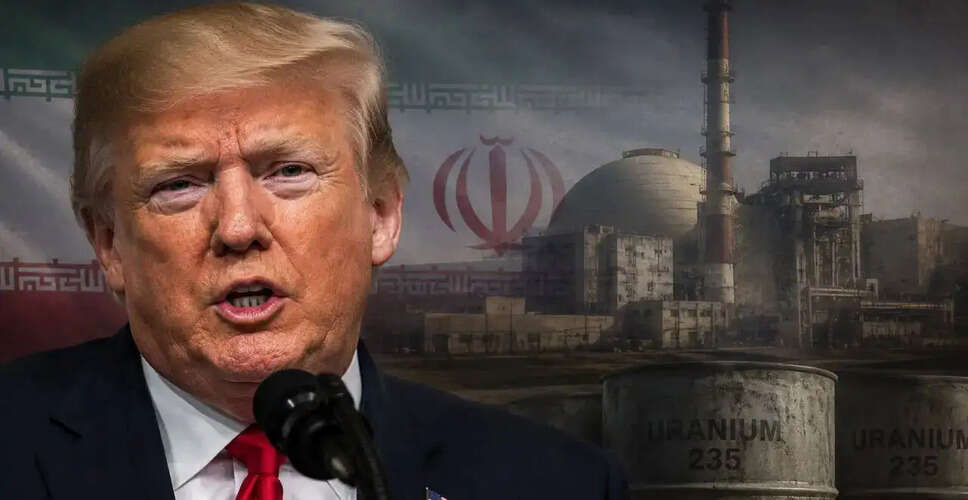
On Sunday, the White House emphasized that Iran would not receive any relief from sanctions unless it agreed to relinquish its stockpile of highly enriched uranium. President Trump aimed to manage expectations regarding a potential agreement to reopen the Strait of Hormuz. He indicated that the US and Iran were nearing a memorandum of understanding that could restore oil shipments through this crucial waterway, allowing for a 30-day period for further discussions on Iran's nuclear program.
This potential deal raised concerns among some Republican lawmakers and supporters of Israel, prompting officials to clarify that no agreement was imminent and that negotiations could extend for an additional five to seven days. A senior official stated, "Iran will gain little unless it commits to giving up enriched uranium. No concessions will be made without compliance."
The official further noted, "We are not prepared to finalize a deal today or tomorrow," adding that President Trump is inclined to give negotiators a few more days to reach an agreement. Trump expressed on Truth Social that both parties should take their time to ensure accuracy, stating, "There can be no mistakes!"
Despite claims of significant progress, a senior official mentioned that while 95% of the agreement is complete, finalizing the wording could take several days. The proposed deal would include strict enforcement measures, with no cash payments or other concessions for reopening the strait.
Another senior official indicated that the framework would allow 60 days to finalize the deal, ensuring Iran could not develop nuclear weapons and requiring the country to abandon what Trump referred to as "nuclear dust." However, Iranian state media expressed skepticism about finalizing any memorandum, citing ongoing disagreements over specific clauses.
Trump also contrasted the potential agreement with the 2015 nuclear deal negotiated by former President Obama, asserting that any deal he makes would be significantly better and would not provide Iran with a pathway to nuclear armament.
The Strait of Hormuz
Trump stated that the Strait of Hormuz would reopen under the proposed memorandum. However, Iranian media, including outlets linked to the Islamic Revolutionary Guard Corps, reported that the strait would remain under Iranian control, allowing shipping traffic to gradually return to pre-war levels over a 30-day timeframe.
Iran has also insisted that the US lift its blockade on Iranian ports simultaneously. Trump countered that the blockade would remain in effect until a certified and signed agreement is reached. Iranian sources clarified that reopening the strait would not imply relinquishing wartime claims over the route, emphasizing that coordination with Iranian authorities is necessary for safe transit.
Iranian Foreign Ministry spokesman Ismaeil Baghaei stated that the Strait of Hormuz is not an issue involving the US but rather a matter between Iran and its neighboring countries, particularly Oman.
Iran's Uranium Stockpile
US negotiators believe that Iran's Supreme Leader, Mojtaba Khamenei, has tentatively approved a broad framework for a peace agreement that would involve Tehran agreeing to dispose of its highly enriched uranium stockpile. However, Iranian sources have denied these claims, stating that the nuclear program will not be part of the preliminary agreement and will be addressed in future negotiations.
Iran is also pressing for the release of billions of dollars in frozen assets abroad, with Baghaei asserting that the status of these assets must be clarified at the outset of negotiations. Reports suggest that without the release of a portion of these blocked assets, no agreement will be reached. However, a senior US official indicated that Iranian assets would only be unfrozen after the Strait of Hormuz is reopened.
Sanctions
Iranian officials continue to advocate for relief from extensive international sanctions imposed by the US and Europe. Baghaei noted that discussions about lifting sanctions would not occur in the immediate future, although he acknowledged that Iran's demand for sanctions relief is included in the text of negotiations. Reports indicate that lifting sanctions on oil exports alone could generate nearly $10 billion in revenue for the Iranian government within 60 days.
Lebanon
The future of the conflict between Israel and the Iran-backed Hezbollah in Lebanon remains uncertain under any potential agreement. Reports suggest that the draft memorandum includes provisions for declaring an end to hostilities on all fronts, including Lebanon. However, an Israeli official stated that Trump assured Prime Minister Netanyahu that Israel would maintain its freedom to act against threats, including those from Lebanon.