
US Shifts Military Focus in Iran: Targeting Key Transport Infrastructure
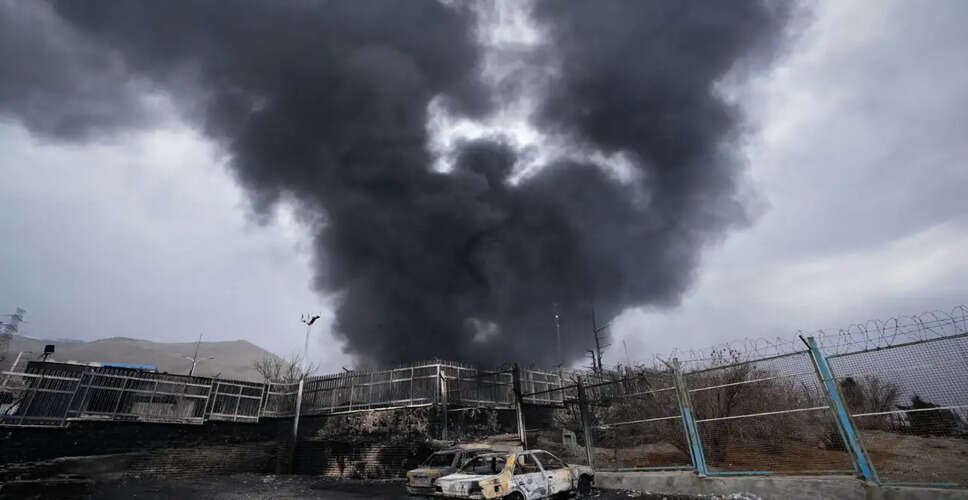

US Military Actions in Iran
Recent reports indicate that the United States has altered its military strategy in southern Iran, moving from direct attacks on combat assets to targeting vital transport infrastructure that supports Iranian military operations near the Strait of Hormuz. As per Iran's semi-official Fars News Agency, US airstrikes have struck five bridges in Hormozgan Province, disrupting crucial road connections between Bandar Abbas and surrounding districts.
According to the Hormozgan Province Governorate, these strikes have damaged several bridges that connect Bandar Abbas with Bandar Khamir, Khmeir, Lar, and other nearby areas. Authorities have urged civilians to steer clear of the affected routes to allow rescue and emergency teams to access the strike sites without hindrance.
The aftermath of the strike on a bridge in Kahurestan, Khamir County, Hormozgan province. @Vahid pic.twitter.com/sOGnEeF1nt
— Fazel Hawramy (@FazelHawramy) July 17, 2026
The targeted infrastructure includes the Gariveh Bridge, which connects Bandar Abbas to Khmeir and Lar, along with a bridge near Latidan village, two bridges on the Kahoorestan-Lar route, a partially completed bridge linking Bandar Khamir, Keshar, and Bandar Abbas, and another bridge located in Maru village within the Khmeir district.
Significance of Bandar Abbas
Why Bandar Abbas Matters
The strikes are particularly noteworthy as Bandar Abbas is Iran's main naval logistics center, strategically positioned by the Strait of Hormuz, a critical route for global oil shipments. This city facilitates the movement of IRGC personnel, coastal defense forces, missile units, engineering detachments, and military supplies throughout southern Iran.
Modern military strategies increasingly aim to disrupt logistics rather than directly confront frontline forces. By targeting multiple bridges at once, military convoys are compelled to use secondary roads, which can lead to increased travel times and create bottlenecks, thereby slowing operational movements without necessarily incapacitating combat units.
Impact on Iranian Military Operations
How The Strikes Could Affect Iran's Military Operations
Experts suggest that the damage to transport links could hinder the movement of fuel convoys, ammunition trucks, engineering equipment, spare parts, and recovery vehicles that are essential for Iranian military operations. Even if missile systems and personnel remain intact, slower logistics can diminish operational tempo and complicate sustained military efforts.
This bridge that was struck by U.S. tonight carries Route 76, the main highway linking Bandar Abbas with Lar and onward to Shiraz. It is a key piece of infrastructure for both commercial freight moving to and from the Port of Bandar Abbas and passenger traffic traveling between… https://t.co/S519YFlZY4 pic.twitter.com/9gjal2mwHD
— Open Source Intel (@Osint613) July 16, 2026
The strikes may also limit Iran's capacity to quickly deploy its anti-ship cruise missiles, coastal defense systems, ballistic missile launchers, and unmanned aerial vehicles, which are strategically dispersed across southern Iran to complicate enemy targeting. With fewer road options, these mobile assets could become easier to track using intelligence, surveillance, and reconnaissance methods.
Challenges to Command and Control
Pressure On Command, Control And Recovery
In addition to logistical challenges, the destruction of bridges could impede command mobility between Bandar Abbas, Bandar Khamir, Lar, and other dispersed IRGC facilities. Senior commanders and communication teams often depend on these road networks during operations, meaning that damaged infrastructure could slow coordination in rapidly changing combat scenarios.
Moreover, these bridges serve civilian functions, making them vital for ambulance services, firefighting units, engineering teams, and evacuation efforts. Their loss could delay both humanitarian responses and military recovery operations, further straining already limited transport corridors. From a military planning standpoint, bridges are considered high-value targets as they isolate operational areas, create chokepoints, and slow reinforcements without causing extensive urban destruction associated with attacks on populated areas.