
US Senate Moves to Reopen Homeland Security Amid Immigration Funding Debate
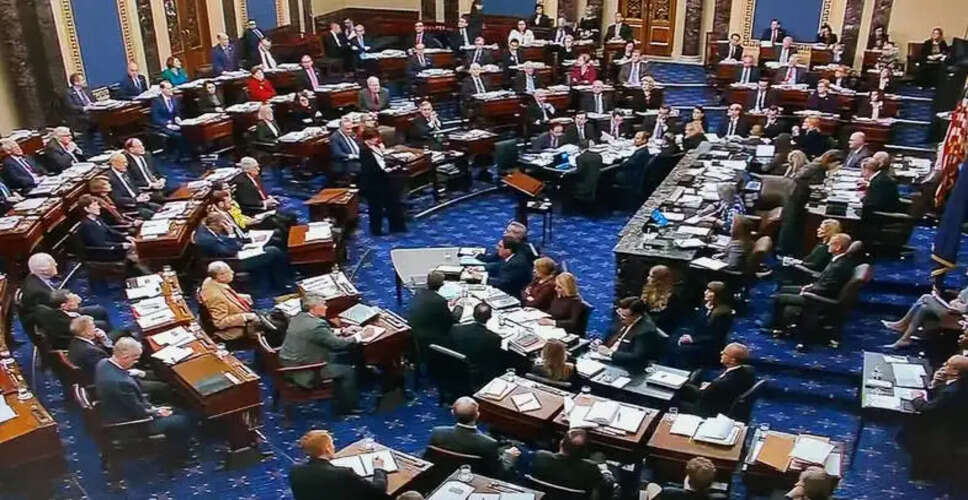

Senate Takes Action on Homeland Security Funding
In a significant move early Thursday, the US Senate initiated steps to reopen the Department of Homeland Security by approving a budget plan aimed at funding ICE and Border Patrol, despite opposition from Democrats. This action follows a shutdown of the department since mid-February, triggered by demands for policy reforms after federal agents fatally shot two protesters.
Republicans are now attempting to finance these agencies through a complex budget reconciliation process, similar to the method used last year to pass President Trump's tax and spending cuts without Democratic support.
Senate Majority Leader John Thune stated, 'We have a multistep process ahead of us, but ultimately, Republicans will ensure the security of America's borders and prevent Democrats from defunding these crucial agencies.'
This budget process allows for a simple majority vote in the Senate, circumventing the usual filibuster rules that require 60 votes for most legislation, which is challenging for Republicans who hold only 53 seats. However, this approach also invites closer scrutiny from the Senate parliamentarian and involves a lengthy series of amendment votes.
The Senate conducted its first round of votes overnight, with Democrats proposing amendments aimed at reducing healthcare costs to contrast with the Republicans' focus on immigration enforcement.
Senate Minority Leader Chuck Schumer criticized the Republicans, stating, 'Instead of allocating hundreds of billions to ICE and Border Patrol, they should collaborate with Democrats to lower out-of-pocket expenses.'
Once the House approves the budget framework and it receives the Senate Parliamentarian's endorsement, both chambers can proceed to pass the measure.
While the Senate has previously voted to reopen the rest of the department on a bipartisan basis, House Republican leaders have indicated they will not consider that bill until the Senate makes progress on funding ICE and Border Patrol.
The proposed $70 billion budget resolution aims to fund these agencies for three years, covering the remainder of Trump's term. Thune and other GOP leaders hope to keep the bill focused solely on ICE and Border Patrol, aiming to send it to Trump's desk by the end of the month, alongside the already passed funding for the rest of the Homeland Security Department.
However, challenges may arise as many within the party view this budget bill as their last opportunity this year to implement their priorities. Republicans in both chambers have sought to include additional funding for farmers and Trump's SAVE America Act, which mandates proof of citizenship for voting.
Senator John Kennedy briefly stalled the voting process, expressing frustration over the exclusion of elements from the SAVE America Act and other legislation. He remarked, 'This is the last train leaving the station,' predicting that no further major bills would pass before the midterm elections in November, but eventually withdrew his objections to allow the voting to continue.
Democrats argue that any funding for the Homeland Security Department should impose restrictions on federal immigration authorities, including better identification for federal officers and increased use of judicial warrants.
Following the fatal shootings of Renee Good and Alex Pretti by federal agents in Minneapolis in January, Trump agreed to separate the Homeland Security bill from a larger spending measure that was subsequently enacted.
However, bipartisan discussions failed to yield results, leading to a lapse in DHS funding without an agreement on changes to the Trump administration's immigration enforcement strategies.
In March, the Senate passed legislation by voice vote to separate ICE and Border Patrol funding from the rest of the department, which includes the Transportation Security Administration, as security lines at airports became increasingly long.
Despite this, House Republicans refused to consider the bill, insisting that any legislation must include funding for immigration enforcement.
Congress then adjourned for a two-week recess, leaving the funding issue unresolved. In the interim, Trump has utilized executive orders to cover some departmental salaries, but the future of these payments remains uncertain.
During the recess, Thune and House Speaker Mike Johnson announced a dual approach: to pass the Senate bill covering most of the department's funding through regular order while simultaneously pursuing a party-line bill for ICE and CBP funding.
Weeks later, Johnson has yet to specify when the House will address the Senate's legislation for the remainder of the department. It remains unclear whether his GOP colleagues will rally behind the streamlined budget bill, as some House Republicans, including Senator Kennedy, advocate for the inclusion of additional priorities.
Johnson emphasized the importance of sequencing the two bills, stating that House lawmakers do not wish to see the rest of the department funded without ICE and Border Patrol.