
US President Trump's Strategy on Iran Conflict and Strait of Hormuz
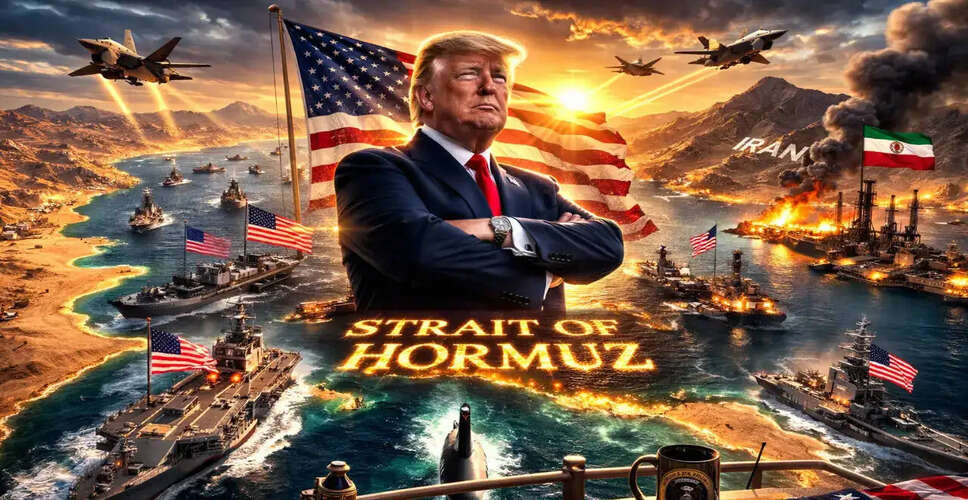
Escalation of the Middle East Conflict
Washington DC: Amid the intensifying conflict in the Middle East, reports indicate that President Donald Trump is considering a strategy to conclude the Iran war without reopening the Strait of Hormuz. This critical waterway, situated between Iran and Oman, is vital for global energy trade, with nearly 20% of the world's energy passing through it. According to The Wall Street Journal, Trump has expressed to his advisors a willingness to halt military actions against Iran, even if the strait remains closed. US officials are concerned that prolonging military operations beyond the planned four to six weeks could escalate the situation further.
The primary objective for the US is to dismantle Iran's naval capabilities and missile stockpiles while diplomatically pressuring Iran to reopen the Strait of Hormuz. Should this approach fail, Washington may seek assistance from its Gulf and European allies to lead efforts in reopening this essential maritime route. Since the conflict escalated on February 28, following US and Israeli airstrikes on Iran, the strait has been effectively closed. The Iranian Islamic Revolutionary Guard Corps (IRGC) has been targeting vessels associated with the US and its allies in the region, leading to an energy crisis affecting several countries reliant on the free flow of energy supplies through the strait.
On Monday, White House Press Secretary Karoline Leavitt informed the media that the US is actively working to restore normal operations in the strait. The White House also noted that the recent movement of oil tankers through the Strait of Hormuz, despite the ongoing conflict, is a result of both direct and indirect negotiations between the US and Iran. Leavitt dismissed allegations that Iran is selectively permitting certain tankers to transit or exerting informal control over maritime traffic. Reports indicate that numerous merchant vessels remain stranded in the strait.