
US Plans Coalition to Secure Strait of Hormuz Amid Ongoing Tensions
Formation of a Coalition to Protect Shipping Routes
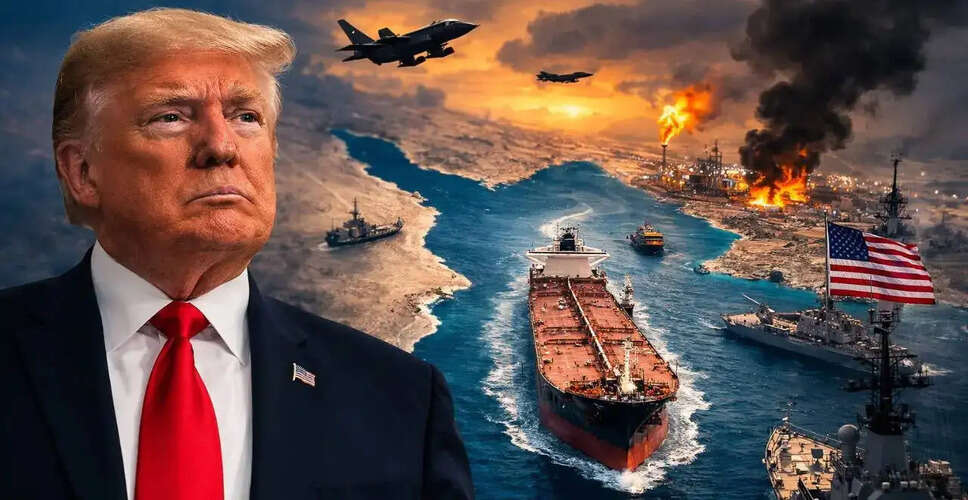
The United States is preparing to announce a coalition aimed at escorting vessels through the strategically vital Strait of Hormuz. President Donald Trump has urged approximately seven nations that depend on Middle Eastern oil to join this initiative to safeguard the strait. However, his requests have not yet resulted in any firm commitments from these countries.
The Strait of Hormuz serves as a crucial maritime passage connecting the Persian Gulf to the Gulf of Oman, with around 20-25% of the global crude oil supply transiting through it. Since the onset of the conflict, numerous ships have been trapped in this narrow waterway between Iran and Oman.
According to reports from American officials, the coalition announcement could come as soon as next week. Discussions are ongoing regarding the timing of operational activities, whether they will commence before or after the current hostilities in the region.
While Trump has indicated that he has requested seven countries to participate, he has not disclosed their identities. Speculation suggests that these nations may include China, France, Japan, South Korea, and the United Kingdom. Despite Trump's calls, no commitments have been made by these countries.
Trump emphasized the importance of these nations protecting their own interests in the strait, asserting that the United States does not require this shipping route due to its own oil access. He made these comments while returning to Washington from Florida aboard Air Force One.
Notably, Trump pointed out that China relies heavily on the strait for its oil supply, obtaining about 90% of its needs from this route, while the US's dependence is minimal. He refrained from confirming whether China would join the coalition.
Trump expressed a desire for other nations to collaborate in policing the strait, stating, “It would be nice to have other countries police that with us, and we’ll help. We’ll work with them.” Previously, he had reached out to China, France, Japan, South Korea, and the UK for support.
In response to the situation, Iran's Foreign Minister Abbas Araghchi mentioned that Tehran has been approached by several countries seeking safe passage for their vessels, indicating that the decision rests with their military. He noted that vessels from various nations have been permitted to transit, although he did not provide specific details. Iran has maintained that the strait remains accessible to all except the United States and its allies.