
US Offers $10 Million Reward for Information on Iranian Military Leaders
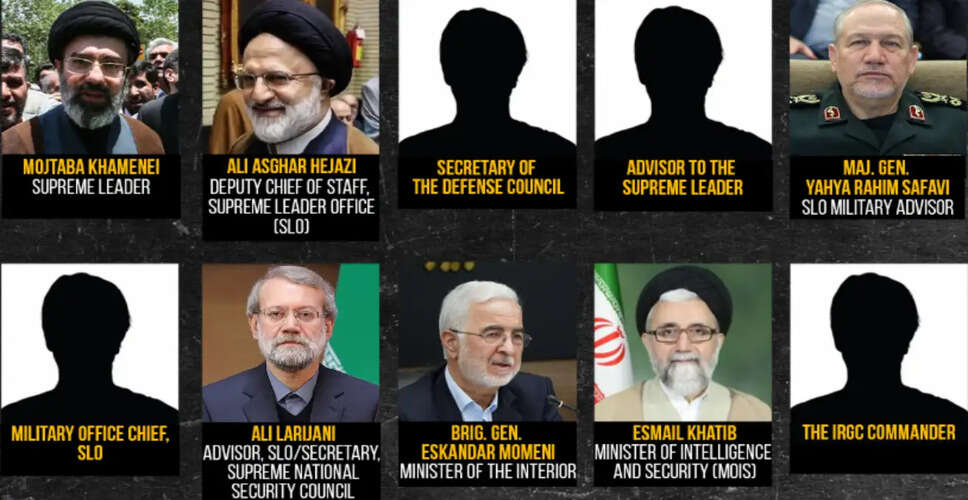
US State Department's Reward Announcement
The United States Department of State has declared a reward of up to $10 million for information regarding high-ranking officials associated with Iran's influential military and security apparatus. This initiative is part of the longstanding Rewards for Justice Program, which aims to gather intelligence on individuals whose actions threaten global security. This announcement coincides with escalating tensions involving the United States, Iran, and Israel, particularly following coordinated US-Israeli strikes on Iranian military installations and subsequent missile and drone assaults in the region on February 28.
RFJ_USA
2032482180568654025
A banner issued by the Diplomatic Security Service highlighted several senior Iranian officials linked to the Islamic Revolutionary Guard Corps (IRGC), which is pivotal in Iran's military framework and manages various security and intelligence operations both domestically and internationally. Notably, the banner includes Mojtaba Khamenei, identified by the US as Iran's prospective Supreme Leader and the son of the current leader, Ali Khamenei.
Purpose Behind the Reward
Why Did US Announce Reward?
According to US officials, the reward is aimed at individuals who are instrumental in directing or supporting the IRGC and its worldwide activities. The State Department's banner indicates that these individuals hold significant positions that enable them to manage the planning, organization, and execution of operations associated with the IRGC.
Among those listed is Ali Asghar Hejazi, who previously served as deputy chief of staff to the late Supreme Leader. The banner also mentions Ali Larijani, a prominent security figure and former high-ranking official in Iran's political landscape. Additionally, Yahya Rahim Safavi, a senior military adviser to the Supreme Leader, is included, along with two other senior Iranian ministers: Interior Minister Eskandar Momeni and Intelligence Minister Esmail Khatib.
The banner emphasizes that these individuals hold leadership positions within Iran's security framework and exert influence over various branches linked to the IRGC. Furthermore, it references four critical roles without naming the current occupants, including the secretary of the Supreme Defense Council, the head of the Supreme Leader's military office, the commander-in-chief of the IRGC, and an adviser to the Supreme Leader.
The State Department encourages anyone with credible information about these individuals or senior commanders associated with the IRGC to reach out to the Rewards for Justice program. The program offers various secure channels for information sharing, including encrypted messaging platforms and a secure communication system operating on the Tor network, allowing for anonymous reporting.
According to the announcement, valuable information that aids in identifying or locating these individuals or their networks could result in a reward of up to $10 million. The Rewards for Justice program has been providing financial incentives for information on suspected militants and security threats since the 1980s. US officials assert that the program's goal is to disrupt cross-border networks that pose security threats globally.